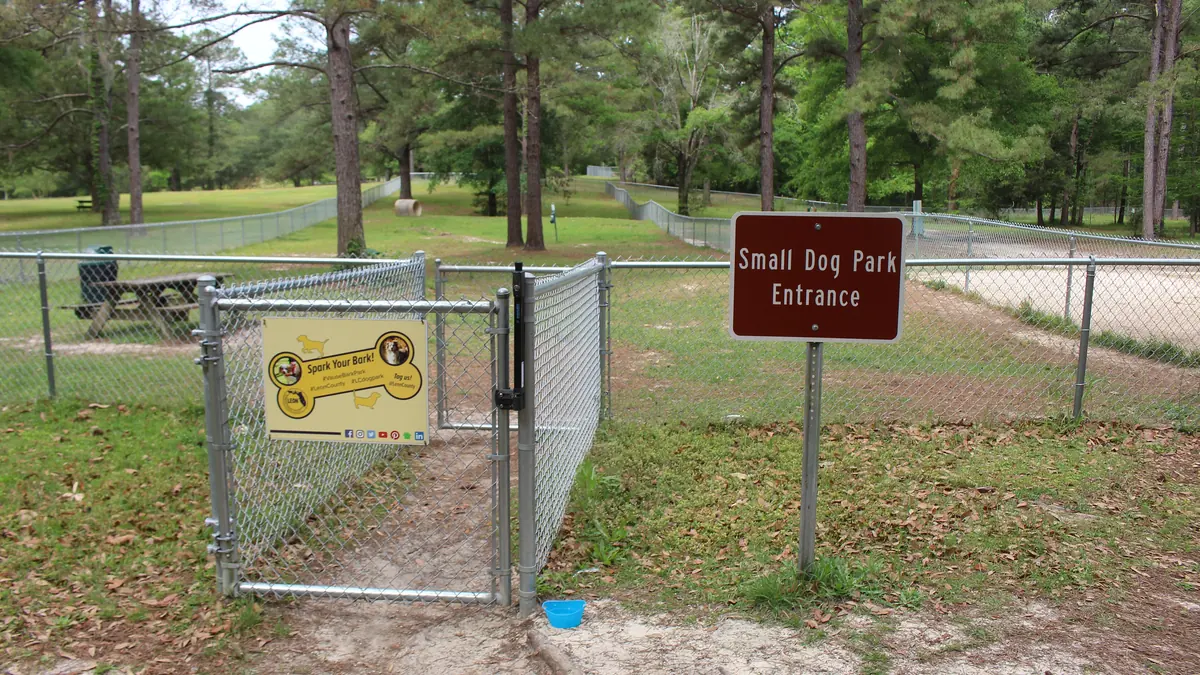
Small dogs can enjoy the dog park, but they're safest in the small-dog area when the park has one. Even friendly big dogs can hurt a small dog by accident with a paw or a body slam, and in rare cases a big dog's chase instinct can switch on when a small dog runs and squeals. If there's no small-dog area, go at quiet times, watch the mix of dogs before entering, and leave if play gets rough.
In this guide
- Why do dog parks have separate small-dog areas?
- What weight limit do small-dog areas use?
- When should a small dog use the big-dog area?
- What signs mean my small dog isn't having fun?
- Should I pick up my small dog when a big dog comes over?
- How can I keep my small dog safe at the park?
- Which injuries are small dogs more prone to?
- Why does my small dog bark or snap at big dogs?
- Is the dog park a good idea for every small dog?
- What else should small-dog owners know?
- Frequently asked questions
Small dogs aren't fragile, but the math is simple: a 70-pound dog playing at full speed with a 10-pound dog doesn't need to be aggressive to cause an injury.
Why do dog parks have separate small-dog areas?
- Size mismatch. Collisions and rough play that are fine between two big dogs can injure a small one.
- Predatory drift. Behaviorists use this term for when a larger dog's play turns into a chase-and-grab, often triggered by a small dog running away and yelping. It's rare, but it happens fast.
- Different play styles. Many small dogs prefer chase and sniffing over wrestling.
Parks usually post a weight limit for the small-dog side at the gate. Read it and respect it.
What weight limit do small-dog areas use?
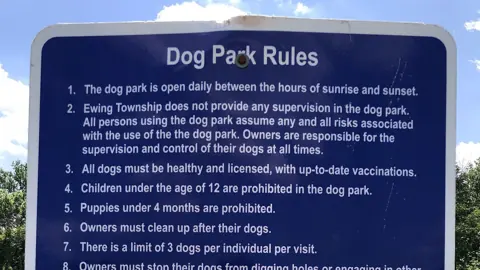
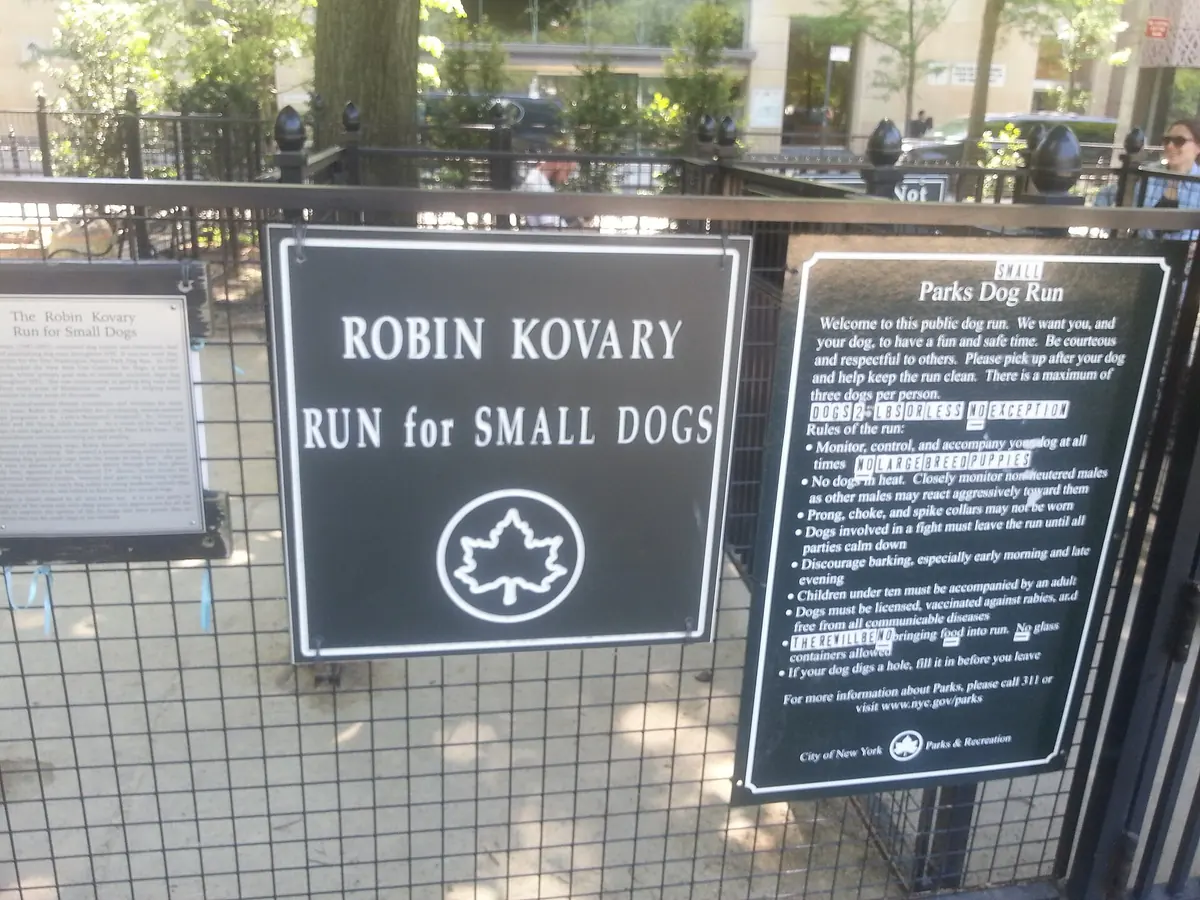
Usually 25 or 30 pounds. In the park records we compiled for our city guides, Dallas marks its small-dog sections as 0 to 30 pounds, a Fort Worth park lists small dogs as under 30 pounds, and Forest Park's Barking Lot in Queens, New York, allows only dogs 25 pounds and under on its small side. The posted number at the gate is the rule for that park.
Two situations cause most of the arguments. A gentle 40-pound dog still belongs on the big side, because the limit is about size and momentum, not temperament. And a big-breed puppy that is under the limit today may be welcome for a few weeks, but it grows fast and plays rough, so move it over before the small dogs' owners have to ask.
When should a small dog use the big-dog area?
Some small dogs love big-dog play and do well with dogs they know. It can work when:
- the park is quiet and you know the dogs there;
- the big dogs play gently and take breaks;
- your dog is confident and recovers quickly from bumps.
Leave right away if a group of dogs starts chasing your dog, if your dog hides or if big dogs keep pinning it.
What signs mean my small dog isn't having fun?
- Hiding under benches or behind your legs
- Tail tucked, ears back, trying to leave
- Always the one being chased or pinned
- Snapping or growling at every dog that comes close
The full guide to reading play is in dog body language at the park.
Go to an emergency vet right away, even if you don't see much blood. Vets call this "big dog, little dog" trauma: a bite and shake can injure the chest, belly and spine under skin that looks almost normal. Small wounds on the surface can hide serious damage underneath, and fast treatment matters.
Should I pick up my small dog when a big dog comes over?
Usually not, unless there's real danger. Picking a dog up can make the big dog jump on you to reach it, and some small dogs feel trapped in your arms and snap. Calmly walk away or call your dog to you. If a fight starts, don't reach in with your hands; see how to break up a dog fight.
How can I keep my small dog safe at the park?
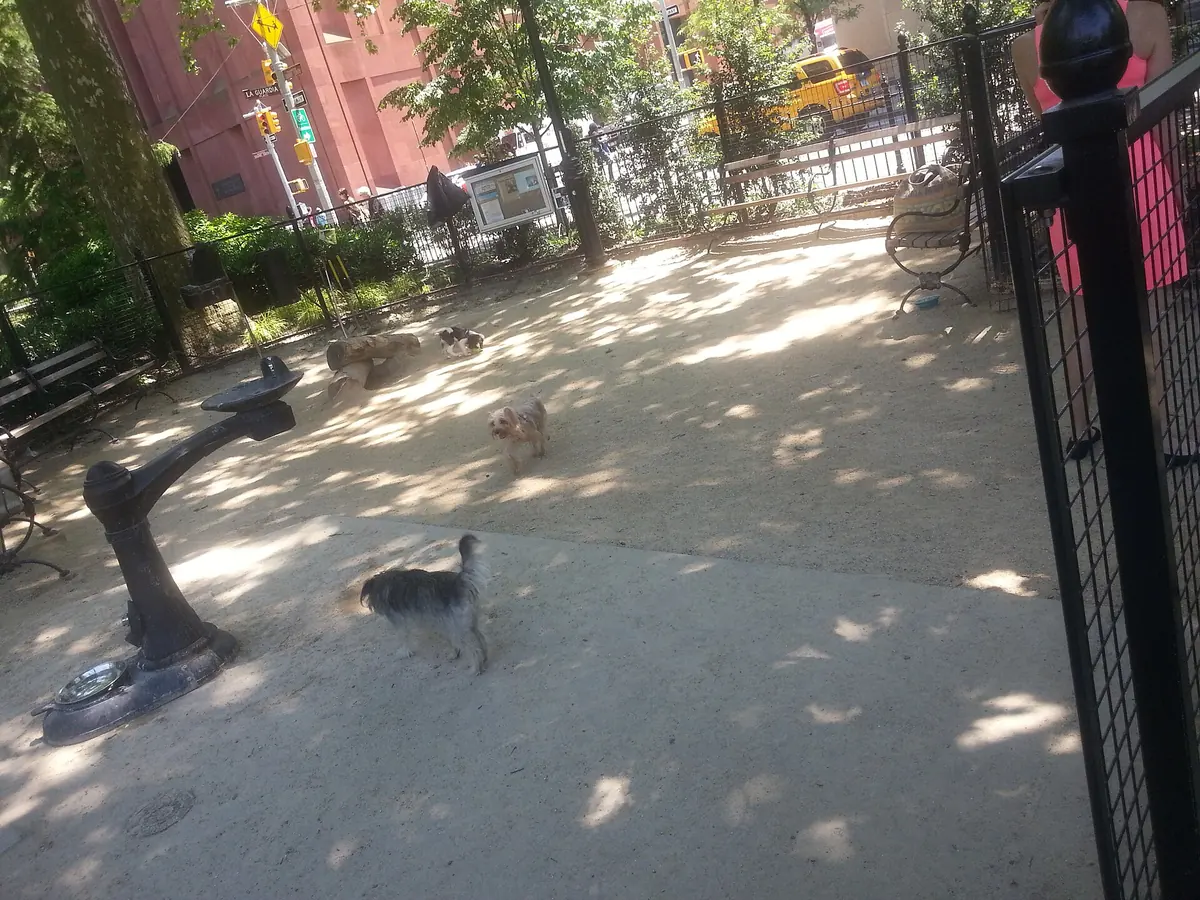
- Look through the fence for a minute before you go in: how many dogs, what sizes, how rough is the play?
- Go at quiet times, like weekday mornings, until you know the regulars.
- Stay close and keep moving with your dog instead of sitting on a far bench.
- Avoid the gate area, where excited dogs crowd new arrivals.
- Practice a fast recall, so your dog comes to you when a group starts running.
- Leave as soon as a bigger dog fixates on your dog: stalking, staring or chasing it again and again.
Which injuries are small dogs more prone to?
Some toy and small breeds have joint and airway weak spots that rough play can aggravate. Kneecaps that slip out of place, called patellar luxation, are common in small breeds, and sudden twists and jumps can make them worse. Collapsing trachea, a weak windpipe seen in breeds like Yorkies, Pomeranians and toy poodles, is why vets recommend a harness rather than a collar for leash walks. If your small dog has either condition, ask your vet how much running and wrestling is safe before you choose the park over a calmer play date.
Why does my small dog bark or snap at big dogs?
Usually fear, not attitude. A small dog that gets stepped on, chased or loomed over learns that big dogs are a threat, and barking or snapping is how it asks them to back off. It can look funny, but it can also provoke the big dog. Give your dog more distance, reward it for calmly looking at bigger dogs from far away, and keep visits short. If the reactions are getting stronger, a certified trainer can build a plan before a bad moment happens.
Is the dog park a good idea for every small dog?
No. Very small breeds, puppies, senior dogs and anxious dogs may be happier with a play date with one known dog. Puppies have their own rules; see can puppies go to the dog park? and the checklist in is your dog ready for the dog park?
What else should small-dog owners know?
- Weather. Small dogs lose heat faster in winter; see cold weather safety for dogs.
- Wildlife. In some cities, coyotes see small dogs as prey. See coyotes and dogs in US cities.
- Harness. A harness is safer than a collar for a small dog on leash, but take it off or keep it snug in the park so other dogs can't catch a tooth in it.
Frequently asked questions
Should small dogs use the small-dog area?
Yes, when the park has one. It reduces the risk of accidental injuries from big dogs.
What is predatory drift?
When a bigger dog's play turns into a chase-and-grab, often triggered by a small dog running and yelping. It's rare but serious.
What is the weight limit for small-dog areas?
It varies by park and is posted at the gate. Most limits we've seen are 25 or 30 pounds.
Should I pick up my small dog at the dog park?
Usually not; it can make big dogs jump on you. Calmly walk away or call your dog, and leave if play gets rough.
What should I do if a big dog bites my small dog?
Separate them without reaching into the fight, then go to an emergency vet right away, even if the wound looks small. Bite-and-shake injuries can be much worse under the skin.
Can small and big dogs play together?
Some can, especially dogs that know each other and play gently with breaks. Watch closely.
Sources: ASPCA, resources on dog play and aggression; behavior literature on predatory drift in dog play groups (including Dogs Playing for Life and shelter play-group guidance); posted rules of city dog parks compiled in our city guides. This guide is general information; for a dog with fear or aggression problems, talk to a veterinarian or a certified behavior professional.