Give the guest a room the dog cannot enter, and give the dog a place to settle that is not the front door, before anyone arrives. The ASPCA's plan for greeting barking is a low-key sit and stay, or a spot away from the door, instead of a face-to-face hello the moment the bell rings.
In this guide
Fear of dogs is common, and it is not an insult to your dog. A guest who is afraid does not get braver because the dog is friendly. They get braver when the dog is predictable, leashed or behind a door, and when nobody tells them to "just let him sniff you." You are the host of both the person and the animal. The plan below is the version that lets a scared guest stay for the meal.
What do you decide before they park?
Ask one direct question when you invite them: do you want the dog in the room, behind a gate, or out of the house for the visit? Offer the options so they do not have to confess a fear to a group text. Then do the thing they picked, even if you think your dog is easy.
- A closed room or a crate that the guest will not need to walk through.
- A baby gate or a closed hallway so the bathroom route is dog-free.
- A leash hung by the door, already clipped to a collar that is not a choke chain.
- A stuffed food toy or a chew the dog already likes, saved for the arrival.
- One person assigned to the dog for the first 15 minutes. That person is not also carrying coats and pouring drinks.
- A backup: a walk around the block, or a quick trip to a sitter, if the guest's answer was "I can't be in the house with a dog."
The guest's answer outranks your dog's reputation. "He's friendly" is a description of the dog, not a plan for the person. Write the plan down if more than one adult in the house will touch the door. Two people with two plans is how the dog ends up in the guest's lap.
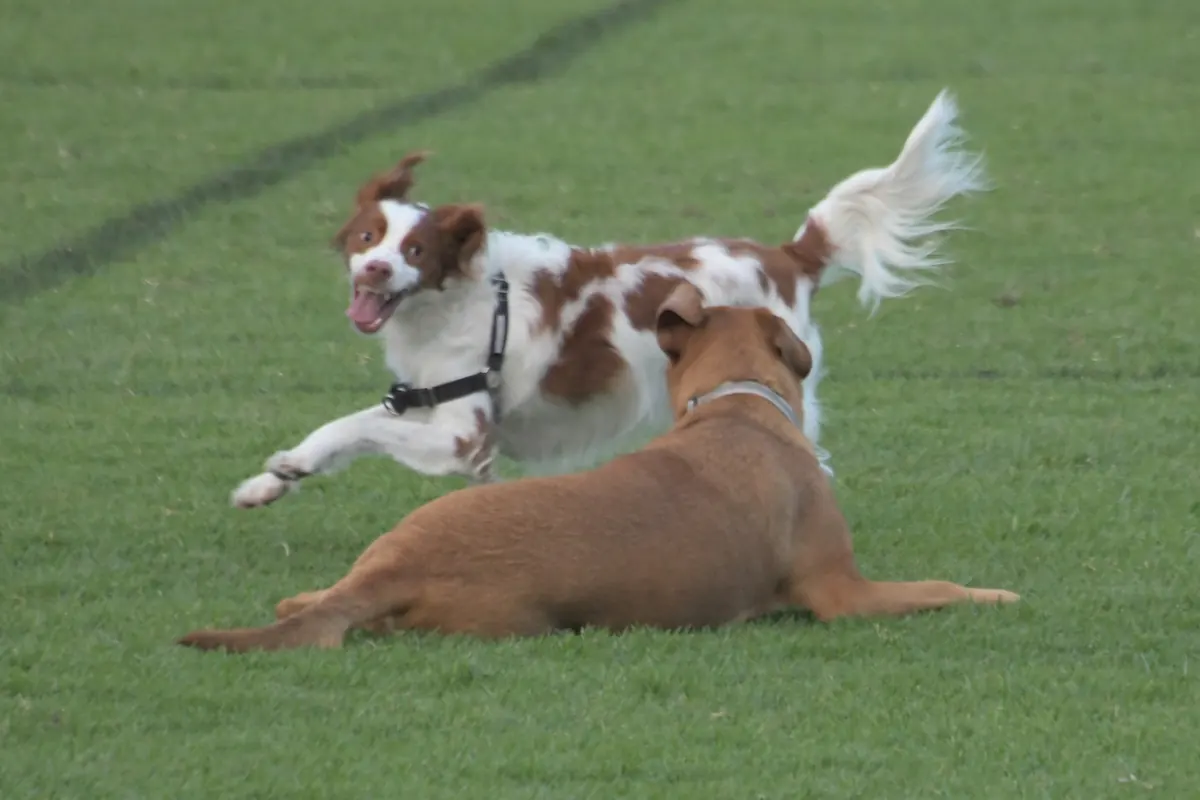
Where should the dog be when the bell rings?
Not at the door. The ASPCA's page on barking says greeting barking comes with a loose body, a wag and often a whine, and the fix it recommends is a sit and stay you taught before any guest existed, so the dog has a job instead of a bark. The same page's "go to your spot" sequence puts that job at least about eight feet from the door, still in sight: a crate, a rug, the top of a short stair, a corner of the next room.
Practice the spot without guests until the dog can hold it while you open the door and pretend to talk to someone. The ASPCA builds that skill in small steps: throw a treat to the spot, add a sit, add a short stay, then walk toward the door, then have a friend repeat mock visits. A holiday arrival is the test, not the first lesson. If you have not trained the spot, use management instead of a brand-new cue under pressure. Management means the dog is behind a closed door or on a leash in another room before the guest knocks. You can train the pretty version in January.
The related door plan, with more detail on the bark itself, is in barking at guests. This page is the host's floor plan. That page is the training. Use both if the dog already rehearses a doorway explosion every time family visits.
How do you introduce them if the guest is willing?
Only if they said yes to sharing the room. Then keep the first meeting boring.
- Dog on leash, sitting or standing beside you, not rushing the guest's knees.
- Guest seated, not standing over the dog, and not reaching over the dog's head. A hand held low, palm up, is easier to refuse. Tell the guest they can ignore the dog. Ignoring is a complete interaction.
- No forced sniff. If the guest wants distance, you create distance. The leash is how.
- Thirty seconds of calm, then the dog goes back to the spot with the food toy. End the meeting while it is still easy, the same way you would end an on-leash hello. See should dogs greet on leash.
- If the guest freezes, cries, or asks you to remove the dog, you remove the dog. You do not negotiate in front of them.
Children who are afraid need the same script, plus a parent who is not joking about it. Do not have other kids drag a scared child toward the dog to prove the dog is nice. That lesson sticks as fear. A scared child can eat in the dog-free room and join the table later, or the dog can be walked during the meal. Either one is a successful visit.
What if you also have guests who want the dog out?
Split the house by time, not by debate. Dog in the room for the half hour when the dog people have arrived and the afraid guest has not. Dog on the spot or behind the gate from the moment the afraid guest's car is in the driveway until that guest leaves, or until they ask for the dog. Do not poll the table. You already asked the person whose fear it is.
Food on the table is a second problem. A dog that counter-surfs will undo a careful introduction in one jump. Feed the dog before guests arrive, clear the coffee table, and use the "leave it" skill if you have it. The training version is in how to teach leave it. If you do not have the skill yet, the management version is a closed door during dinner. Guests who are afraid are also guests who will not want a dog's head on their plate, even if they were starting to relax.
Holding the leash feels like control to a handler and like a trap to someone who does not want the dog near them. You hold the leash, or the dog is behind a door. The guest's job is to be a guest.
What do you say, in one sentence?
Tell the guest the plan when they walk in, so they are not scanning the hall. "She's behind the gate in the kitchen, and she stays there unless you tell me you want to say hello." That sentence does three things. It names the location. It names who decides. It removes the surprise. Do not add "but she's really sweet" onto the end. The extra clause asks them to argue with their own fear.
If another guest says "you're being silly, come pet him," you stop that guest. The host's job is the boundary. A joke at the afraid person's expense will end the visit faster than the dog will. Thank them later, in private, for telling you. People who were mocked at one house do not warn the next house, and then the dog meets a frozen guest with no plan.
When is the dog better off somewhere else?
When the guest said they cannot share a house with a dog, when the dog guards the door or the couch and you cannot reliably move him, when small children who are afraid will be on the floor the entire time, or when you do not have a room with a door. A two-hour stay with a sitter, a trusted friend, or a daycare you already use is a normal hosting tool. It is not a confession that your dog is bad. Boarding versus a sitter, including the questions to ask before a holiday, is in boarding versus a pet sitter.
If the dog has bitten when startled by a stranger, this is not a dinner experiment. That history means a professional trainer or a veterinary behaviorist helps you build a plan, and the guest comes on a day the dog is not home. The ASPCA's barking guide points people to certified trainers when the quick steps fail. Use that door before you use the front door.
Frequently asked questions
How do I host someone who is afraid of my dog?
Ask whether they want the dog in the room, behind a gate, or out of the house. Put the dog on a trained spot or behind a door before they arrive. A leashed hello happens only if they ask for it.
Should I let the dog sniff them so they see he's friendly?
No, unless they asked. The ASPCA's greeting advice is a calm sit, not a nose in a stranger's lap. Forced contact makes the next visit harder.
What if my dog barks when they knock?
That is ordinary greeting or alarm barking. Teach a spot away from the door on quiet days, using the ASPCA sequence, and manage with a closed door until the cue is solid. The bark guide linked above is the longer version.
Can the dog sleep in the guest room?
Only if that guest invited the dog. Default is no. The guest room is the dog-free room if you have nothing else to offer.
What if I disagree with their fear?
You can disagree and still follow the plan. The visit works when the person feels safe. Your opinion of the dog does not change their body.
Sources: ASPCA, Barking (aspca.org/pet-care/dog-care/common-dog-behavior-issues/barking), especially greeting barking, the sit-stay at the door, and the "go to your spot" steps, read November 2026; ASPCA Pro handout on leash reactivity, for why a head-on hello under pressure backfires. This is a hosting plan built from that guidance, not a treatment plan for a phobia. A person who wants help with a severe fear should talk to a clinician they choose. A dog with a bite history needs a qualified trainer or veterinary behaviorist before the next gathering.