Teach "leave it" by rewarding the dog for backing off a treat, and never by letting the dog have the thing you just forbid. The American Kennel Club's training article says the payoff has to be a different, better treat from your other hand, because the point is that some items, like dropped medication, are never up for grabs.
In this guide
- What does the cue actually mean?
- How do you start, before you ever say the words?
- How do you move the treat to the floor?
- How do you take it on a walk and into a party?
- What does a busy week of practice look like?
- Where does this fail at the dog park?
- When should you get a trainer?
- Frequently asked questions
Holiday weeks are when the cue earns its keep: a plate on a low table, a gift on the floor, a guest the dog should not climb. The AKC says to have the skill in place before the house fills up. A new cue shouted over a football game is noise. The steps below follow the AKC's order, starting with an easy hand and ending on a walk.
What does the cue actually mean?
It means "disengage from that." It does not mean "wait, then eat it when I look away." The AKC is explicit that you should not use the forbidden item as the reward. If the dog learns that staring at the dropped pill eventually produces the pill, you have taught the opposite of the cue. Pay from a pocket or the other hand, and make that pay better than whatever is on the floor.
The ASPCA uses the same cue when a dog is about to mount another dog: say "leave it" as the dog lines up, reward the disengage, and end the session if the dog ignores you. That park version only works if the kitchen version already works. The mounting page is linked from why dogs hump at the dog park.
How do you start, before you ever say the words?
The AKC's impulse-control version and its holiday version start the same way. Do this in a quiet room, with tiny treats, for a few minutes. Stop while the dog is still winning.
- Put a treat in a closed fist and hold it where the dog can smell it. Let the dog lick and paw. The moment the dog backs off or looks away, mark it with "yes" or a click, and pay with a treat from the other hand.
- Repeat until backing off is the dog's first idea, not the tenth.
- Open the hand so the dog can see the treat. If the dog dives, close the fist. If the dog stays back, pay from the other hand. The open hand is harder. Do not skip the closed fist to look advanced.
- Only when the open hand is boring do you move food to the floor.
The AKC says not to add the words "leave it" until the dog already understands the game. A cue attached to confusion becomes a cue the dog ignores, which is the worst possible holiday outcome. Practice the behavior first. Name it second.
How do you move the treat to the floor?
This is the AKC's floor sequence, in their order:
- Put a treat on the floor and cover it with your hand. Let the dog try. The instant the dog stops trying, mark and pay with a better treat from your pocket or the other hand. Do not hand over the floor treat.
- When that is reliable, start lifting your hand, ready to cover the treat again if the dog goes for it. Mark a look away, a lean back, or a loss of interest. The dog should not win the floor treat. Ever, in this exercise.
- Clip a leash on. Stand up and use your foot to cover food you drop. The leash stops the dog getting a crumb you kick away. Mark and pay the same way.
- When the dog leaves dropped food alone on its own, add the words. Say "leave it" before you drop or reveal the food. Mark and pay from the other hand. After many repetitions the words predict the behavior you already built.
If the dog grabs the food, you moved too fast. Cover it, say nothing sharp, and go back to the closed fist for a few reps. The AKC's standard is success, not a test of how much temptation the dog can fail.
How do you take it on a walk and into a party?
The AKC's real-world steps start with a setup, not with a sandwich on a sidewalk you did not expect.
- With the dog out of the room, place low-value treats in a row, several feet apart. Bring the leashed dog in, say "leave it," and walk past. At each treat, mark and pay with something better. If the dog dives, cover the treat with your foot and use the leash. Do not try the whole row on the first pass.
- When single treats are easy, walk the whole row after one cue. Pay with something the dog loves, such as a short game of tug, not only another crumb.
- Repeat outside, in the yard and on the sidewalk. A cue that lives only in the kitchen dies in the driveway.
- Swap the food for a toy the dog wants. Then for the objects that show up in your real week.
The AKC's holiday article names the objects: appetizers on a side table, a gift on the floor, and guests the dog should not mob. Practice those with a person the dog already knows, at a boring time of day, before the actual party. The guest plan that goes with a dog who also barks is in barking at guests. The house rules for someone else's Thanksgiving are in bringing your dog to Thanksgiving.
The AKC uses the example of dropped medication as the reason the floor item is never the reward. Do not put medicine, cleaners or a stranger's food on the floor to "see if it worked." Use a boring dog treat until the cue is dull.
What does a busy week of practice look like?
Short sessions, under five minutes, a couple of times a day. Monday is the closed fist. Tuesday is the open hand. Wednesday is food under your foot on a leash. Thursday you add the words, still at home. Friday you lay out a row of three treats. The weekend you try the yard. If a day goes badly, repeat the day before. The AKC's urban-skills article says to start at home with few distractions and only then move to walks, where trash and other dogs are the point of the cue.
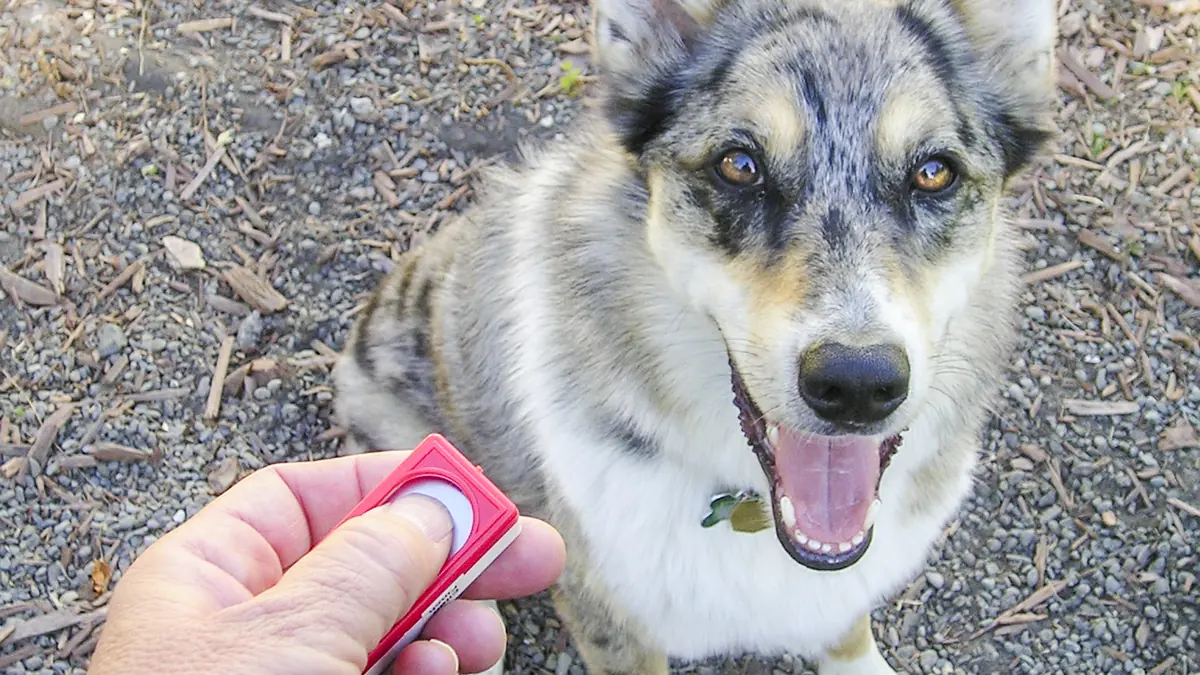
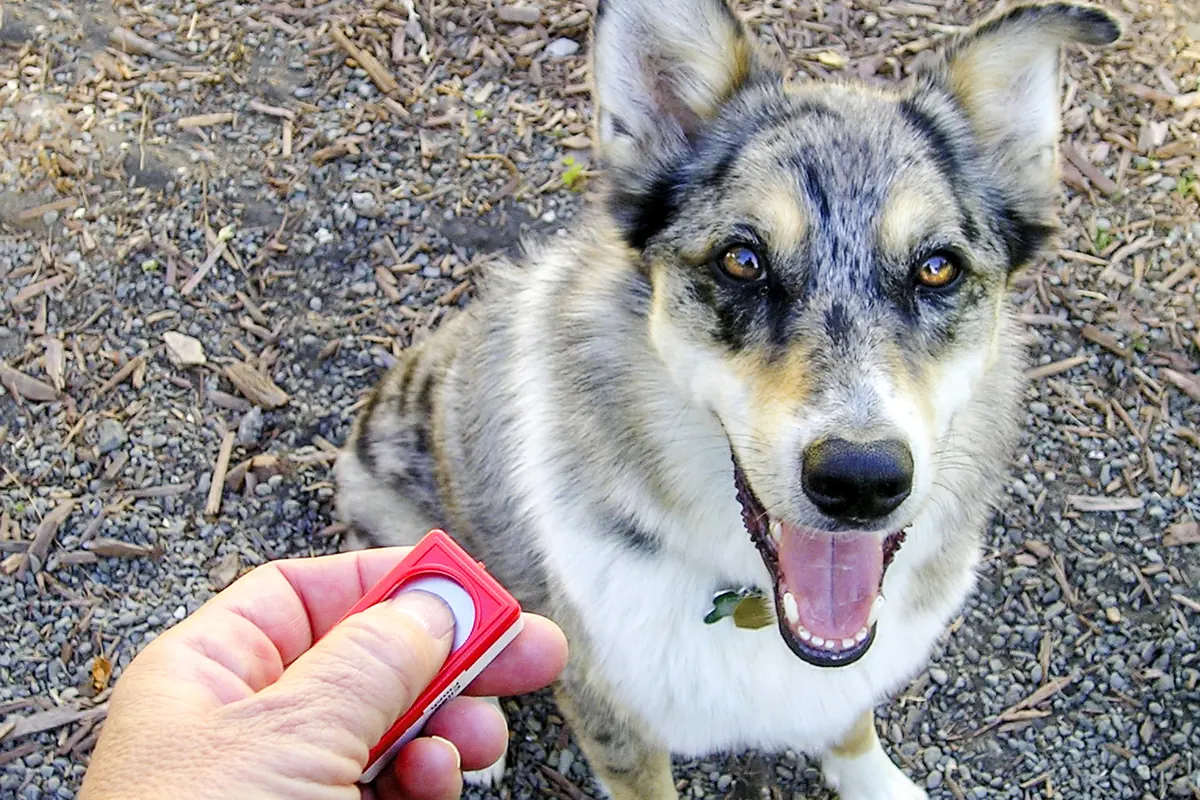
A clicker, like the one in the photo, is optional. It marks the exact instant the dog looks away, which is useful if your "yes" is late. The food from the other hand is not optional. Marker without pay is just a noise.
Where does this fail at the dog park?
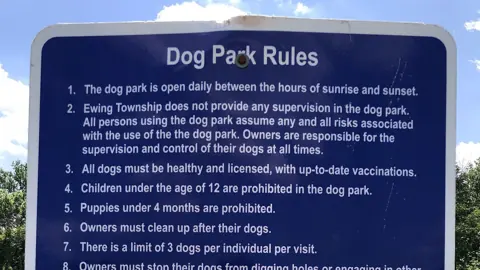
In a crowd, with a dog that is already over threshold, and in a park that bans treats. Some city rules tell you to leave food and toys outside the fence because they start fights. If that is your park, you cannot sprinkle cheese in the middle of a scuffle. Use "leave it" to call the dog off another dog only if you have practiced it, and if the dog ignores it, leave. That is the ASPCA's instruction, and it matches the AKC's idea that a failed rep means you make the exercise easier, not louder. Park rules that ban food are part of dog park etiquette and the city comparison in dog park rules by city.
A turkey trot is the other crowded test. Cups and snacks on the ground, kids at knee height, a short leash. If "leave it" is new this week, do not debut it at the start line. The race rules are in turkey trots that allow dogs.
When should you get a trainer?
When the dog guard-growls over the fist, when the grab is so fast you cannot cover the item, or when the thing the dog will not leave is another dog or a child and the rehearsal at home is not changing the real moment. A certified trainer can see the timing. This article can only give you the order the AKC published. It cannot watch your hand.
Frequently asked questions
How do you teach a dog "leave it"?
Start with a treat in a closed fist. When the dog backs off, pay from the other hand. Open the hand, then use the floor, and only then add the words. The AKC says the forbidden item is never the reward.
When do I say the words?
After the dog already leaves the food alone. The AKC attaches the cue once the idea is clear, usually just before you drop or reveal the food.
What if my dog eats the treat anyway?
You went too fast. Cover what is left, go back to an easier step, and do not scold your way through it. A successful easier rep teaches more than a failed hard one.
Can I use this at a party?
Yes, after it works at home. The AKC lists appetizers, gifts and guests as the reasons to have the cue before the holidays. Practice with a calm helper first.
Does this work at the dog park?
Only if the dog can do it in a quiet room, and only if you can pay the dog without breaking a park rule that bans food. If the dog ignores the cue, end the visit.
Sources: American Kennel Club, "How to Teach Your Dog the 'Leave It' Command" (akc.org/expert-advice/training/learning-the-leave-it-command/); AKC, "Teaching Your Dog Self-Control," leave-it steps; AKC, "Important Skills to Teach Your Dog Before the Holidays"; AKC, "Urban Dog Skills," leave-it steps. ASPCA, "Mounting and Masturbation," for using "leave it" when a dog is about to mount. Read Nov. 2026. This is a training plan from those pages, not a session with your dog.