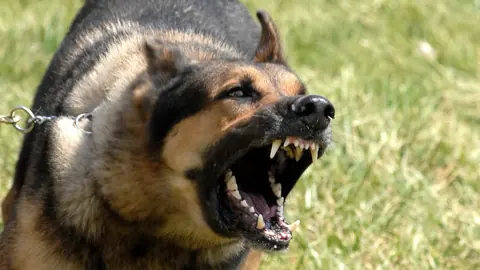
Dogs hump at the dog park for more than one reason, and you should step in as soon as the other dog is annoyed, the humping will not stop, or a fight is the likely next second. The ASPCA says mounting is ordinary canine behavior, that many dogs dislike being humped, and that those dogs may start a fight.
In this guide
The park makes it look like a sex problem because that is the joke everyone makes. The ASPCA's account is wider. Mounting can be sexual, especially around a dog in heat, and it can also show up with stress, excitement or a habit that paid off before. Neutering can lower sexual motivation. It does not delete a habit the dog has already practiced on every visit. Your job at the park is not to diagnose the mood. It is to stop the moment the other dog, or the other owner, is no longer in the game.
Why does it happen in a crowd?
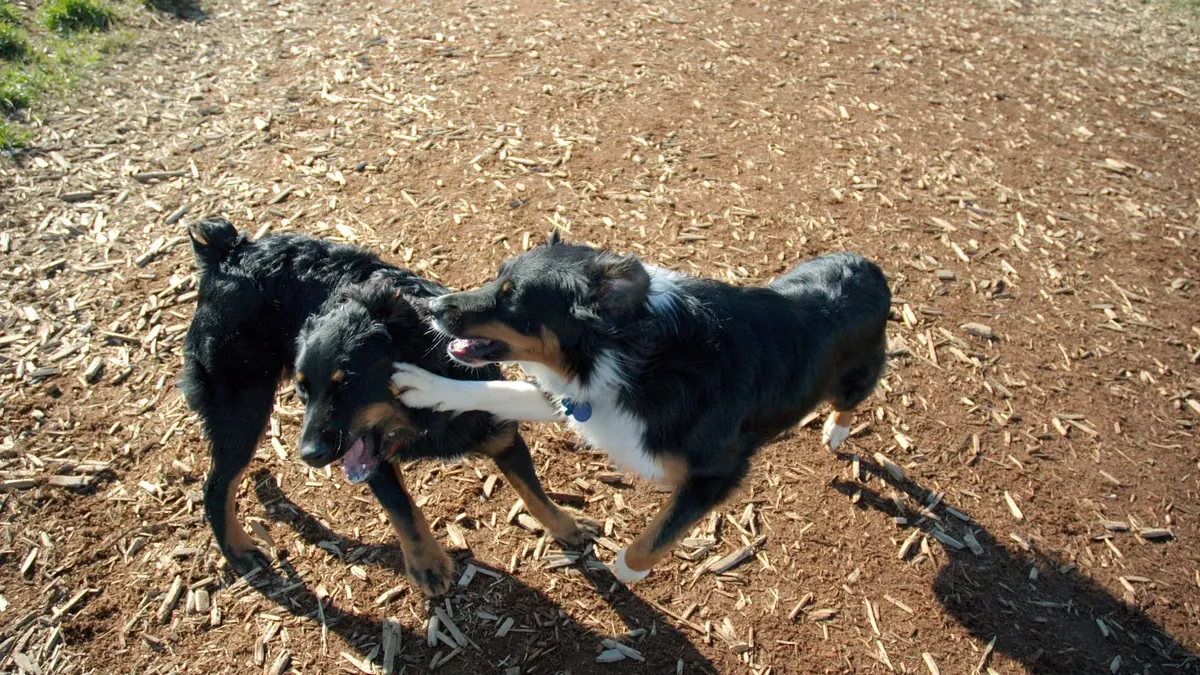
The ASPCA describes a wind-up you can see: the dog sidles up, pants, licks, whines, paws or rubs, and then mounts. At a dog park that sequence hides inside ordinary play. Two dogs are chasing, one gets over-aroused, and the chase turns into a clasp. Intact dogs, and dogs around a female in heat, have a clearer sexual reason, which is one reason parks ban dogs in heat in the first place. Spayed and neutered dogs still do it. The ASPCA says neutering reduces the sexual push and does not always stop the behavior, and that the same is true of spaying a female who mounts when she is in season or around another female in season.
Stress is the version people miss. The ASPCA notes dogs that mount when a situation is hard, such as greeting new people, and it recommends avoiding that situation or making it easier, not just scolding the dog in the middle of it. A dog park at peak hour is a hard situation for a lot of dogs. If your dog only humps in the first three minutes at the gate, the problem may be the arrival, not a permanent character flaw. Shorten the arrival. Stand away from the entrance. Leave if the third minute looks like the first.
When can you let it go?
The ASPCA draws a practical line. If it is infrequent, on the order of once or twice a day at most, and it is not bothering you, other people or other dogs, you do not have to stop it. At a dog park that second test fails fast. Another dog is involved, and that dog did not agree to be a piece of furniture. "Infrequent at home" and "fine at the park" are not the same sentence.
| What you see | What to do |
|---|---|
| A brief clasp, both dogs loose and bouncy, and it ends on its own | Watch. Be close enough to interrupt. Do not laugh and film it. |
| The other dog stiffens, tucks, snaps, or tries to leave | End it now. Call your dog, leash, and move away. |
| Your dog will not release after you ask | Leash and leave the park for the day. Practice the cue at home. |
| It happens every visit, in the first minutes | Stop using peak hour. Work on "leave it" without an audience. |
| People, kids or a person's leg are the target | That is a management problem, not play. Remove the dog. |
The other owner's face is data. If they are not laughing, the visit is over, even if you think the dogs are fine.
How do you interrupt without starting a fight?
The ASPCA's method is a cheerful redirect, done early. Toss a toy, start a game, offer a chew, or ask for a cue the dog already likes, such as sit. The point is to catch the wind-up, not to tackle a dog that is already clasped on. If you taught "leave it," say it when you see the setup, and pay the dog for doing it. If the dog ignores you, the ASPCA says to end the play session and go practice without other dogs.
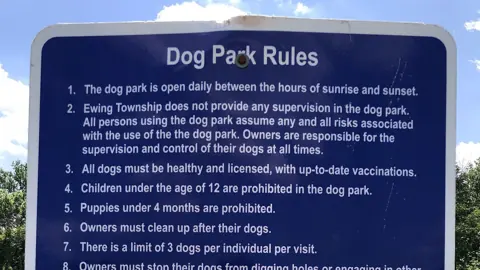
Do not grab a collar in the middle of two upset dogs if you can avoid it. A dog that is aroused can bite the hand that belongs to its own person. A leash clipped on before you need it, which you can step on, is calmer than a dive. Many parks already tell you to carry the leash for this reason. Ours on city rules is dog park rules by city.
For mounting aimed at people, the ASPCA suggests making your body a bad platform: push the dog off, turn away, sit down, or otherwise remove the surface. If that fails, a short time-out in a boring room, one to three minutes, with no speech and no toys, then back out as if nothing happened. Repeating the time-out teaches the dog to dodge you, which is why they suggest a light house line you can pick up, and why you take that line off when you cannot watch. A dog park is a bad place to invent that protocol. If your dog mounts people, do not bring the dog to a park full of strangers' knees until the house version works.
The ASPCA warns that many dogs hate being mounted and may fight. Interrupt early, or leave. Do not wait to see if they "work it out."
Does neutering fix it?
Not by itself. The ASPCA says an intact male may mount less after neutering because sexual motivation drops, especially if a female in heat was the trigger, and that an intact female may mount less after spaying if her mounting was tied to a heat cycle. It also says the behavior can continue because it was learned. Surgery is a conversation with your veterinarian about your dog, not a park trick, and this page is not a medical recommendation. What you can do this weekend is management: no dogs in heat at the park, shorter visits, and a cue that means "unhook."
The cue the ASPCA names for this is "leave it." Teach it at home with boring rewards, then use it at the moment the dog lines up on a friend. The steps, including the holiday version where the distraction is a plate, are in how to teach leave it. If the dog cannot perform it in the yard, the dog cannot perform it at the park.
What should you practice before the next visit?
- A recall that works when the dog is having fun, not only when the dog is bored.
- "Leave it," paid from your hand, so stopping is worth more than the clasp.
- A toy or a scatter of food you can use as the redirect the ASPCA describes. Some parks ban food and toys inside the fence. If yours does, the redirect is your voice and then the exit, not a handful of treats on the ground.
- A habit of standing near your dog for the first five minutes, when arousal is highest.
- An agreement with yourself that one ignored cue means you leave. Negotiating with a dog in a crowd teaches the dog that the cue is optional.
Read the other dogs, not just yours. A play bow and a loose body are different from a stiff stand and a hard eye. That contrast is the whole subject of body language at the park. If you are unsure, leave. A boring afternoon is cheaper than a bite report.
Kids change the math. A child running and squealing can be the thing a dog mounts or chases. If children are in the park, and your dog is the one getting silly, you are the person who should go. Parks that ban small children from the off-leash pen exist because this mix goes wrong. Follow the posted age rule even when other people do not.
What if it is every single visit?
Then the park is a bad classroom. The ASPCA's fallback is to end play and rehearse the skill with no other dogs around, and to build games with you, such as tug and fetch, so the interesting thing in the room is not another dog's hindquarters. A dog that rehearses the habit thirty times a week will not drop it because you said "no" once. Cut the visits. Use a sniff walk. Try again when "leave it" works with a friend in a yard, which is a smaller version of the park.
If the mounting comes with growling, pinning, or a dog that cannot be called off people, stop using shared off-leash spaces and get a qualified trainer or a veterinary behaviorist involved. That is a step up from a blog. The ASPCA is the right first read. A professional who can see your dog is the right second read. We have not met your dog, and we are not going to pretend a paragraph replaces that.
Frequently asked questions
Why do dogs hump at the dog park?
The ASPCA treats mounting as normal behavior with more than one cause, including sexual motivation and habit. At the park it often shows up when play gets too exciting. Dogs in heat make it more likely, which is why parks send those dogs home.
When should I step in?
As soon as the other dog is unhappy, the clasp will not end, or a person is the target. The ASPCA says many dogs will fight if they are humped. A brief, mutual, self-ending moment is the only version to merely watch.
Will neutering stop it?
It can reduce sexual motivation, especially around a dog in heat. The ASPCA says it does not always stop mounting, because the behavior may already be a habit. Ask your own veterinarian before you book surgery for a park problem.
What cue should I use?
"Leave it," taught before you need it, then a reward when the dog disengages. If the dog ignores the cue, the ASPCA says to end the session.
Should I bring treats to interrupt?
Only if that park allows food. Some city rules ban treats inside the fence because they cause fights. If treats are banned, interrupt with your voice and leave.
Sources: ASPCA, "Mounting and Masturbation" (aspca.org/pet-care/dog-care/common-dog-behavior-issues/mounting-and-masturbation), including the infrequent-behavior line, the wind-up signs, the fight warning, the neuter limits, the "leave it" instruction, and the time-out steps for mounting people. Read Nov. 2026. This is general information about behavior, not a diagnosis of your dog.