You have to pick up dog poop because it carries parasites and bacteria that can infect other dogs and people, it washes into storm drains and pollutes local water, and in most cities leaving it is against the law. Roundworm and hookworm eggs, giardia cysts and parvovirus can stay in grass and soil long after the poop itself is gone. Picking it up right away, bagging it and throwing it in the trash is the whole fix.
In this guide
- What's actually in dog poop?
- Why is it a problem for water?
- Is it illegal not to pick up dog poop?
- Doesn't it just break down on its own?
- What's the right way to pick up and throw away dog poop?
- Are compostable dog poop bags better?
- What should I do with dog poop on a hike?
- What can I do about a park full of poop?
- What if my dog has diarrhea at the park?
- Frequently asked questions
"It's natural, it's fertilizer" is the most common excuse. Dog poop doesn't work like that. Dogs eat a high-protein diet, and their waste is full of germs that a lawn doesn't break down safely.
What's actually in dog poop?
| Germ | Who it can infect | Why it matters |
|---|---|---|
| Roundworms (Toxocara) | Dogs and people, especially children | Eggs can stay infective in soil for a long time |
| Hookworms | Dogs and people | Larvae in soil can enter through bare skin |
| Giardia | Mostly dogs | Cysts survive for months in wet, cool places |
| Parvovirus | Dogs, especially puppies | Very contagious, survives a long time outdoors |
| Salmonella, Campylobacter, E. coli | People and dogs | Cause stomach illness |
The CDC lists contact with soil contaminated by dog and cat feces as the main way people, often kids playing outside, pick up roundworms. Several of these germs are covered in our guides to giardia in dogs and dog park diseases and vaccines.
Children play on the ground, touch everything and put their hands in their mouths, which is how roundworm eggs from soil reach people. Keep dogs out of sandboxes and playgrounds, wash kids' hands after the park, and keep your own dog on the deworming or parasite-prevention schedule your vet recommends, so it isn't the one shedding eggs.
Why is it a problem for water?
Rain carries poop left on lawns, sidewalks and trails into storm drains. In most cities, storm drains go straight to creeks, rivers, lakes and the ocean, without treatment. The EPA lists pet waste among the sources of bacteria and nutrients in stormwater. Bacteria can close beaches and swimming areas, and the nutrients feed algae, including the kind that can be toxic. See toxic algae and dogs.
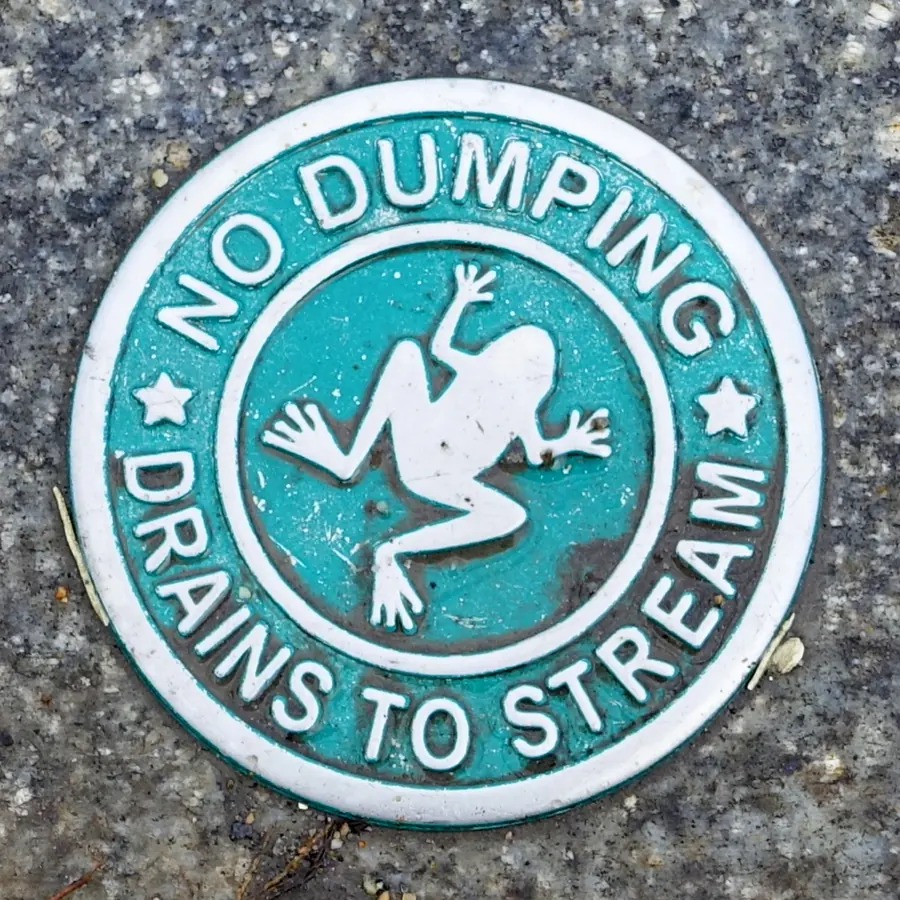
Look down at the next storm drain on your walk. Many cities stamp or tag them with "drains to creek," "drains to bay" or "drains to ocean." It's a quick reminder that the sidewalk and the beach are connected, and that a bag left on the curb is one heavy rain away from the water.
Is it illegal not to pick up dog poop?
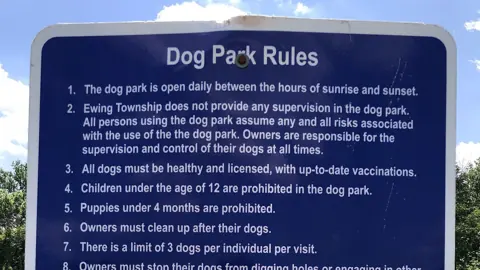
In most US cities, yes. New York City's "pooper scooper" law, passed in 1978, was one of the first and is still the best known. Fines vary by city. Dog parks add their own rules: picking up after your dog is one of the basic rules posted at the gate. See dog park etiquette and dog park rules in 20 US cities.
Doesn't it just break down on its own?
Slowly, and the germs don't go with it. The visible part can wash away in a few rains while parasite eggs stay in the soil. Leaving it in the woods on a trail has the same problem; the Leave No Trace principle is to pack it out or follow local rules for burying it.
What's the right way to pick up and throw away dog poop?
- Pick it up right away, while it's easy to find and before it gets stepped on.
- Use a bag, with your hand inside it like a glove.
- Tie the bag and put it in a trash can. Don't leave bags on the trail "for later."
- Don't put dog poop in a compost bin for food plants, or in the recycling.
- Wash or sanitize your hands.
Some cities allow flushing unbagged dog poop; check local rules before you do. Our list of what to bring to the dog park starts with bags for this reason.
Are compostable dog poop bags better?
Less than the label suggests. Most bags marked "compostable" are made to break down in industrial composting facilities, with high heat and controlled conditions. In a landfill, where most dog waste ends up, they behave a lot like any other bag. And home compost piles don't get hot enough to kill the parasites in dog poop anyway, so dog waste shouldn't go there.
That doesn't make the choice useless. A certified compostable bag is fine if your city has a pet waste or organics collection program that accepts it. Otherwise, the best bag is simply the one you always have with you. Be wary of vague claims like "eco" or "biodegradable"; California, for example, bans selling plastic products labeled "biodegradable," because the word promises more than the product does.
What should I do with dog poop on a hike?
Bag it and carry it out, even if it's a long trail. Leaving a tied bag by the path "to grab on the way back" is how so many end up hanging in bushes for months. A few habits make it easy:
- Bring more bags than you think you need; long hikes often mean two or three.
- Carry a small odor-proof pouch or a clip-on container so the bag can ride on your pack or leash.
- Pick it up even far from the trail; wildlife and other dogs find it, and rain carries it to water.
- Check the park's rules. Some backcountry areas allow burying pet waste in a small hole away from water; many don't, and national parks often require you to pack it out.
- Toss the bag in the first trash can at the trailhead, not in a vault toilet unless the sign says it's allowed.
What can I do about a park full of poop?
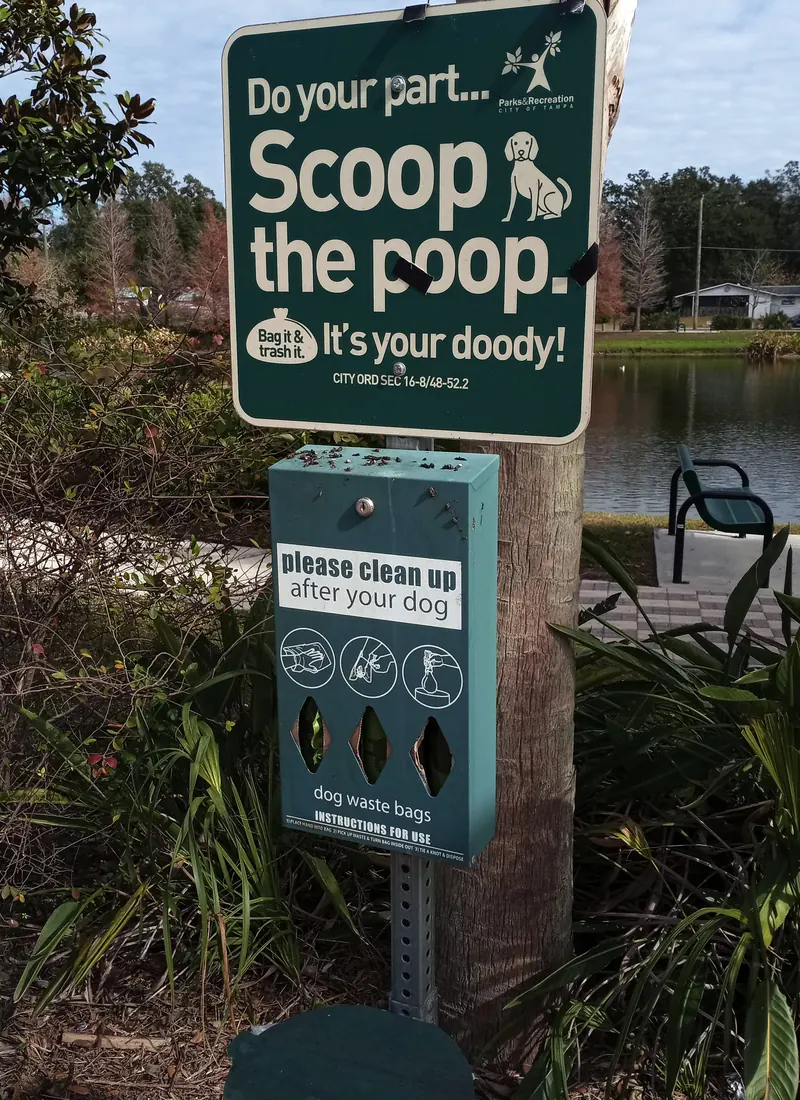
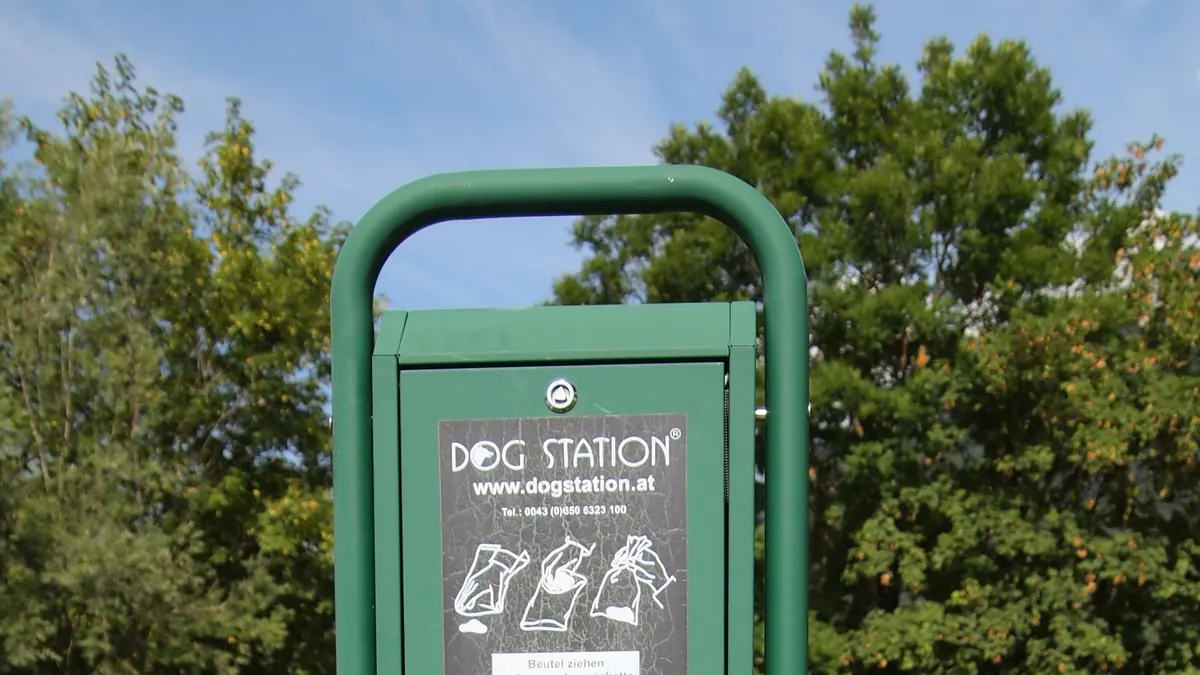
Report it to the parks department, often through your city's 311 line or app, and ask specifically for a bag dispenser and a trash can near the entrance. Those two things change behavior more than signs do. Many dog parks also have volunteer groups that run cleanup days; joining one is the quickest way to get to know the regulars and the people who make park decisions.
When you see someone miss their dog's poop, a friendly "Hey, want a bag?" works far better than a lecture. Most people simply didn't see it.
What if my dog has diarrhea at the park?
Pick up as much as you can, tell the park staff if there are any, and leave. A dog with diarrhea should stay home until it's better, because it may be shedding giardia or other germs. Talk to your vet if it lasts more than a day or two.
Frequently asked questions
Why is dog poop bad for the environment?
Rain carries it into storm drains and local water, adding bacteria and nutrients that can close beaches and feed algae blooms.
Can people get sick from dog poop?
Yes. Roundworms, hookworms, Salmonella and Campylobacter can all spread from dog feces to people, especially children.
Is dog poop good fertilizer?
No. Unlike cow manure, it carries parasites and bacteria that a lawn doesn't break down safely.
How long do parasite eggs survive in soil?
Some, like roundworm eggs, can stay infective in soil for a long time, which is why picking up right away matters.
Are compostable dog poop bags better for the environment?
Only if they go to an industrial composting or pet waste program that accepts them. In a landfill, they break down about as slowly as regular bags.
Can I flush dog poop?
Some cities allow flushing unbagged dog waste. Check your local rules; never flush the bag.
Sources: Centers for Disease Control and Prevention, pages on toxocariasis, hookworm and healthy pets (cdc.gov); U.S. Environmental Protection Agency, stormwater and nonpoint source pollution materials on pet waste (epa.gov); New York City pooper scooper law (1978); Leave No Trace Center for Outdoor Ethics, "Dispose of Waste Properly"; California Public Resources Code rules on "biodegradable" plastic labels. This guide is general information, not veterinary advice.