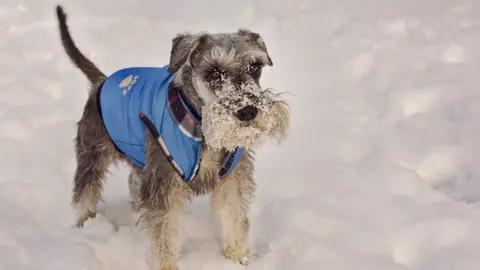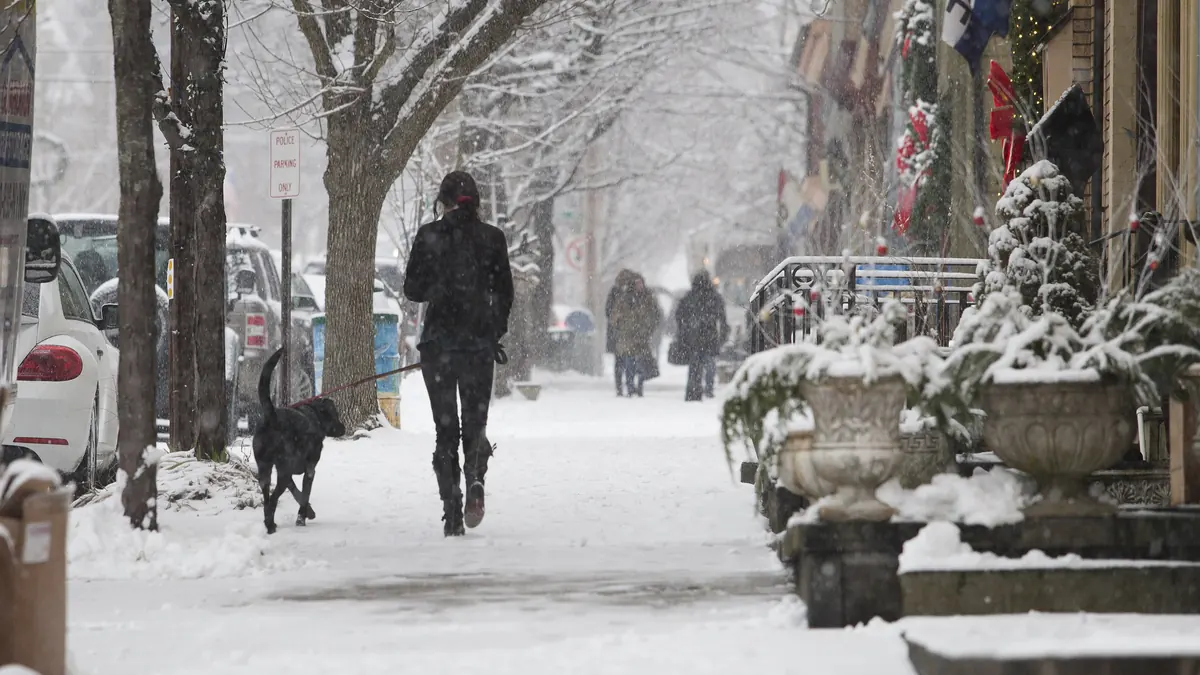
Make the first snow day a short leashed walk in a place the dog already knows, with a recall you have already paid for in dry weather, and skip the dog park until the dog will come back when snow is more interesting than you. Control is the fun. A dog that vanishes into a white field is not having a better time. It is unsupervised.
In this guide
Snow changes three things at once. It hides the holes and the curb. It makes other dogs and people look strange, so greetings get ruder. It gives a dog a reason to ignore a cue that worked on grass. None of that requires a medical lecture. It requires a plan that assumes the first session is practice, not a postcard. State leash laws do not take the winter off. A 6-foot leash is still the number in Michigan, Georgia, North Carolina and a long list of state parks.
Where should the first walk happen?
On your block, or on the same loop you used last week, in daylight, before the plow piles turn the street into a canyon. The dog is learning a surface, not a new neighborhood. A trailhead twenty minutes away adds a car, a parking lot full of other first-timers, and no easy retreat. Ten minutes outside the front door can be the whole lesson. You can do it twice if the first one goes well. You should not double it because the photos are pretty.
Leash on before the door opens. A dog that has never felt snow will often bolt, eat it, or spin. A fenced yard is a fine first surface if you have one, and it is still a leash or a long line you can hold, not a hope. An unfenced front yard that opens onto a plowed road is a car problem. Snowbanks hide the dog from drivers and hide the road from the dog.
What does "under control" mean on snow?
It means the dog is on a leash you can shorten, or inside a fence, and will turn toward you when you say its name and produce food. The ASPCA's work on frustration barking is the reason not to tie the dog to a post and film the zoomies. A dog restrained while it wants to chase snow, or other dogs, often gets louder, not calmer. Hold the leash and move with the dog, or give the dog a small fenced space and stay in it. Do not outsource the first snow day to a tie-out.
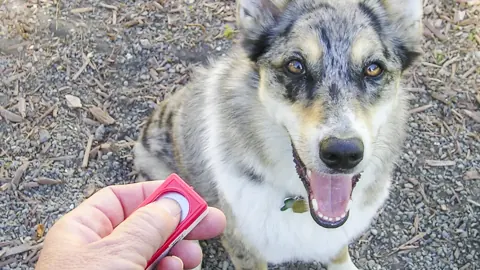
Practice the recall in the kitchen the night before if it is rusty, then pay it on the walk every time the dog looks at you. Snow is a jackpot of smells. Your treat has to beat a snowbank at least once so the dog believes you. If the dog will not look at you at all, you are done for the day. That is a successful read, not a failed outing. The park version of the same read is in body language at the park.
- Regular leash, not a retractable. Ice plus a thin cord is a hand injury and a dog in the street.
- Harness or a flat collar you trust. A choke chain on a dog that leaps at snow is a bad combination.
- High-value treats in a pocket that still opens with gloves on.
- A towel at the door. Salt and ice melt come inside on paws and get licked off. Wiping is the whole intervention this page is willing to give. If the skin looks damaged, that is a veterinarian, not a blog.
- Booties only if the dog already walks in them. A first snow day is a bad day to add four new shoes.
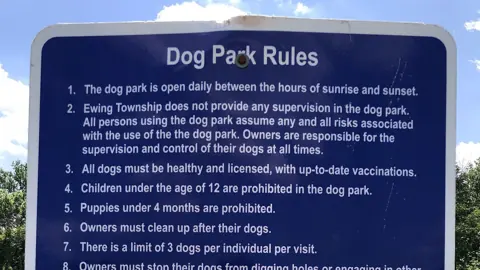
- A light if the walk might slip past dusk. Many parks close at sunset even when the snow looks bright. Florida's state parks are the clean example: 8 a.m. to sunset, all year.
Should the first snow day include a dog park?
Usually no. A dog park adds loose dogs, a gate, and a surface you cannot trust, on the same day your dog is discovering that the ground is edible and exciting. The ASPCA's greeting notes assume a dog that can approach in an arc. A first snow day is a dog that may not hear you. Take the park on a later day, after a recall has worked outside, and only if that park is actually open. Plows, ice and Tuesday mowing windows do not care that your dog is having a moment. How those closures work is in dog parks in winter.
If you do go later, walk the entrance before you unclip. Ice at the gate is how a good recall becomes a slide into another dog. If you cannot stand still, the dog should stay on leash on the cleared sidewalk. An open gate is not an assignment.
What do you do when the dog wants to greet everyone?
You pass. Snow days pull more dogs outside at the same hour, and every one of them is aroused. The head-on sidewalk greeting is the one the ASPCA says goes badly, because the leash kills the normal curved approach. A first snow day is the worst time to "let them work it out." Cross the street. Turn around. The script is in should dogs greet on leash. Other owners who want a snow photo of two dogs nose to nose can take it with their own dogs. You do not owe a stranger a greeting your dog cannot leave.
Children with sleds are a separate trigger. A running, yelling child looks like a game. Keep the leash short and step off the sled line. If your street is the sled street, walk a block over. Being right about the leash law does not help if you are standing in the runout.
White coats disappear. Plow drivers cannot see a low dog. If the leash or the gate fails, do not chase in a way that pushes the dog into the street. Call the dog back along the path you came, note which way it ran, and ask the nearest people to stand still rather than join a chase. Prevention is the leash you put on inside the house.
How do you make it fun without losing the plot?
Let the dog sniff. Sniffing is the activity. You do not need a frisbee, a pack of neighborhood dogs, or a mile. Scatter a few treats in clean snow in your yard if you want a game, and only there, so you are not teaching the dog that every snowbank in the county might be food. Skip treats on the public sidewalk where ice melt is mixed in. Play a short game of name-and-treat. Go in while the dog still wants more. Ending early is how the second snow day stays easy.
Talk to the dog in a normal voice. A high, panicked voice when the dog eats snow teaches the dog that snow is a big deal. Most dogs eat a little snow. You redirect and walk on. If the dog is gulping snow nonstop, end the walk and offer water inside. That is management, not a diagnosis. Pain, limping, or a dog that will not get up is a veterinarian, the same day, and it is outside what this article is for.
Apartment dogs use the same plan on a shorter loop: hallway on leash, elevator with the dog sitting, sidewalk, home. Do not use the lobby as an off-leash snow party. Other tenants did not agree. The building's leash rule, if it has one, still applies in December.
What about the rest of the season?
After two or three boring successful walks, you can add a new block, then a quiet trail that allows leashed dogs, then a dog park on a day the gate is open and the ground is walkable. Each addition is one change, not three. New place plus new dogs plus new surface is how the first week goes sideways. State park trails in the big states are leashed and often closed at the beach and the building. The comparison is in dogs in state parks. A snowy trail with a 6-foot leash is a legal, pleasant second week. A snowy trail with a recall you have never proofed is the first week again, with worse consequences.
If the temperature is low enough that you are worried about leaving the dog outside after the walk, that question is a legal one as much as a practical one. Read your state's shelter and tethering statute before you treat the yard as an all-day plan. A snow day for a house dog ends indoors with the people.
Frequently asked questions
How do I handle my dog's first snow?
Short leash, familiar block, daylight, treats for looking at you, home early. Add a dog park only after the dog will come back on snow.
Can I let my dog off leash because the park is empty and snowy?
Only inside a legal off-leash fence. State parks and most city paths keep the leash in winter. Snow is not a waiver.
My dog is eating snow. Should I panic?
Redirect and keep the walk short. Offer water inside. This page is not medical advice. Call a veterinarian if the dog is vomiting, in pain, or will not settle.
Are booties required?
No. They help some dogs that already accept them, and they ruin the walk for dogs that do not. A towel for salty paws matters more on day one.
What if my dog hates it?
Go in. A dog that plants, shakes, or tries to drag you home has finished the lesson. Try a shorter loop another day. Forcing a mile creates a dog that hates winter, not a dog that got used to it.
Sources: ASPCA Pro, "Dogs Who Are Reactive On-Leash," on why restrained greetings and barrier frustration go badly; ASPCA, Barking, on frustration-induced barking when movement is restricted; Michigan DNR, Georgia State Parks, and North Carolina State Parks pet pages, 6-foot leash; Florida State Parks, 8 a.m. to sunset. Read November 2026. This is a handling plan, not veterinary advice. Limping, pain or illness goes to a veterinarian. Park closures after a storm belong to that city's parks page.