Good dog park play looks loose and bouncy: wiggly bodies, play bows, open mouths, and dogs taking turns chasing and being chased. Trouble usually shows first as stiffness: a frozen body, a hard stare, the whites of the eyes showing ("whale eye"), a tight closed mouth, or one dog pinning or chasing another that keeps trying to get away. When you see those signs, call your dog and take a break.
In this guide
- What does healthy play look like?
- What are the warning signs?
- What is the ladder of stress signals?
- How do I know if play is too rough?
- What does whale eye look like?
- How do dogs greet each other politely?
- When should I call my dog away?
- What should I do if a fight starts?
- Is my dog a good fit for the dog park?
- Frequently asked questions
Reading this is the most useful skill for the dog park. You don't need to know every signal. You need to tell relaxed from tense, and fair play from one dog having no fun.
What does healthy play look like?
- Loose, curvy bodies. Movement looks floppy, exaggerated, a bit silly.
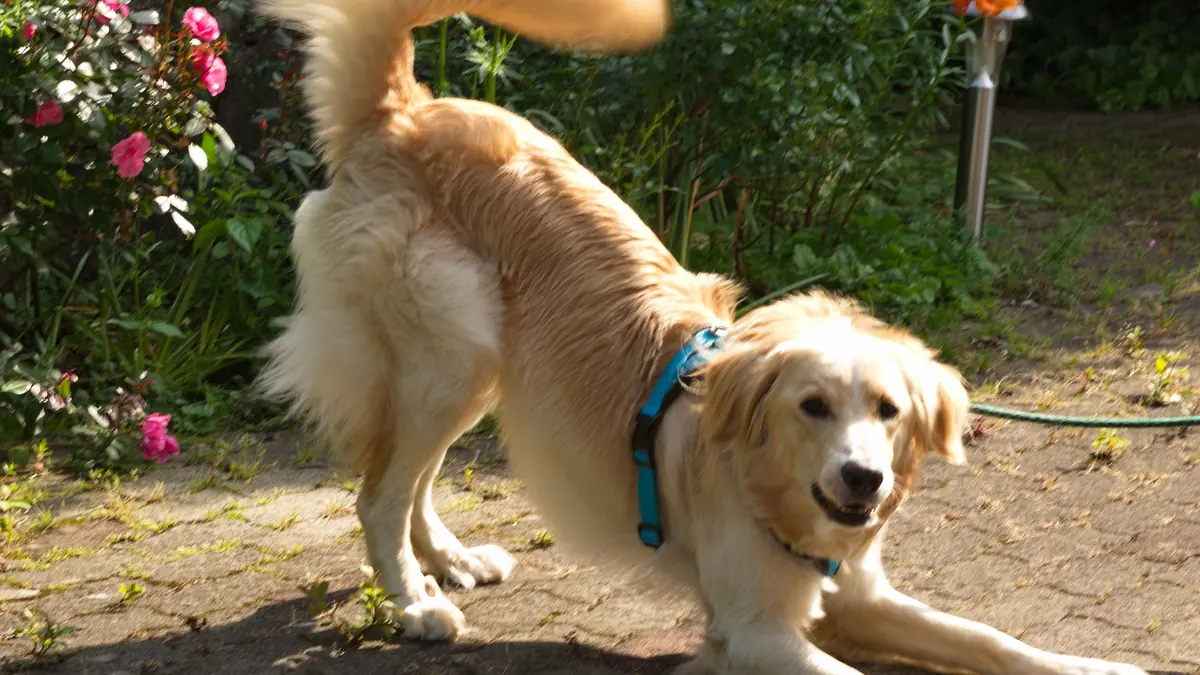
- Play bow. Front end down, rear up. It's an invitation, and it often appears again during play as a "this is still a game" signal.
- Relaxed open mouth. Soft face, no tight lips.
- Taking turns. Chaser becomes chased, the dog on top lets the other get up.
- Self-handicapping. A big dog lies down or plays softer with a small one.
- Short pauses. Dogs stop, shake off, sniff, then go back.
What are the warning signs?
| Signal | What it can mean |
|---|---|
| Stiff, frozen body | Tension; a common sign right before a snap or a fight |
| Hard stare | A challenge or a warning |
| Whale eye (whites of the eyes showing) | Discomfort or fear, often with the head turned away |
| Closed, tight mouth; lips pulled back | Stress |
| Tail tucked or held high and stiff | Fear (tucked) or arousal (high, stiff, sometimes wagging fast) |
| Hackles up | Arousal; not always aggression, but worth watching |
| Lip licking, yawning, turning away | Mild stress; the dog may want a break |
| Growl, lifted lip, snap | A clear warning; separate the dogs |
A wagging tail doesn't always mean a happy dog. A high, stiff tail wagging fast can come with tension. Look at the whole body, not one part.
What is the ladder of stress signals?
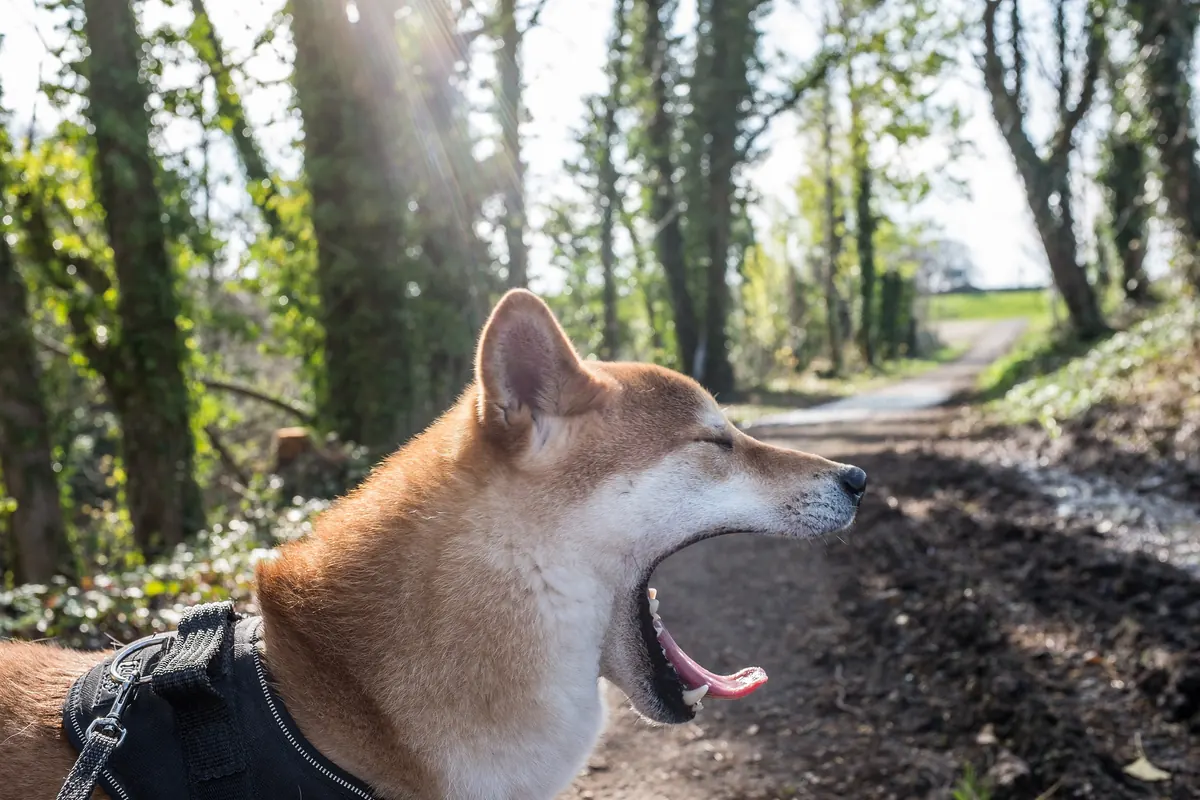
Dogs rarely bite "out of nowhere." Most first send small, quiet signals: a yawn when they aren't tired, a quick lick of the nose, a head turned away. If those are missed, the signals get bigger, until growling and snapping. Veterinary surgeon Kendal Shepherd described this as a ladder, and it's a useful way to read a dog at the park.
The practical lesson: a growl is information, not bad manners. A dog that is scolded for growling learns to skip the warning, not to feel better. At the park, treat a growl as a polite "please stop" and give that dog space.
How do I know if play is too rough?
Ask one question: does the dog underneath want more? A simple test used by trainers:
- Gently take the dog that seems to be "winning" by the harness and hold it for a few seconds.
- Watch the other dog. If it comes back to play, the game was fine.
- If it leaves, hides or stays away, the game wasn't fun for it. Give both dogs a longer break.
Other signs that play has gone wrong: one dog is always the one chased or pinned, a group of dogs chases one dog, or the noise and speed keep rising without pauses.
What does whale eye look like?
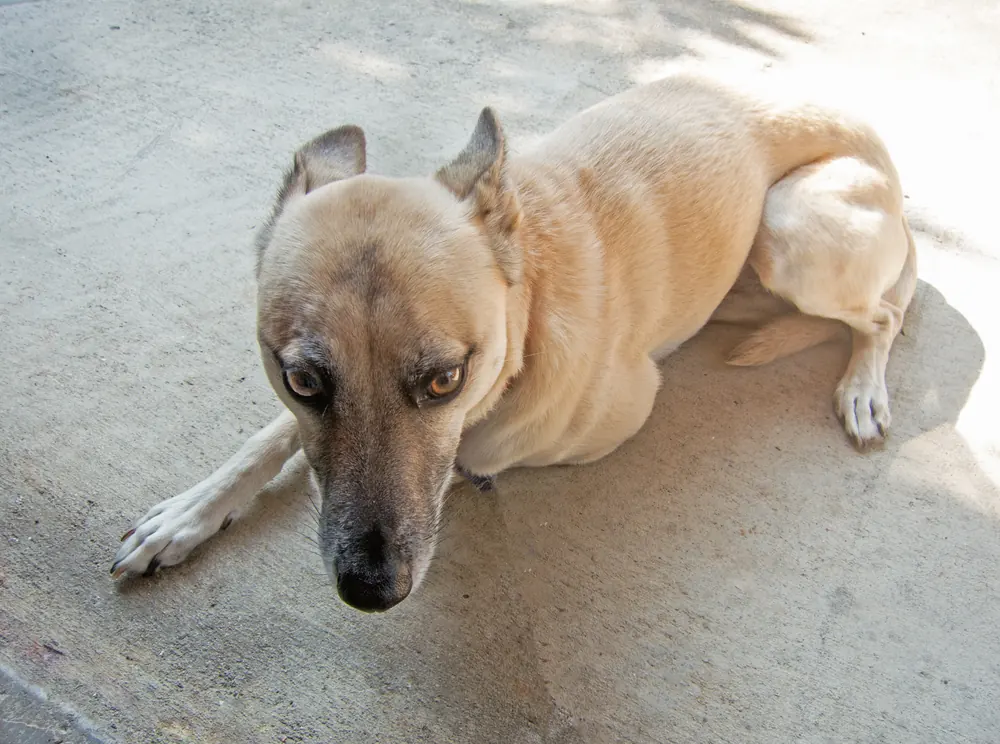
The dog keeps its head turned one way while its eyes look another, so a crescent of white shows. You'll often see it in a dog being hugged, cornered or crowded by other dogs at the gate. Pair it with ears pinned back or a low body and the message is clear: this dog wants out of the situation.
How do dogs greet each other politely?
Good greetings are short and a little indirect. Dogs approach in a curve rather than head-on, sniff the face and then the rear, and move apart within a few seconds. A straight, fast approach with a high head and stiff legs is rude in dog terms, even when it's friendly in intent, and it's one of the most common sparks for trouble at the gate.
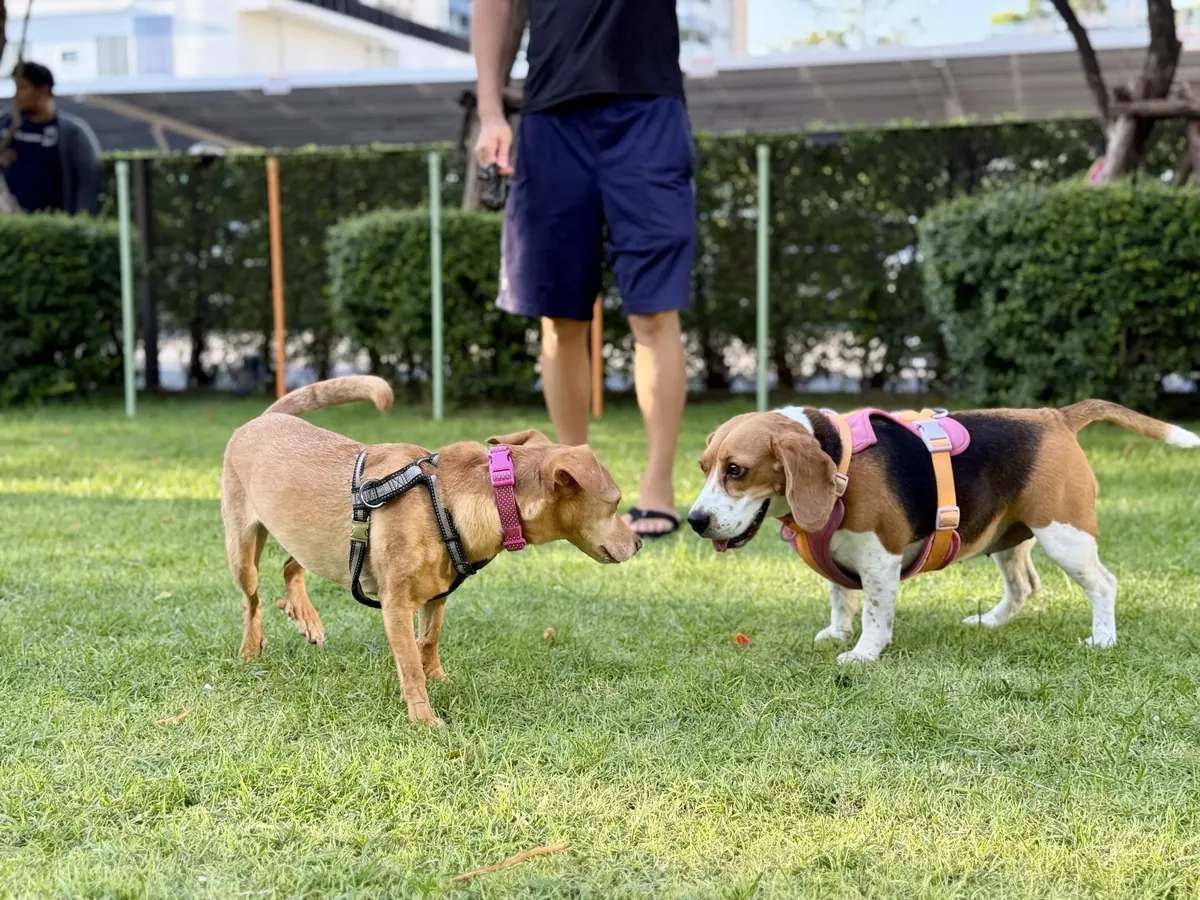
You can help by keeping the leash loose during any on-leash hello, counting to three, then cheerfully walking your dog away. Tight leashes pull a dog's head up and its chest forward, which looks like a challenge to the other dog.
In the video below, the dog training channel Thriving Canine walks through an adult dog and a puppy, explaining which growls and movements are play and which are a warning.
When should I call my dog away?
- When you see stiffness, a hard stare or a growl that doesn't stop.
- When your dog is hiding behind you or under a bench.
- When several dogs gang up on one dog.
- When play has no pauses for a few minutes.
- When your dog is tired. Tired dogs have less patience.
Calling your dog for a short break, a treat and a drink, then letting it go back, is normal. Leaving the park early isn't a failure either.
What should I do if a fight starts?
Don't reach between the dogs. Use noise, water or a barrier first, as explained in how to break up a dog fight. If someone gets bitten, see what to do after a dog bite at the park.
Is my dog a good fit for the dog park?
Some dogs just don't enjoy crowds of strange dogs, and that's fine. If your dog spends the visit hiding, guarding you or getting stiff, a walk or a play date with one known dog may suit it better. See is your dog ready for the dog park?
Frequently asked questions
How can I tell if dogs are playing or fighting?
Play is loose and bouncy, with play bows, pauses and turn-taking. Fighting shows stiff bodies, hard stares, closed mouths and no pauses.
What is a play bow?
Front legs down, rear end up. It's an invitation to play and a signal that what follows is a game.
What does whale eye mean in dogs?
The whites of the eyes show, often with the head turned away. It usually signals discomfort or fear.
Does a wagging tail mean a dog is friendly?
Not always. A high, stiff, fast-wagging tail can come with tension. Read the whole body.
Why does my dog yawn at the dog park?
Often because it's a little stressed or overwhelmed, not tired. Yawning, lip licking and turning away are early, quiet signals that a dog would like a break.
How do I know if play is too rough?
Hold the dog on top for a few seconds. If the other dog comes back for more, it's fine. If it leaves, the play was too much.
Sources: ASPCA Professional, resources on canine body language and play; American Veterinary Society of Animal Behavior, educational materials on recognizing fear and stress in dogs. This guide is general information; for a dog with fear or aggression problems, talk to a veterinarian or a certified behavior professional.