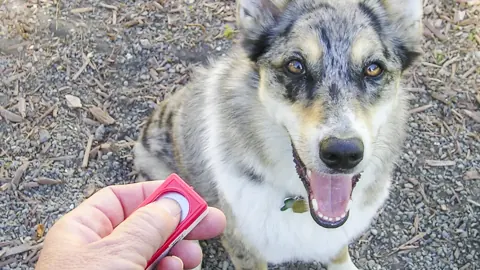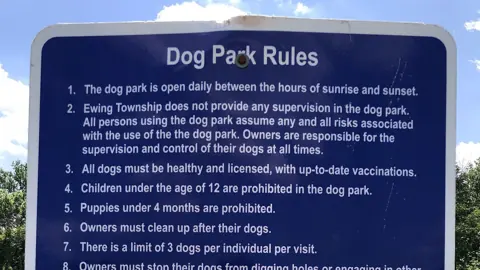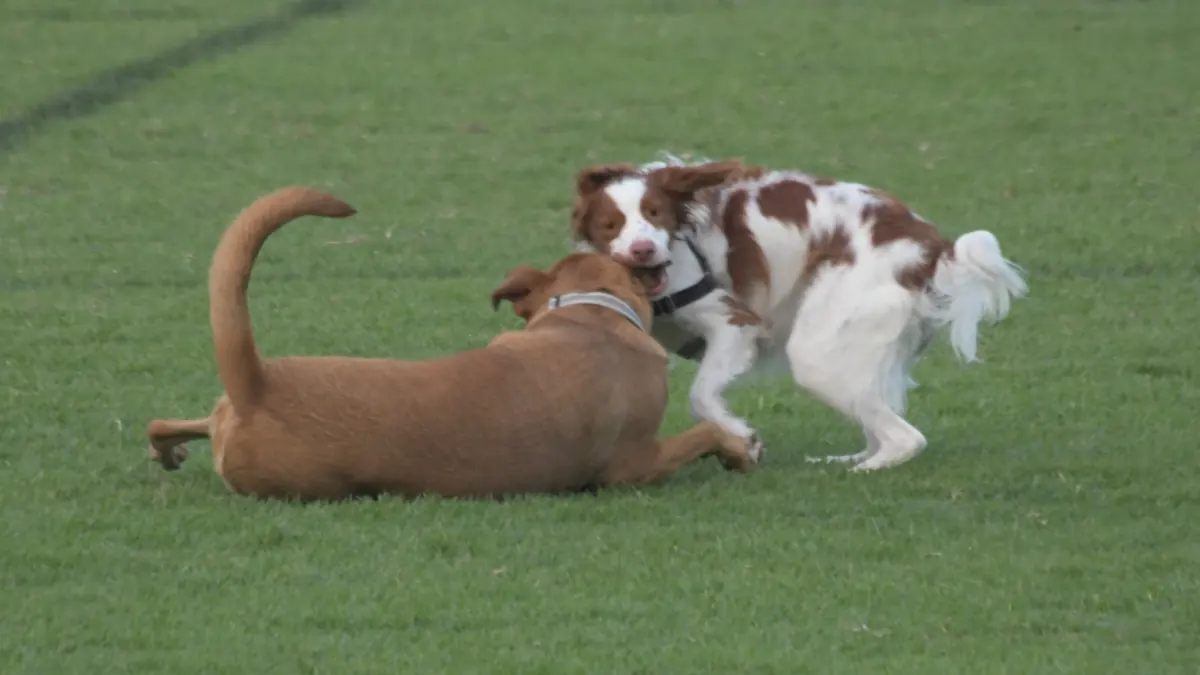
At the dog park, barking is usually one of the types the ASPCA names: greeting, frustration, alarm, or socially facilitated barking set off by the other dogs, and the fix depends on which one it is. The ASPCA's own goal is less barking, not silence. A dog that never makes a sound at a park full of dogs is not the standard.
In this guide
The mistake is one correction for every bark. A greeting bark, with a wag and a whine, is a dog saying hello too loudly. A frustration bark is a dog that cannot reach the play it wants, often because a leash, a fence line or a gate is in the way. An alarm bark is stiffer, and it can show up even when you are not on home turf. Those are different jobs. Yelling "quiet" at all three teaches the dog that you add noise to the noise. Name the bark first, then pick the matching step from the ASPCA's guide, and leave the park when the bark is the whole visit.
Which bark is it?
The ASPCA says many owners can hear the difference once they stop treating every bark as the same word. Use its questions before you invent a motive: when and where does it happen, who is the target, what triggers it, and what does the dog get if the barking works.
| ASPCA type | What it looks like at a dog park | What the dog gets if it works |
|---|---|---|
| Greeting | Bark plus a loose body, excitement, tail wag, often a whine, aimed at a dog or a person arriving | The hello it wanted. If you then open the gate or release the dog, you paid the bark. |
| Frustration | Barking when the dog can see play and cannot join it: on a leash in the vestibule, tied, or stuck on the wrong side of a fence | Sometimes the release. Sometimes nothing but a habit of exploding at barriers. |
| Alarm | Stiffer body, a pounce forward with each bark, aimed at a sight or sound, not only at home | The strange thing goes away, which feels like success to the dog. |
| Socially facilitated | Starts when other dogs bark, even at a distance, and would be quiet if the park were empty | A chorus. Your dog is answering, not requesting you. |
| Attention | Aimed at you, and it pauses if you look, talk, or hand over a toy | You. Attention is the wage. |
The ASPCA also lists territorial barking, compulsive barking, barking from pain, and separation-anxiety barking. Territorial barking is about a place the dog treats as its own, which some dogs do to a favorite corner of a park they visit every day. Compulsive barking is repetitive, often with pacing. Pain and separation anxiety are reasons to stop the park session and talk to a veterinarian or a behavior professional, not to film the bark and hope it burns out. This guide does not diagnose either one. If the bark is new, paired with limping, panting that does not match the weather, or destruction when you leave, that appointment comes before another Saturday at the fence.
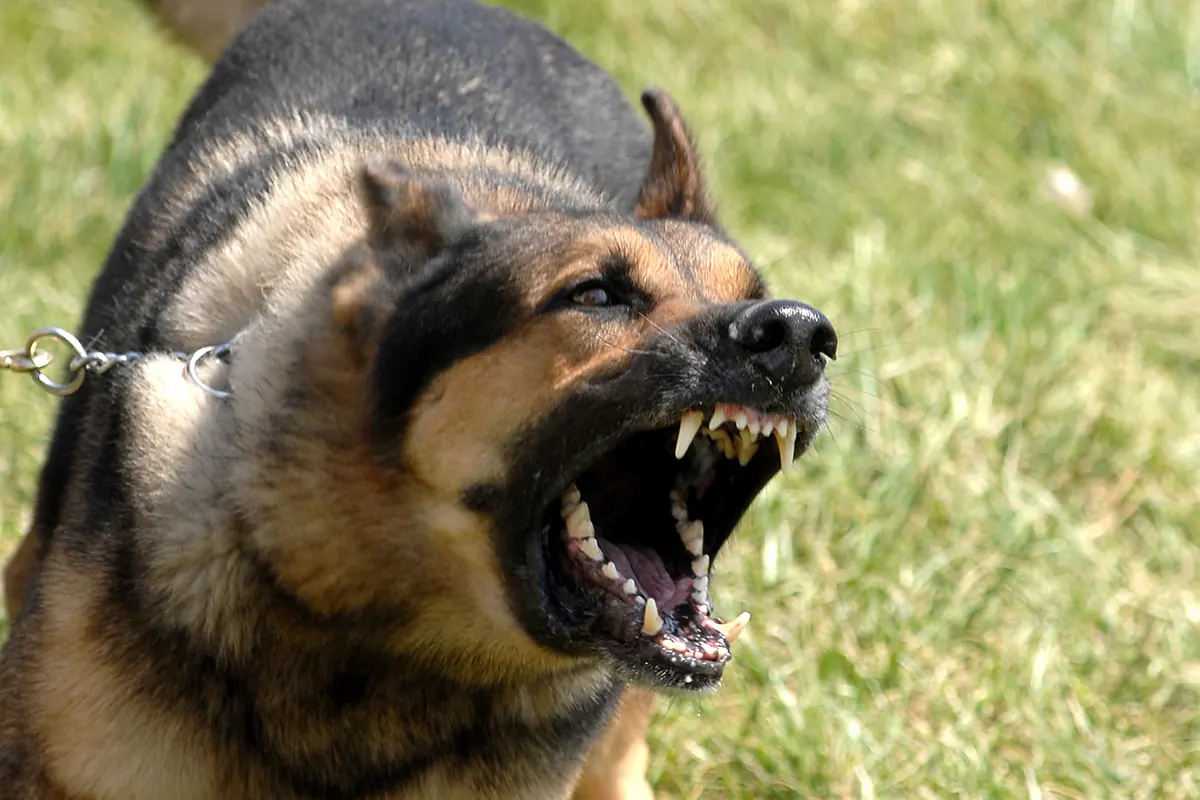
Why does the gate make it worse?
Frustration barking, in the ASPCA's definition, shows up when movement is restricted or the dog cannot reach playmates. The double gate of a dog park is that situation on a timer. Dogs inside rush the fence. Your dog is leashed, or held, and can see the play. The bark is the protest. If you wait until the bark stops for one second and then open the inner gate, you have taught a clean lesson: bark, then the world opens. If you drag the dog in while the leash is tight and the bark is at full volume, you have taught a different lesson: the bark and the tight leash are the entrance ritual.
Open the gate on a pause, or do not enter. A one-second quiet is enough to start. If you cannot get a pause, the park is too hot for this dog today. Walk away and let the arousal drop. The leash-reactivity handout from ASPCA Pro explains the same trap on a sidewalk: a restrained dog that wants to greet, or a restrained dog that wants the other dog gone, both look loud. The geometry is in should dogs greet on leash.
Once you are inside, unclip if the rules say to. A leashed dog in a yard of loose dogs cannot use a normal greeting and often keeps barking because it still cannot move. That is frustration again, now surrounded by the dogs it was barking at. If your dog cannot be off leash safely, this is the wrong yard, not a training venue.
What do you do about a greeting bark?
The ASPCA's greeting section says to keep hellos low-key and to give the dog a sit and stay so there is a job besides barking. Teach the sit when nobody is arriving, then use it at the gate. A bark that is only noise on the way to a soft wag is not a crisis. A bark that never ends, while the other dog is trying to leave, is a dog that needs to be called out of the conversation.
Call your dog, reward the return, and give the pair a break. If the barking starts again the moment they re-engage, end the visit. You are not required to socialize through a wall of sound. Other handlers are allowed to leave because of your dog, and the kind version is that you leave first. Persistent barking is also a rule at some city parks. Tampa's directory, for example, says a dog that barks persistently is a nuisance and will be removed. Your city's sign may say the same thing in fewer words. Read it. "He's just talking" is not a defense if the rule says the dog goes home.
What do you do about alarm barking and the chorus?
Alarm barking is the ASPCA's category for a dog that vocalizes at sights and sounds in places that are not its house, with a stiffer body than a greeting. At a park, the trigger might be a skateboard, a person in a hood, a dog running straight in, or a trash truck. The recommendation that travels from the home section to the park is distance and a paid alternative. Move away before the bark if you can. If the bark has started, the "quiet" steps the ASPCA prints are calm, not shouted: let a few barks happen, say "quiet" once, then either feed a stream of tiny treats for silence or, if you are using their muzzle-hold version, do it only if it does not scare the dog. Many handlers should skip the muzzle hold and use the food stream. If the dog will not eat, the dog is over threshold. Food cannot compete. Leave.
Socially facilitated barking needs a different park or a different hour. If your dog is silent on a solo walk and loud only because the park is loud, you will not out-train a chorus of twelve dogs in one afternoon. Go earlier, go to a smaller yard, or go to a sniff walk instead. The ASPCA notes that some dogs are simply more vocal, and some breeds have a reputation for it. The goal remains a decrease. A hound that announces every arrival may never become a quiet spaniel, and you should not pick a crowded park as the place you demand that transformation.
- Watch the body for one minute before you correct anything.
- Do not open a gate during a bark. Wait for a pause.
- Unclip inside if the rules require it, so the leash is not the frustration.
- Reward a recall and a settle. Do not reward the bark with a game of chase.
- Leave if the bark is the entire visit or if another dog is hiding from yours.
- Skip the park on days your dog is already wound up in the car. You heard that version in the parking lot.
If the bark is paired with lunging, snapping, or a dog that other dogs are fleeing, remove your dog. The ASPCA's alarm and territorial notes say punishment can suppress the noise and leave the bite. Distance is the safe step. A qualified trainer or a veterinary behaviorist is the next step if this is a pattern, not a one-time scuffle. How fights start is in breaking up a dog fight, which is an emergency skill, not a weekly plan.
When should you stop using dog parks for this dog?
When every visit is a bark from arrival to departure. When other handlers leave because of the noise. When your dog is on leash the whole time because off leash feels unsafe, which means the park's design is working against you. When you are too embarrassed or too angry to watch the body language, because then you will miss the second where a greeting becomes a fight. Sniff walks, a single known playmate, and training games pay the exercise bill without the chorus. A supervised daycare is a different product from a public park: staff, a roster, and a door that can turn a dog away. Use that if the public gate is the problem, and read that business's rules before you treat it as a quieter park.
If you want a skill, practice "quiet" and recalls at home and on boring sidewalks, using the ASPCA's treat stream, before you practice them next to ten off-leash dogs. The park is the final exam. It is a bad classroom.
Frequently asked questions
Why does my dog bark at other dogs at the dog park?
Often it is greeting, frustration at the gate, alarm, or an answer to the other dogs barking. The ASPCA says to name the type before you try to stop it. The goal is less barking, not zero.
Should I yell "no" when the barking starts?
Yelling adds a second bark. The ASPCA's quiet cue is a calm word plus a reward for silence, or distance if the dog is too aroused to eat.
Is barking at the gate normal?
It is common, and it is often frustration because the dog can see play and cannot join it. Wait for a pause before you open the gate so the bark is not what unlocks the yard.
Can a city remove a barking dog?
Some rules say yes. Tampa's parks directory says persistent barking is a nuisance and the dog will be removed. Read your gate. Other handlers can also just leave, which is information.
When do I call a professional?
When the bark comes with stiffness and snapping, when it is new and might be pain, or when home practice of the ASPCA steps has not touched it. Ask a veterinarian to rule out pain, then a certified trainer or a veterinary behaviorist.
Sources: ASPCA, Barking (aspca.org/pet-care/dog-care/common-dog-behavior-issues/barking), types of barking, the goal of decreasing rather than eliminating it, and the quiet and greeting steps, read November 2026; ASPCA Pro, "Dogs Who Are Reactive On-Leash," on restrained greetings; City of Tampa dog park directory, persistent barking as a nuisance. This is general guidance from those sources, not a diagnosis. A dog in pain, or a dog that bites, needs a veterinarian or a behavior professional in person.