Bring the dog only if the host has agreed in a specific way: where the dog sleeps, which rooms are closed, how kids and other animals will be handled, and who cleans up. A group text that says "dogs are family" is not that agreement. A house rule is a short list you can say out loud before you unload the car.
In this guide
Thanksgiving at someone else's house fails for ordinary reasons. The dog is excited, the kitchen is busy, a child grabs a fistful of fur, and another dog already lives there. None of that requires a lecture about food chemistry. It requires a plan the host helped write, and an exit you are willing to use at 4 p.m. if the plan breaks.
What should you ask the host before you say yes?
Ask in a normal message, not as you ring the bell. The answers change whether you go.
- Is there already a dog or a cat in the house, and has that animal met visitors' dogs without a fight?
- Are there kids, and do they know not to hug a strange dog or to chase it?
- Which rooms are off limits: nursery, formal dining room, a bedroom with medicine on the nightstand?
- Where can the dog sleep, and is a crate in a quiet bedroom acceptable?
- Is the yard fenced, and does the gate latch? A "big yard" that opens onto a road is not a plan.
- Who else is bringing a dog? Two visiting dogs plus a resident dog is a different party.
- What time you should arrive and leave. An overtired dog at 8 p.m. is when the barking starts.
If the host hesitates, offer to come without the dog. That offer is part of being a good guest. A sitter or a boarding stay, booked early, is often the kinder plan, and the questions for choosing one are in boarding versus a pet sitter. If the whole trip is a hotel instead of a family house, the booking steps are in Thanksgiving getaways with a dog.

How do you introduce the dog when you arrive?
On a leash, outside or in a boring hallway, not in the doorway while six people shout hello. Let the resident dog see yours with both of them able to leave. If either dog goes stiff, stare, or growls, you do not "let them work it out" in the kitchen. You separate them and you keep them separate. The longer version of a first meeting is in how to introduce two dogs, if that guide is the one you need before the holiday. If the date on that page is still in the future when you read this, use the short version here and do not force the meeting.
People get a calmer hello if the dog is asked to sit before the petting starts. A dog that jumps on Grandma is not charming at a crowded table. Reward the sit. If the dog cannot sit with this much going on, the dog is over threshold and needs the quiet room, not another lap of the living room.
The AKC's holiday training notes treat "leave it" as the cue for appetizers, gifts on the floor and even guests the dog should not maul with affection. Teach it before the week, not during the toast. The steps are in how to teach leave it.
Where should the dog be during the meal?
Not under the table, and not in the kitchen while people carry hot pans. A crate or a mat in a bedroom, with something to chew that the dog already likes, beats a dog weaving through ankles. Tell guests the rule in one sentence: please do not feed the dog from your plate, and please do not open the bedroom door "so he can say hi." You are the person who enforces it. The host should not have to.
Walk the dog before the meal and again before you leave, on a leash, in the area the host said was fine. A fenced yard is only off leash if the host said the latch works and you have checked it yourself. A neighbor's lawn is not your relief area. Bags come back inside to a trash can, not to the host's planters.
Holiday houses have doors propped for platters and kids. A leash on, or a closed crate, is the whole safety plan. Do not rely on "he never bolts" in a house he has never seen.
What about kids, noise and other dogs?
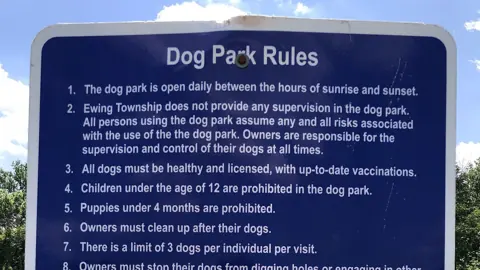
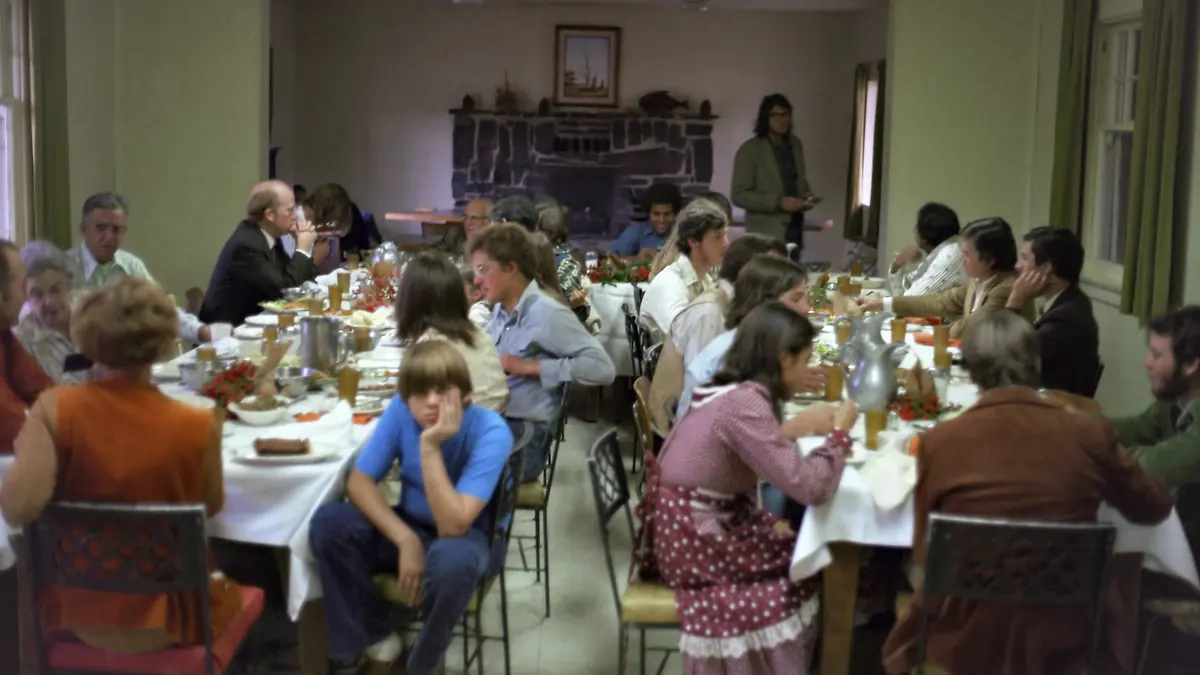
Kids at a dog park and kids at Thanksgiving are the same risk with better snacks. A child on the floor at eye level can get knocked over or bitten by a dog that is normally fine. Put the dog away during the loudest hour if the kids cannot follow "ask before you pet." Our park version of that problem is in kids at dog parks. The house version is stricter, because there is no fence between the toddler and the dog except the one you create.
Noise is the other half. A football game, a door that slams, and a room full of strangers can push a dog into barking that the host experiences as a ruined meal. If you already know the dog barks at guests, do the practice at home first. The outline is in how to stop a dog from barking at guests. If you have not done the practice, leave the dog home. Apologizing every thirty seconds is not a training plan.
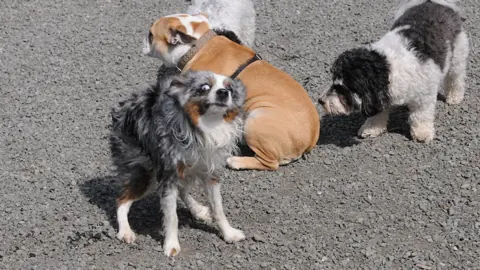
Two dogs that play too roughly need a break before someone gets hurt. Mounting, pinning and a hard stare are reasons to split them, not reasons to film. The ASPCA's warning that many dogs will fight if they are humped is in why dogs hump, and when to step in. A living room is a worse place for that fight than a park, because there is furniture and there are people holding plates.
What do you bring, and when do you leave?
Bring the crate, the food the dog already eats, bowls, a leash, bags, a bed or a familiar shirt, and anything you need so nobody has to improvise with the host's Tupperware. Do not borrow a neighbor's leftovers as dog food. Do not let the dog drink from a glass someone set on the floor.
Leave earlier than you want to. A successful visit is one the host would repeat. If the dog has stopped taking treats, is panting in a cool room, or is hiding, the visit is already too long. Thank the host, crate the dog, and go. The exit is part of the house rule, and you should decide the time before you arrive.
If you are staying overnight, the crate stays the bedroom plan. A dog loose in a strange kitchen at 2 a.m. is how counters get cleared. Say that out loud so a well-meaning cousin does not "let him sleep wherever."
What if the host is afraid of the dog?
Then you do not bring the dog. Fear is not a negotiation. A baby gate and a promise do not fix a guest who cannot be in the room. Offer a visit on a different day without the dog, or host at your own place where the dog can be put away before they arrive. Forcing the introduction "to get them used to dogs" is a favor nobody asked for.
The same is true in reverse. If you are the host and a guest is afraid, the dog is in another room with the door shut before the guest walks in, not after. That is a one-minute plan, and it is the polite one.
Frequently asked questions
Should I bring my dog to Thanksgiving at someone else's house?
Only after the host agrees to the practical rules: rooms, kids, other animals, a crate spot and a leash. If any of those are a no, leave the dog with a sitter or at a kennel.
Where should the dog be during dinner?
In a crate or on a mat in a quiet room, not under the table and not in the kitchen. Ask guests not to feed from their plates and not to open that door.
How do I introduce my dog to the host's dog?
On leash, with space to leave, before you enter the crowded room. If either dog stiffens or growls, separate them for the rest of the visit.
What if there are small children?
The dog stays out of the loudest hour unless the kids can ask before they pet and an adult is actually watching. A toddler and a strange dog on the floor together is a bad plan.
What should I pack?
Crate, the dog's own food, bowls, leash, bags and a familiar bed. Do not improvise with the host's kitchen.
Sources: ASPCA, mounting and masturbation guidance, for the warning that many dogs dislike being humped and may fight (aspca.org); AKC, "Important Skills to Teach Your Dog Before the Holidays," for using "leave it" around appetizers, gifts and guests (akc.org/expert-advice/training/train-dog-before-holidays/). House-rule steps are a planning list, not a claim that we spent Thanksgiving in your relative's kitchen. Read Nov. 2026.