Stay until the first clear stop signal, and leave before the park's posted close. No city rule we read sets a national minute count such as "20 minutes." The hard stop is the clock or the sunset line on that park's page. The earlier stop is your dog's body, described by the ASPCA, or a rule the park already prints, such as "remove the dog at the first sign of aggression."
In this guide
People want a number because a number feels fair. The pages that actually govern the gate talk about hours, leashes at the double gate, and leaving when play goes bad. A visit that ignores a stiff stare because you have eight minutes left on a homemade timer is how a short outing becomes the story everyone else tells later.
What is the only time limit that is written down?
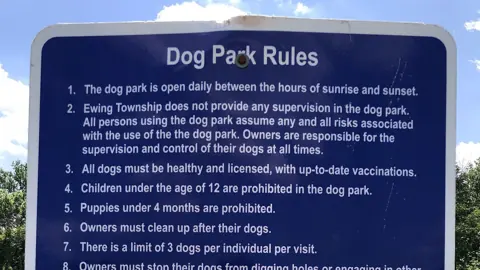
The hours. Night closing is the long version. Short version: Albuquerque's default dog-park line is 6 a.m. to 10 p.m. Miko's Corner in Tucson is 7 a.m. to 10 p.m. Nixa, Missouri, closes 30 minutes after sunset. San Dimas and Runyon Canyon in Los Angeles close at sunset. Forest Park in St. Louis, which is not off-leash at all, closes at 10 p.m. If you are still inside at the closing time, you have already stayed too long, even if every dog looks happy.
Maintenance mornings end a visit before it starts. Tucson prints those next to the long evening hours. A Thursday at 10 a.m. at Miko's Corner is a closure, not a short stay. Check that line when you check the night line. They live on the same page for a reason.
Which signals mean the visit is over?
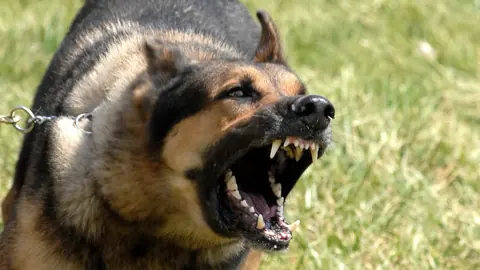
The ASPCA's bite-prevention page separates a relaxed dog from an anxious one and from an aggressive display. Relaxed: muscles soft, breathing ordinary or a light pant, a loose wag. Anxious or scared: the dog tries to look smaller, crouches, lowers the head, licks the lips over and over, tucks the tail, flattens the ears, yawns, looks away, goes very still, or rolls over. Aggressive: the dog tries to look bigger, ears forward, hair up, tail stiff and high, weight on straight legs, staring, moving in, teeth, growl, lunge. The page's point is that a wag can sit on top of a threat, and a crouch is not always an invitation. If you see the anxious set or the loaded set, in your dog or in the dog your dog is stuck to, the visit is over. Leash up and go.
Several city rules say the same thing in plainer words. Albuquerque: any dog showing aggressive behavior must be leashed and removed immediately. Nixa: be ready to remove the dog at the first sign of aggression, and dogs that bite or chase in an attacking way can be barred. You do not get to finish a game of fetch while you "see if it blows over." Immediate is the city's word.
| Stop | Where it comes from | What you do |
|---|---|---|
| Posted closing time, or sunset if that is the rule | The park's own page | Leash at the inner gate and leave |
| Stiff stare, growl, lunge, or the anxious cluster (lip lick, yawn, look-away, tucked tail, freeze) | ASPCA bite-prevention descriptions | End the session. Do not negotiate one more lap. |
| "Remove at the first sign of aggression" | Albuquerque and Nixa, among others | Leash and exit. The other owner does not have to agree. |
| You cannot see or call your dog | Voice-control lines on those same park pages | You are already outside the rule. Go get the dog and go home. |
Is a 15-minute rule a real park rule?
Not in the ordinances above. The figure people pass around sometimes comes from a training drill. The ASPCA's page on mouthing and play biting tells you to stop the game, pause 10 to 20 seconds, and not repeat a yelp-and-stop sequence more than three times inside 15 minutes. That is a lesson in your living room about teeth on hands. It is not Albuquerque's hours, and it is not a recommended length for a public dog park. Using it as a park timer will make some dogs leave while they are still playing well, and it will make other people stay through a freeze because the timer has not rung. Use the body and the posted close. Do not use a training cap as a city law.
Body language at the park goes further into play bows versus stiffness. Whether a dog is ready is the question to ask before the first visit, not at minute 12 of a bad one. A dog who spends the whole time at the gate, or who cannot take a breath without scanning, is telling you the park is too much today. Leaving at four minutes is a successful visit if the alternative was a fight.
How should a first visit be shorter without a magic number?
Go when the park is quiet enough that you can see your dog the entire time. Albuquerque limits handlers to three dogs and tells you to keep them in sight and under voice control. Nixa limits you to two and tells you to stay attentive inside the fence. A first visit with one dog, a leash in your hand, and an exit you have already found is the practical short stay. You leave when the dog has had a drink, a sniff, and a few polite greetings, or at the first stress signal, whichever comes first. You do not stay to "get your money's worth" at a free city park, and you do not stay at a permit park just because the permit was expensive. The permit buys access. It does not buy a minimum hour.
- Read today's hours, including a maintenance closure.
- One dog, if this dog is new to the park. You can add a second when you can watch both.
- Leash in your hand the whole time, which is what Albuquerque and a lot of other cities already require.
- Leave at the first lip-lick cluster, freeze, or growl. Yours or someone else's, if your dog is in the middle of it.
- Leave early enough to be outside the gate at closing, not clipping the leash at closing.
- Skip the park on a day you already know the dog is over threshold. A walk is a complete outing.
If you heard a growl or saw a freeze, you are done. If the sign says sunset or 10 p.m., you are done at that time even if the play looked perfect. The next visit can be tomorrow. The citation and the vet bill are slower to schedule.
What if the other dog will not quit and yours has had enough?
Leash your dog and move to the gate. You do not need the other handler's permission to leave. If the other dog is blocking the gate, wait at a distance and ask for space. Nixa tells people to keep dogs away from the gate while others enter and exit, which is the same choke point on the way out. If you cannot get out safely, that is a reason to call the number on the sign, not a reason to stay and socialize. Etiquette covers the ordinary version of this. The hours article covers the version where the floodlights are the only reason you think you may linger. You may not, past the printed close, and you need not, before it, once the dog is done.
Frequently asked questions
How long should a dog park visit last?
Until the dog shows stress or the park's rule says to remove an aggressive dog, and no later than the posted close. There is no national minute count in the city rules cited here.
Is 15 minutes the right length?
No. A 15-minute cap appears in an ASPCA drill about mouthing hands at home, limited to three repeats. It is not a dog-park ordinance.
What does "done" look like?
On the ASPCA page: repeated lip licking, yawning, looking away, a tucked tail, crouching, or going still, and on the other side a stiff stare, raised hair, growling, or lunging. A loose, soft body can keep playing. A wag by itself does not settle the question.
Do lights mean I can stay?
No. Lit parks such as Miko's Corner and Los Altos still have clock times. See the night-hours guide.
My dog wants to leave and I just got here. Do we stay?
Leave. A short visit that ends at the gate is within every rule above. A long visit that overrides the dog is not required by any of them.
Sources: ASPCA, Dog Bite Prevention, descriptions of relaxed, anxious, and aggressive body language; ASPCA, Mouthing, Nipping and Play Biting in Adult Dogs, the 10-to-20-second pause and the three-repeats-in-15-minutes cap, cited here as a home drill rather than a park time limit; City of Albuquerque dog park rules, hours, three-dog limit, immediate removal for aggression; City of Nixa dog park rules, sunset-based hours, two-dog limit, removal at the first sign of aggression; City of Tucson and other hours as summarized in Pawnauta's night-hours guide. Confirm today's sign.