There's no single temperature that's safe for every dog, but a good rule is: if the pavement is too hot to hold the back of your hand on it for about seven seconds, it's too hot for paws, and once the air is in the high 80s or above, cut walks short and keep them to early morning or late evening. Flat-faced breeds, older dogs, overweight dogs and dogs with thick or dark coats overheat much sooner. Phoenix takes this seriously enough to ban dogs from city hiking trails on days of 100°F or hotter.
In this guide
- How do dogs handle heat?
- What causes most heatstroke in dogs?
- How hot is too hot for pavement?
- Why did Phoenix ban dogs from trails?
- What are the signs of heatstroke in dogs?
- What should I do if my dog overheats?
- Can I leave my dog in the car for a few minutes?
- Do cooling vests and shaving help?
- Is it safe to hike with my dog in hot weather?
- How do I keep my dog cool at the dog park?
- What should I check before a walk on a hot day?
- Frequently asked questions
How do dogs handle heat?
Worse than we do. Dogs cool themselves mostly by panting, plus a little sweating through their paw pads. On a hot, humid day, panting doesn't move much heat, and a dog that's running or playing can overheat fast. That's why a game of fetch at a sunny dog park on a warm afternoon can turn into an emergency.
The American Veterinary Medical Association (AVMA) lists the dogs most at risk:
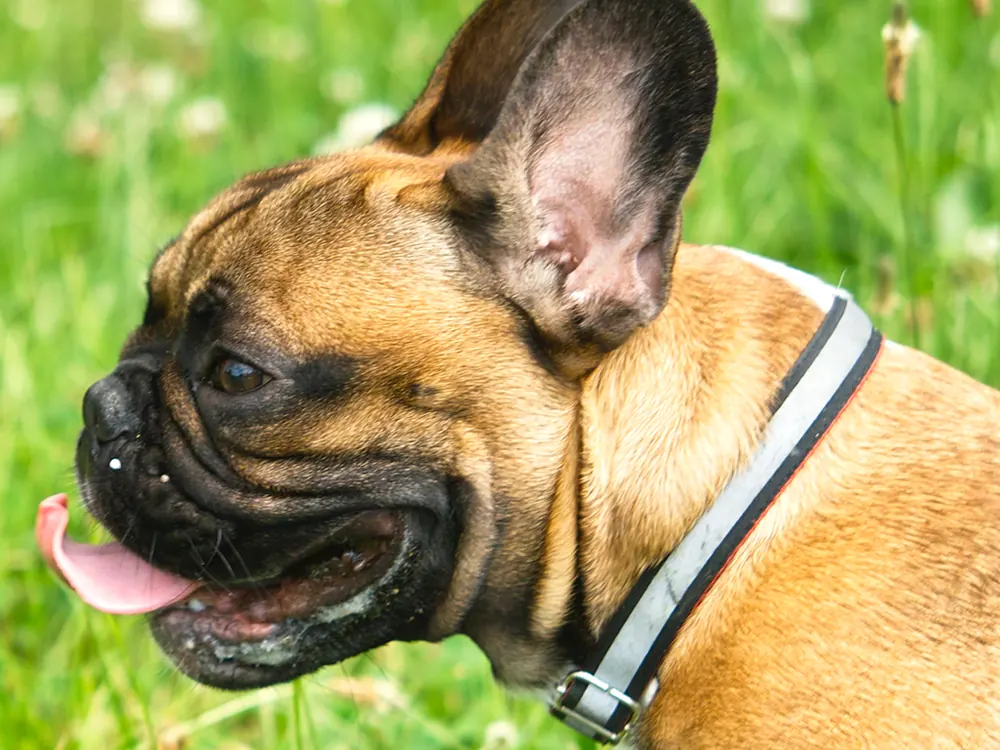
- Flat-faced (brachycephalic) breeds like pugs, bulldogs, French bulldogs and boxers
- Older dogs and puppies
- Overweight dogs
- Dogs with heart or breathing problems
- Dogs with long or dark coats
Breed makes a bigger difference than most owners realize. A study of more than 900,000 dogs seen by UK vets in 2016 (the VetCompass program at the Royal Veterinary College) found that flat-faced dogs as a group were about twice as likely to develop heatstroke as dogs with medium-length muzzles, and English bulldogs about 14 times as likely as Labrador retrievers. Chow chows, French bulldogs and dogs that were heavy for their breed also stood out. Dogs over two years old were at higher risk than young dogs.
What causes most heatstroke in dogs?
Exercise, not hot cars. Hot cars get the headlines, and they are deadly, but a second VetCompass study of 1,259 heat-related illness cases found that most were triggered by exercise: walks, runs and play on warm days. The same research estimated that about one in seven dogs treated for heatstroke died.
That's why the dog park in summer deserves the same caution as the parked car. Dogs don't stop playing when they're hot. Many will keep chasing a ball until they collapse, so the decision to stop has to be yours.
How hot is too hot for pavement?
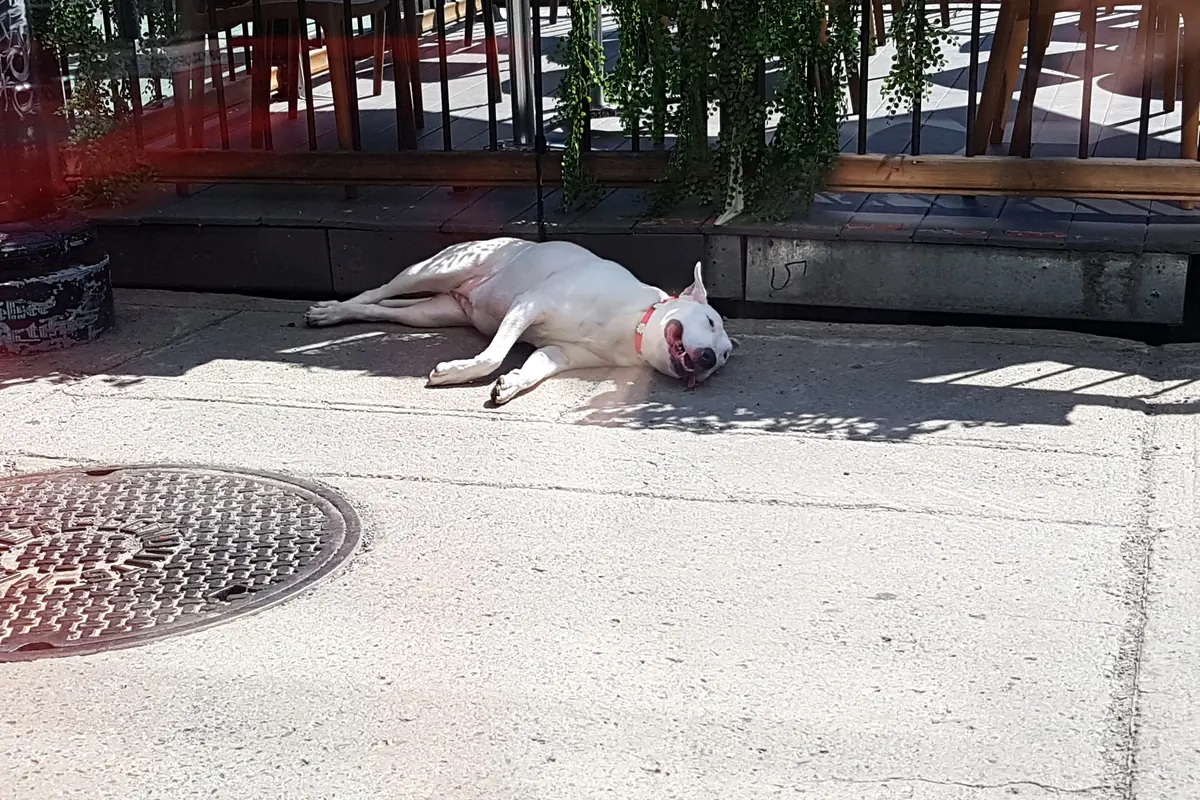
Hot asphalt and concrete burn paw pads, and they get much hotter than the air on a sunny day. A simple test that veterinarians suggest is to feel the pavement with the back of your hand. A common rule of thumb is seven seconds: if you can't keep your hand there that long, your dog shouldn't walk on it.
On hot days:
- Walk early in the morning or after sunset, when surfaces have cooled.
- Stick to grass, dirt or shade.
- Avoid dark asphalt, metal surfaces and sand in full sun.
- Consider dog booties, if your dog will wear them.
Why did Phoenix ban dogs from trails?
After several hiker rescues and at least one death on city trails, Phoenix approved a rule banning dogs from the city's trails when the temperature is 100°F or above. The humane society supported it, and city officials noted that people underestimate how hot trail surfaces get. It's one of the clearest examples of a city writing heat safety into its pet rules, and it's in our Phoenix dog park guide and in our 20-city rules comparison.
Many Phoenix dog parks stay open until 11 p.m. so owners can go after dark. That's a smart pattern in any hot city.
What are the signs of heatstroke in dogs?
| Early signs | Emergency signs |
|---|---|
| Heavy, fast panting that doesn't slow down in shade | Vomiting or diarrhea |
| Thick drool | Stumbling, weakness, confusion |
| Bright red gums or tongue | Collapse or seizures |
| Lagging behind, looking for shade | Pale or bluish gums |
If you see early signs, stop the activity right away. Emergency signs mean a vet, now.
What should I do if my dog overheats?
- Get your dog into shade or air conditioning.
- Cool with cool (not ice-cold) water, especially on the belly, armpits and paws. A fan helps.
- Offer small amounts of water to drink; don't force it.
- Call your vet or an emergency clinic on the way. Heatstroke can damage organs even after a dog seems to recover.
Veterinary researchers at the Royal Veterinary College sum it up as "cool first, transport second": start cooling right away with water and moving air, then go to the vet. Skip ice baths, and don't leave a soaked towel lying on your dog, which can trap heat against the body. Keep wetting and fanning instead.
Even if your dog seems back to normal after cooling down, get it checked the same day. Heatstroke can injure the kidneys, liver and blood clotting in ways that show up hours later.
Can I leave my dog in the car for a few minutes?
No. The AVMA warns that the temperature inside a parked car rises quickly even on a mild day, and cracking the windows makes little difference. A quick stop for coffee is enough to put a dog in danger. Many states have laws against leaving animals in hot cars, and some allow bystanders or officers to break in to rescue them. Our road trip checklist has a plan for stops.
Do cooling vests and shaving help?
Cooling vests and mats can help on hot days, as long as they're kept wet (for evaporative vests) and your dog is still watched for signs of heat stress. They don't make it safe to exercise hard in the heat.
Shaving is a different story. A dog's coat also protects the skin from the sun, and many veterinarians advise against shaving double-coated breeds, like huskies and golden retrievers, down to the skin. A trim and regular brushing to remove the undercoat usually does more good. Ask your vet or groomer before shaving.
Is it safe to hike with my dog in hot weather?
Only early in the day, on shaded trails, with more water than you think you need, and with a plan to turn around early. Rocky and sandy trails heat up much faster than the air. Federal lands have their own rules; see hiking with dogs in national forests.
How do I keep my dog cool at the dog park?
- Go early or late. Midday sun is the worst time.
- Bring plenty of water and your own bowl. Shared bowls can spread disease, as our guide to dog park diseases explains.
- Pick parks with shade, or with water access where it's allowed and safe.
- Take breaks every 10 to 15 minutes, even if your dog doesn't want to.
- Leave as soon as your dog is panting hard and not recovering in the shade.
What should I check before a walk on a hot day?
- Do the seven-second back-of-the-hand test on the pavement you'll walk on.
- Check the forecast for both temperature and humidity; humid heat is harder on dogs.
- Pick a time: early morning or after sunset, and a route with shade or grass.
- Pack more water than you think you need and a bowl your dog will drink from.
- Know where the nearest emergency vet is, especially when traveling.
- Plan to turn back early, and shorten the walk for flat-faced, older or heavy dogs.
Be careful with lakes and ponds in summer: toxic algae blooms can kill dogs within hours. Austin, for example, advises keeping dogs out of Lady Bird Lake. Our dog beach guide explains how to spot a bloom.
Frequently asked questions
What temperature is too hot to walk a dog?
There's no single number, but once the air is in the high 80s or the pavement fails the seven-second back-of-the-hand test, keep walks short and on grass or shade, or go early and late.
How can I tell if the pavement is too hot for my dog?
Press the back of your hand on it for seven seconds. If it's too hot for you to hold, it's too hot for your dog's paws.
What is the most common cause of heatstroke in dogs?
Exercise on warm days. In UK veterinary records, about three in four heat-related illness cases started with exercise, compared with about one in twenty from being left in a car.
Which dogs are most at risk in hot weather?
Flat-faced breeds, older dogs, puppies, overweight dogs, dogs with heart or breathing problems, and dogs with long or dark coats.
Are dogs allowed on Phoenix hiking trails in summer?
Not on days of 100°F or hotter. Phoenix bans dogs from city trails at that temperature.
What should I do if my dog has heatstroke?
Move your dog to shade, cool it with cool (not ice-cold) water, offer small sips, and get to a vet right away.
Sources: American Veterinary Medical Association, "Warm weather pet safety" and "Pets in vehicles" (avma.org); NPR, "5 tips to keep your pet safe and comfortable in extreme heat" (July 15, 2023), back-of-the-hand pavement test from the Humane Society Veterinary Medical Association; Hall, Carter and O'Neill, "Incidence and risk factors for heat-related illness (heatstroke) in UK dogs under primary veterinary care in 2016," Scientific Reports (2020), and "Dogs don't die just in hot cars: exertional heat-related illness (heatstroke) is a greater threat to UK dogs," Animals (2020), Royal Veterinary College VetCompass; City of Phoenix trail rule banning dogs at 100°F or above, as reported by ABC15; City of Austin advisory on Lady Bird Lake. This guide is general information, not veterinary advice.