How cold is too cold depends on the dog, not just the thermometer: a husky and a Chihuahua live in different worlds. The American Veterinary Medical Association's advice is to shorten walks in very cold weather, protect paws from ice and de-icing salt, wipe your dog's feet, legs and belly after every winter walk, and keep antifreeze far out of reach. Small, short-haired, older and thin dogs feel the cold first.
In this guide
- How do I know if it's too cold for my dog?
- What are the signs of hypothermia and frostbite in dogs?
- Why is de-icing salt bad for paws?
- Why is antifreeze so dangerous?
- Can I leave my dog in the car in winter?
- Are dog parks open in winter?
- How do I keep my dog safe at the dog park in winter?
- Should my dog stay inside in winter?
- Do dogs need more food in winter?
- Does my dog need a coat?
- What should I do after every winter walk?
- What about winter hikes?
- Frequently asked questions
How do I know if it's too cold for my dog?
The AVMA notes that cold tolerance varies with a dog's coat, body fat, activity level and health. Watch the dog, not the forecast:
| Usually fine for longer outings | Needs short outings and maybe a coat |
|---|---|
| Thick double-coated breeds (huskies, malamutes, Bernese) | Small and toy breeds |
| Healthy, active adult dogs | Short-haired or thin dogs (greyhounds, whippets, pit bulls) |
| Dogs used to the climate | Puppies and senior dogs |
| Dogs with arthritis, diabetes, heart or kidney disease |
Signs your dog is too cold: shivering, lifting paws off the ground, hunching, slowing down, whining, or trying to turn back home. Head home and warm up.
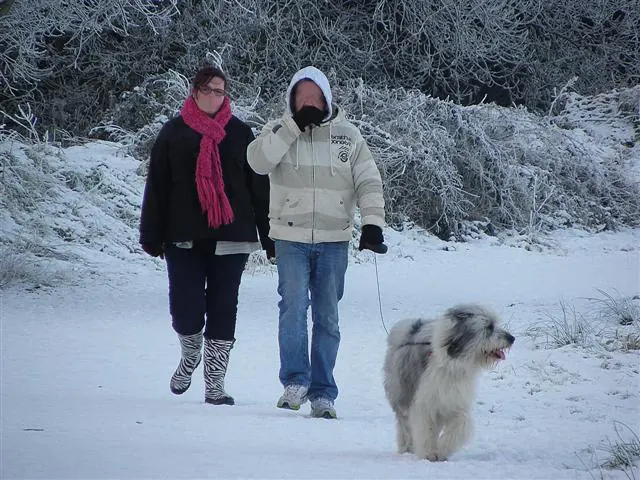
Wind and wet matter as much as the number on the thermometer. A dry 30°F morning with no wind can be easier on a dog than a rainy 40°F evening, because a soaked coat stops insulating and wind pulls heat away from the body. Weather safety scales used by animal welfare officers, like the one developed at Tufts University, treat rain, snow and wind as factors that make the same temperature more dangerous, especially for small dogs.
What are the signs of hypothermia and frostbite in dogs?
Hypothermia is a drop in body temperature. It starts with strong shivering and lethargy, then moves to weakness, stiff muscles, slow breathing and, in severe cases, collapse. Frostbite is tissue damage from freezing, and it hits the parts with the least protection: ear tips, tail, paws and, in males, the scrotum. Frostbitten skin can look pale, gray or bluish, feel cold and hard, and become red, swollen and painful as it warms.
| What you see | What to do |
|---|---|
| Shivering, slowing down, seeking warmth | Head inside, dry the coat, offer a warm (not hot) place to rest |
| Weakness, stiffness, very slow breathing | Wrap in dry blankets and go to a vet now |
| Pale, gray or hard skin on ears, tail or paws | Warm gently with lukewarm water, never rub or use a heating pad, and call your vet |
Rubbing frostbitten skin or putting it near direct heat can make the damage worse. Frostbite often looks mild at first and becomes obvious only days later, so a vet check is worth it even when the dog seems fine.
Why is de-icing salt bad for paws?
Rock salt and other de-icers dry and crack paw pads, sting cuts, and can upset the stomach when a dog licks its feet. Some de-icers are more irritating than others. The AVMA recommends:
- Wiping or washing your dog's feet, legs and belly after walks, to remove ice, salt and chemicals.
- Using pet-safe de-icers on your own steps and driveway.
- Trying booties, if they fit well and your dog will tolerate them.
- Trimming the fur between the toes so ice balls don't form.
A thin layer of paw balm before walks also helps some dogs.
Why is antifreeze so dangerous?
Most car antifreeze contains ethylene glycol, which tastes sweet to dogs and is highly toxic even in small amounts. Winter is when it's most often spilled in garages and driveways. Clean up spills right away, store containers closed and up high, and call your vet or the ASPCA Animal Poison Control Center (888-426-4435) immediately if you think your dog licked some. Early treatment matters.
Can I leave my dog in the car in winter?
Not for long. The AVMA warns that a car in cold weather acts like a refrigerator, holding in the cold. Short-haired and small dogs can get dangerously cold while you run errands.
Are dog parks open in winter?
Most are, but winter changes things. From the official rules we compiled for our city guides:
- Some parks move. Portland's Gabriel Park shifts its off-leash area between a summer site and a winter site.
- Wet ground closes parks. In Dallas and Fort Worth, large dog parks can close when the ground is saturated; Dallas runs a rain-out phone line.
- Beaches open up. New York allows dogs on its beaches only in the off-season, from October 2 through the Friday before Memorial Day.
Check your city's page before driving over. Our 20-city rules comparison links to each one, and the dog beach guide covers beach rules.
How do I keep my dog safe at the dog park in winter?
- Watch for ice. Frozen ground and icy patches are where dogs slip, strain muscles and tear pads while running.
- Keep visits shorter for small, thin or older dogs, even if they want to keep playing.
- Bring water. Dogs still get thirsty in winter, and snow isn't enough. Skip puddles; they can carry leptospirosis. More in dog park diseases and vaccines.
- Check paws before you leave the park for cuts and ice balls.
- Go in daylight. Parks get dark early in winter, and dark-coated dogs disappear from view. A light-up collar helps.
Our what to bring checklist covers the gear for cold or snowy days too.
Should my dog stay inside in winter?
Most dogs should live indoors in cold weather, going out for walks and play. The AVMA advises against leaving pets outside for long periods in very cold weather. If a dog does spend time outdoors, it needs a dry, draft-free shelter raised off the ground, with bedding that's changed when wet, and fresh water that isn't frozen. Check the water bowl often, and use a heated bowl if temperatures stay below freezing.
Do dogs need more food in winter?
Dogs that spend a lot of time outdoors or are very active in the cold may burn more calories. Most indoor dogs don't need more food, and many actually exercise less in winter. Keep an eye on your dog's weight and ask your vet before changing the amount.
Does my dog need a coat?
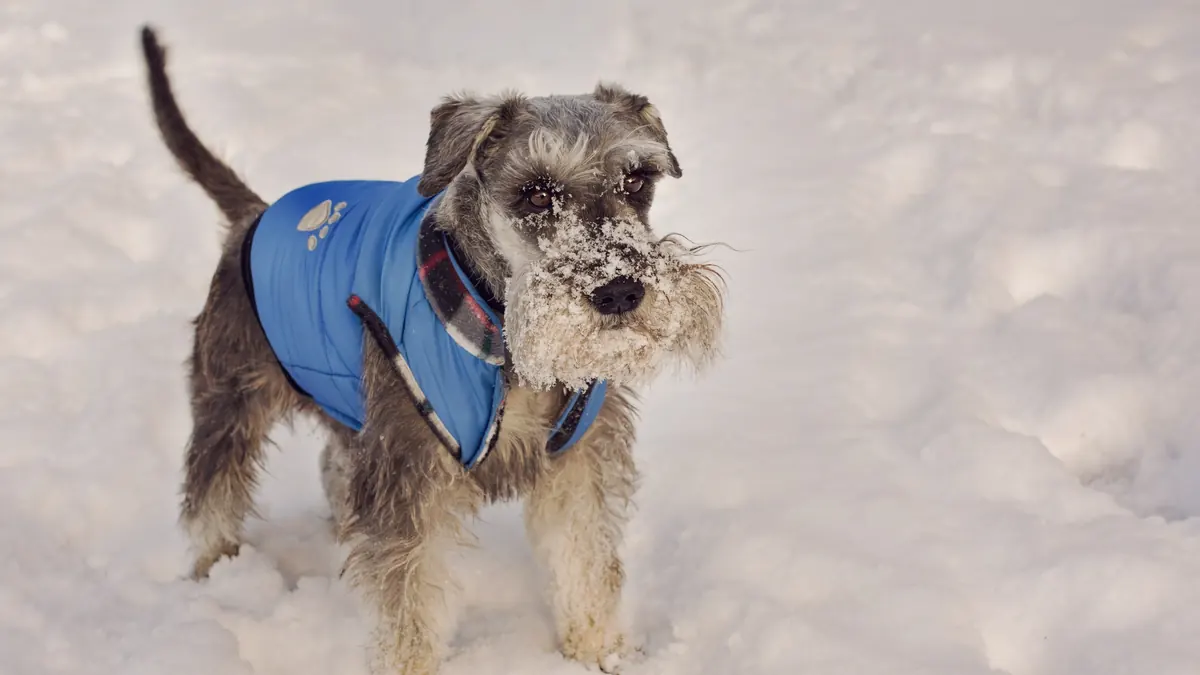
Short-haired, small, thin and senior dogs often benefit from a sweater or coat in very cold weather. Dogs with thick double coats usually don't need one and can overheat in it. Pick a coat that covers the back and belly without restricting movement, and take it off indoors so your dog doesn't overheat. If a coat gets wet, change it; a wet coat is colder than none.
What should I do after every winter walk?
- Wipe or rinse paws, legs and belly to remove salt and de-icer.
- Check between the toes for ice balls, cuts and cracked pads.
- Dry the coat, especially on small and short-haired dogs.
- Look at ear tips and tail for pale or hard spots.
- Offer fresh water; dry indoor heat dehydrates dogs too.
What about winter hikes?
Daylight is short and temperatures fall fast after sunset, especially at elevation. Plan to be back early, bring a light, and keep your dog close near frozen lakes and rivers: a dog that breaks through ice is a real emergency, and owners who go in after them are often hurt too.
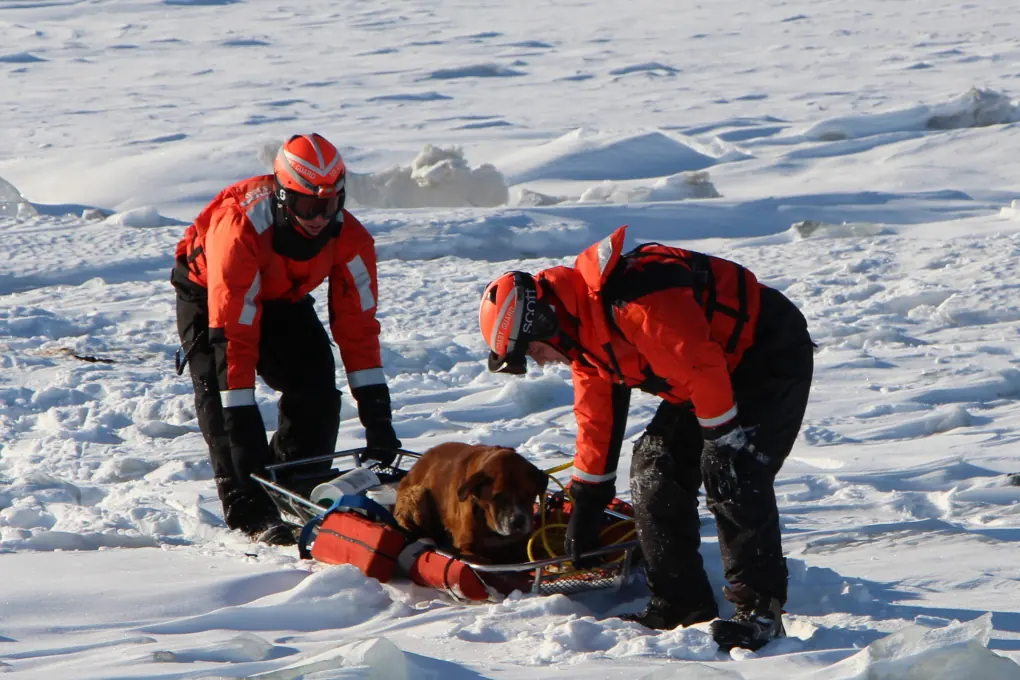
Don't go out on the ice after it. Call 911: fire departments in cold states train for ice rescue and have the gear. From the shore, call your dog toward you, and reach with a long branch, rope or leash only if you can stay on solid ground. Many dogs get themselves out by scrambling back the way they came in.
Rules for dogs on federal lands are in hiking with dogs in national forests.
Frequently asked questions
What are the signs of frostbite in dogs?
Pale, gray or bluish skin on the ear tips, tail or paws that feels cold and hard, then turns red, swollen and painful as it warms. Don't rub it; warm gently and call your vet.
How cold is too cold for a dog to be outside?
It depends on the dog's coat, size, body fat, age and health. Small, short-haired, thin, very young and older dogs need short outings in cold weather; watch for shivering, lifting paws and slowing down.
Is road salt bad for dogs' paws?
Yes. De-icing salt can dry and crack paw pads and upset the stomach if licked. Wipe your dog's feet, legs and belly after walks and use pet-safe de-icers at home.
Do dogs need booties in winter?
Not always, but they help protect paws from salt, ice and cold if they fit well and your dog accepts them.
Are dog parks open in winter?
Most are, but some close when the ground is wet or frozen, and a few move their off-leash areas seasonally. Check your city's parks page.
Why is antifreeze dangerous for dogs?
Most antifreeze contains ethylene glycol, which tastes sweet and is highly toxic. Call a vet or poison control right away if your dog may have licked some.
Sources: American Veterinary Medical Association, "Cold weather pet safety" (avma.org); ASPCA Animal Poison Control Center (aspca.org); Veterinary Emergency Group, "Frostbite in dogs"; Tufts University Animal Care and Condition (TACC) weather safety scales; US Coast Guard, Lake St. Clair ice rescue (March 2014); official dog park rules from Portland Parks & Recreation, Dallas Park and Recreation, Fort Worth Park & Recreation and NYC Parks, compiled in our city guides. This guide is general information, not veterinary advice.