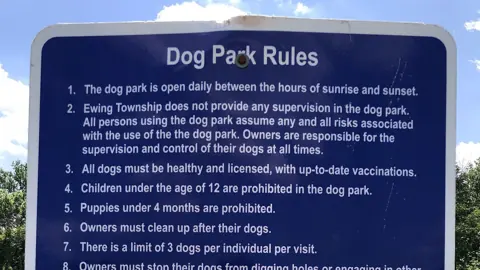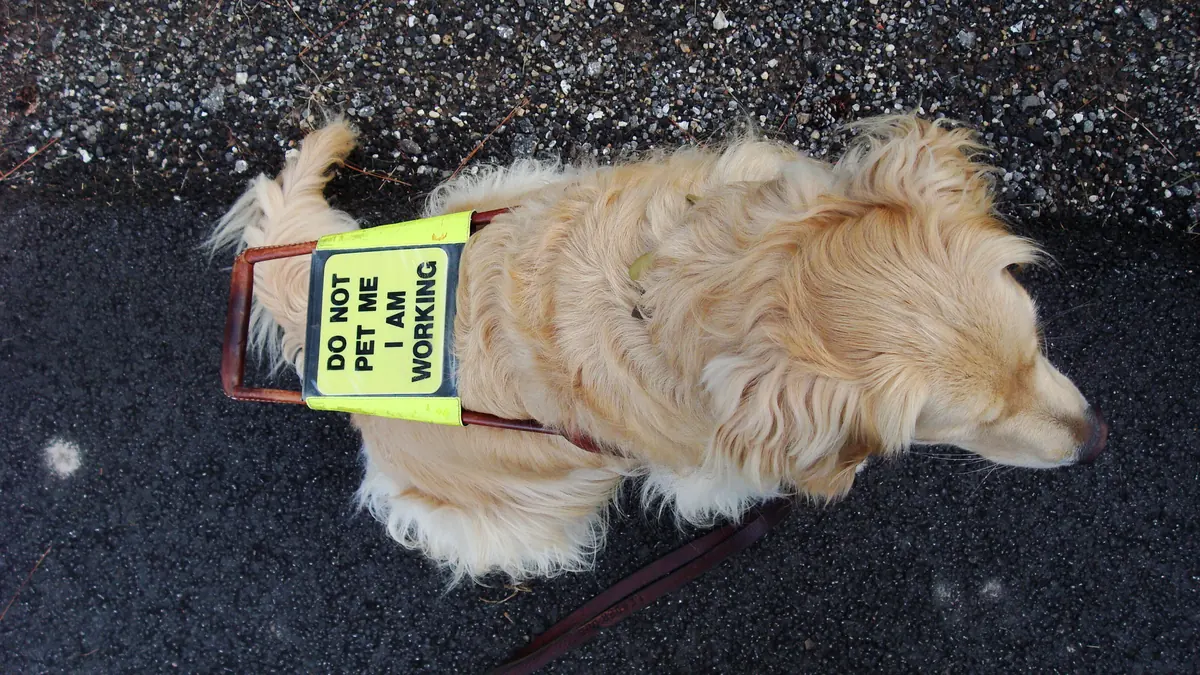
The Department of Veterans Affairs can help a veteran with a service dog in two different ways that people mash into one: access, and benefits. A task-trained service dog may come into VA facilities with its handler. The veterinary insurance benefit in federal regulation is narrower, and it does not mean VA hands every veteran a dog.
In this guide
Veterans Day is when the search spikes. The useful distinction is the one VA and the regulation already print. A dog that only comforts someone is not a service dog for facility access. A dog that performs a trained task can be. Whether VA will pay for that dog's veterinary insurance is a separate eligibility question, tied to a clinical decision and to an accredited training organization.
Can a service dog enter a VA hospital?
Yes, if it is a service dog under VA's rule. VA's own page, "Are Service Dogs Allowed In VA Facilities?", says service dogs of all breeds are allowed in VA health facilities, Vet Centers, regional offices and other property VA owns or leases, when all of these are true:
- The dog is trained to do work or perform tasks for a person with a disability. That includes a physical, sensory, psychiatric, intellectual or mental health disability.
- Dogs that only provide emotional support, comfort or companionship do not qualify.
- The dog is under the handler's control.
- The dog stays out of places where an animal would interfere with care, safety or infection control, such as an operating room.
VA says it does not allow other animals, with narrow exceptions such as police dogs or animal-assisted therapy. A pet in a vest does not become a service dog because the appointment is important. The same page is the one to show a receptionist who is guessing.
What can staff ask?
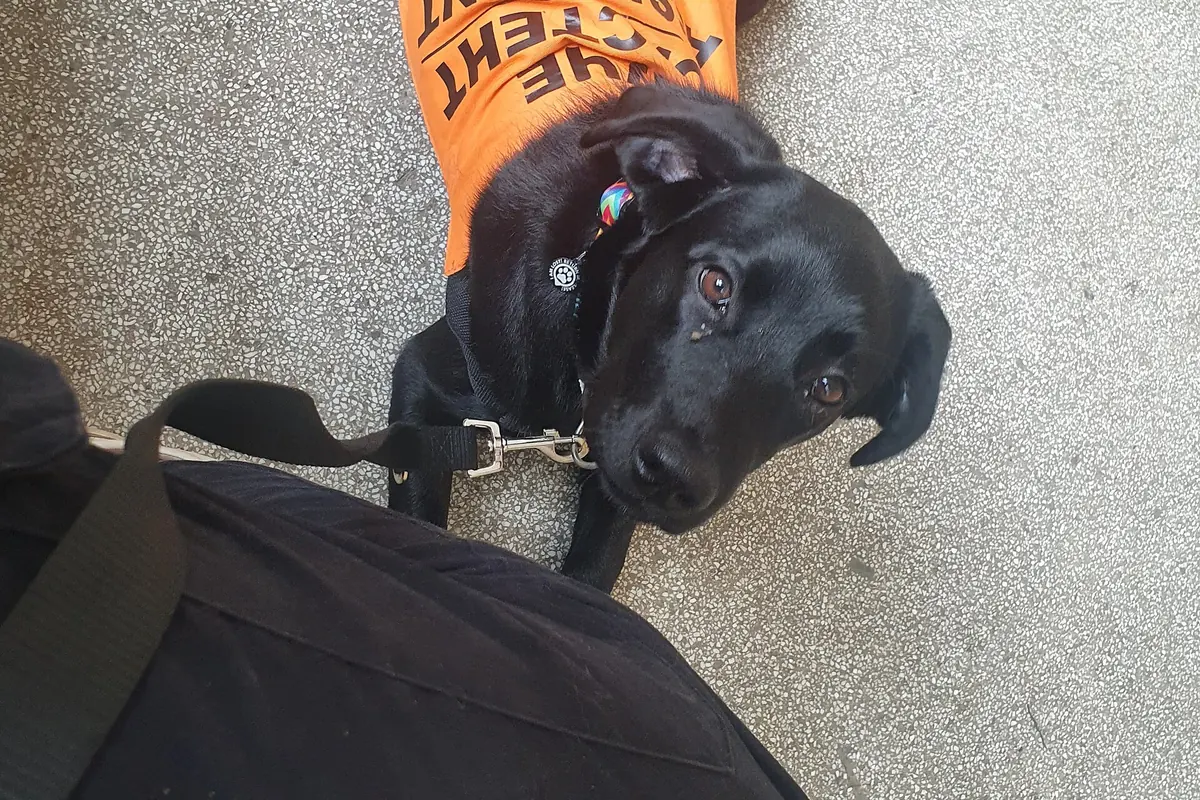
VA Palo Alto's service dog page, updated May 11, 2026, says staff cannot ask about the disability, demand medical records, demand an ID card or training certificate, or make the dog perform. If it is not obvious that the dog is a service dog, staff may ask two questions: whether the dog is required because of a disability, and what work or task the dog has been trained to do. That matches the public-access pattern in the Americans with Disabilities Act, even though the Palo Alto page notes that the ADA itself does not govern VA. VA says its policy is consistent with those rules.
Dogs still in training are not service dogs for this purpose. The Palo Alto page says a dog that has not been trained, or is still in training, cannot enter. "In training" on a patch is not the same as "trained."
The Justice Department's ADA page is the civilian version of the same idea: a service animal is a dog trained to perform a task directly related to a disability, and emotional support is not that. We keep the longer comparison in service dog versus emotional support dog. Use it before you argue with an airline or a landlord. Use the VA page before you argue with a VA clinic.
What does the statute let VA provide?
Congress wrote a list. Title 38, section 1714, says the Secretary may provide guide dogs to enrolled veterans who are blind, and may provide service dogs for hearing impairment, for spinal cord injury or another chronic impairment that substantially limits mobility, and for mental illnesses including post-traumatic stress disorder. Subsection (e) says a service dog for mental illness, including PTSD, may be provided even if the veteran does not have a mobility impairment. Travel and incidental expenses to adjust to the dog may be covered under the terms of section 111.
"May" is the verb in the statute. It is authority, not a promise that every application produces a dog next month. The clinical team still has to be involved, and the supply of trained dogs is not something a blog can schedule.
What does the regulation actually pay for?
The benefit rule people need to read next to the statute is 38 CFR 17.148. As published, VA provides benefits under that section only if the veteran has a visual, hearing or substantial mobility impairment, and the VA clinical team treating that impairment decides a trained service dog is the right way to manage it and to live independently. If a device or therapy would give the same independence, the note in the regulation says VA will not authorize the benefit.
Substantial mobility impairment, in that section, means a spinal cord injury or dysfunction or another chronic impairment that substantially limits mobility. The regulation's examples include a traumatic brain injury that affects decisions around traffic or obstacles, and a seizure disorder that leaves the veteran immobile during and after a seizure.
The dog and the veteran must successfully finish a program from an organization accredited by Assistance Dogs International or the International Guide Dog Federation, or both when the dog does both jobs. The benefits listed are not "VA buys the dog at a store." They are:
- A commercial insurance policy, where practical, with VA billed for premiums, copayments and deductibles, and the veteran responsible for costs over the policy cap.
- Hardware the dog clinically needs to do the tasks, and repairs or replacements, through Prosthetic and Sensory Aids at the VA medical center.
- Travel expenses to obtain the dog, for a veteran the clinical team has prescribed a dog for, including travel for a replacement dog.
The statute names PTSD service dogs. The insurance rule in 17.148, as written, is tied to vision, hearing or substantial mobility. Do not assume a psychiatric service dog automatically comes with the veterinary policy. Ask the VA clinical team which benefit you are actually being evaluated for, and read the current CFR, because a regulation can be amended after a page like this one.
| Question | Where the answer lives |
|---|---|
| Can the dog come into the VA clinic? | VA facilities page: task-trained service dog, under control, not in sterile areas. Comfort-only animals no. |
| Can VA provide a guide, hearing, mobility or mental-health service dog? | 38 USC 1714. PTSD does not require a separate mobility impairment. |
| Will VA pay veterinary insurance and hardware? | 38 CFR 17.148: visual, hearing or substantial mobility impairment, clinical decision, ADI or IGDF accreditation. |
What do nonprofits do that VA does not?
Most of the waiting, the training and the matching happen at nonprofit schools, not at a VA window. Organizations accredited by Assistance Dogs International or the International Guide Dog Federation are the ones the regulation names for the insurance benefit. Other groups raise money, place dogs and use different standards. A group can be caring and still not be the accreditation 17.148 requires. Before you donate or apply, ask whether the school is ADI or IGDF accredited, whether the veteran pays anything, how long the wait is, and what happens if the match fails. VA's news service has described the veterinary benefit as applying when the dog was trained by an ADI-accredited organization under VA's rules. That is a reason to check the accreditation, not a reason to skip the regulation.
Nobody on this page can rank those schools. We have not audited them. The federal accreditation requirement is the filter the regulation already gives you.
Buying a certificate online does not make a pet a service dog, does not force a VA clinic to pretend it is, and does not start the insurance benefit. Task training and a clinical decision are the path the government wrote down.
What should a veteran do this month?
Talk to the clinical team that already treats the condition, and ask specifically about service dog benefits rather than about a pet. If the goal is only to bring a trained service dog into appointments, the facilities page is the rule, and the two questions are the script. If the goal is insurance and hardware, ask whether 17.148 applies to this diagnosis and which accredited schools the team will accept. Keep copies of anything the team puts in the record.
For travel to a school or a clinic, the practical transport rules are separate again. A service dog on a bus is not the same as a pet on a bus. Greyhound's rule is in can dogs ride Greyhound. Amtrak's pet program is a weight-limited carrier rule and is the wrong box for a working dog that cannot ride in a carrier. Read can dogs ride Amtrak and then ask Amtrak about service animals, because the pet page is not the service-animal page.
Frequently asked questions
Are service dogs allowed in VA facilities?
Yes, when the dog is trained to perform tasks for a person with a disability, is under control, and stays out of areas such as operating rooms. VA says emotional support, comfort and companionship do not qualify.
Does VA give veterans service dogs for PTSD?
The statute, 38 USC 1714, says the Secretary may provide service dogs for mental illnesses including PTSD, even without a mobility impairment. "May" is not an automatic placement. Ask your VA clinical team.
Does that include veterinary insurance?
The insurance benefit in 38 CFR 17.148 is written for visual, hearing or substantial mobility impairments, with training from an ADI- or IGDF-accredited organization. Confirm whether a PTSD-only dog qualifies under the current text before you count on the policy.
What can VA staff ask about the dog?
If the task is not obvious, two questions: is the dog required because of a disability, and what work or task has it been trained to do. They should not demand papers or a performance.
Are emotional support dogs allowed in VA hospitals?
No. VA's facilities page says dogs that only provide emotional support, comfort or companionship do not qualify as service dogs.
Sources: VA, "Are Service Dogs Allowed In VA Facilities?" (va.gov/resources/are-service-dogs-allowed-in-va-facilities/); VA Palo Alto, Service Dogs, updated May 11, 2026; 38 USC 1714; 38 CFR 17.148 (eCFR); ADA service animal definition via ADA.gov as reflected in VA's description of its policy. Read Nov. 2026. Benefits decisions are VA's, not ours.