A service dog is individually trained to do a specific task for a person with a disability, and under the Americans with Disabilities Act (ADA) it can go almost anywhere the public can go. An emotional support animal (ESA) provides comfort by being there, without task training, so it is not a service animal under the ADA: in stores, restaurants, hotels, national parks and on airlines it is treated as a pet. The one big place the law protects ESAs is housing.
In this guide
- What counts as a service dog?
- What kinds of service dogs are there?
- Where can each one go?
- What can a business ask about a service dog?
- Are online service dog registries real?
- What changed for emotional support animals on planes?
- Where do emotional support animals have legal protection?
- What about service dogs in training?
- Does a service dog have to wear a vest or be on a leash?
- Can a service dog or ESA use the dog park?
- What about national parks?
- What can I do if a business refuses my service dog?
- Frequently asked questions
The difference matters every time you plan a day out with your dog, so here is what each label actually gets you, place by place.
What counts as a service dog?
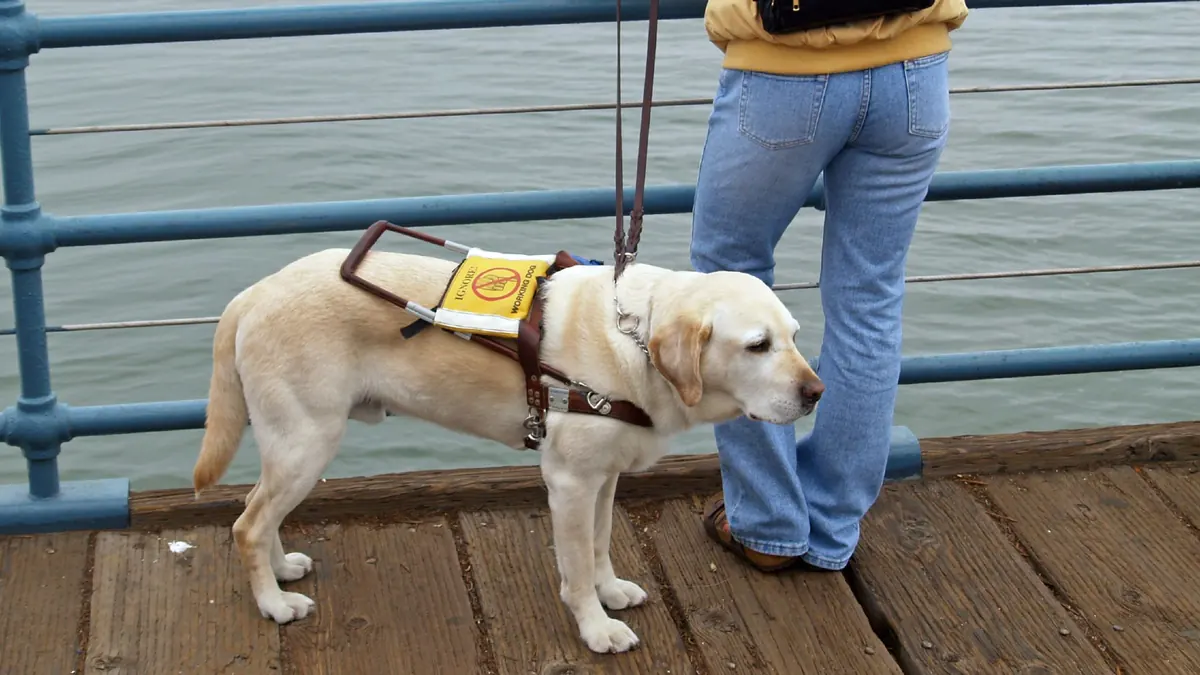
The Department of Justice, which enforces the ADA, defines a service animal as a dog individually trained to do work or perform tasks for a person with a disability. Examples: guiding a person who is blind, alerting a person who is deaf, pulling a wheelchair, alerting to a seizure, reminding a person to take medication, or interrupting a panic attack with a trained behavior.
The key word is trained. The ADA regulations say plainly that providing emotional support, well-being, comfort or companionship does not count as work or tasks. A psychiatric service dog trained to do a specific task is a service dog; a dog whose presence helps is an emotional support animal.
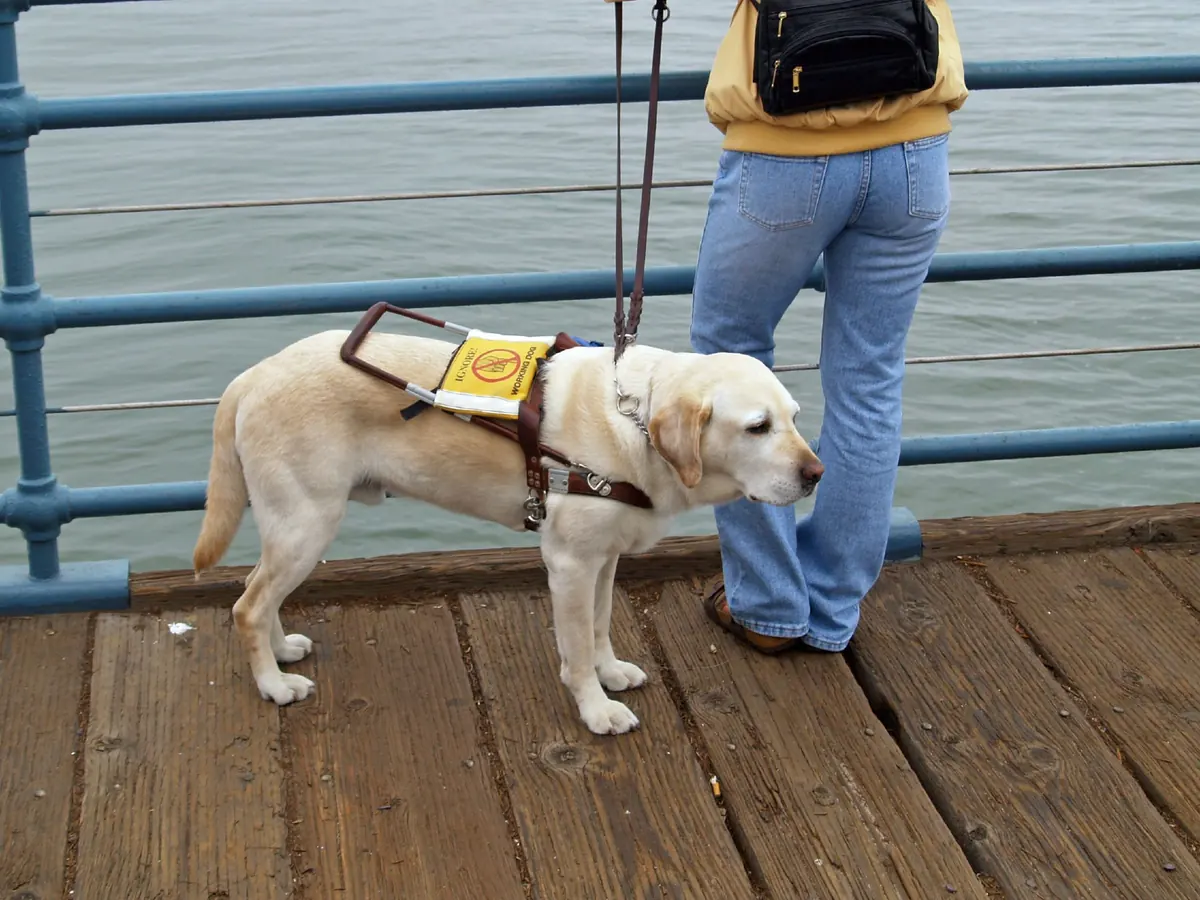
Under the ADA, only dogs count as service animals, with one narrow exception: the Department of Justice lets businesses accommodate trained miniature horses in many cases. Cats, rabbits and other animals can be emotional support animals in housing, but never service animals in public places.
What kinds of service dogs are there?
| Type | Example tasks |
|---|---|
| Guide dog | Leading a person who is blind or has low vision around obstacles and across streets |
| Hearing dog | Alerting a person who is deaf to doorbells, alarms, a baby crying or their name |
| Mobility dog | Retrieving dropped items, opening doors, bracing for balance, pulling a wheelchair |
| Medical alert or response dog | Alerting to a seizure or low blood sugar, getting help, bringing medication |
| Psychiatric service dog | Interrupting a panic attack or self-harm, checking a room for a person with PTSD, waking a person from nightmares |
Where can each one go?
| Place | Service dog | Emotional support animal |
|---|---|---|
| Stores, restaurants, offices | Yes (ADA) | Only where pets are allowed |
| Restaurant patios | Yes | Only if the patio allows dogs |
| Hotels | Yes, with no pet fee | Under the hotel's pet policy |
| Airlines | Yes; airlines may require DOT forms | Treated as a pet since 2021 |
| Housing (rentals, HOAs) | Yes | Yes, as a reasonable accommodation |
| National parks | Yes, including many places pets can't go | Only where pets are allowed |
| Dog parks | Same rules as any dog | Same rules as any dog |
Some states and cities have broader laws than the ADA, so it's worth checking local rules, especially for housing and public accommodations.
What can a business ask about a service dog?
Only two questions, and only when it isn't obvious what the dog does:
- Is the dog a service animal required because of a disability?
- What work or task has the dog been trained to perform?
Staff can't ask about the person's disability, ask for medical papers, ask for an ID card or certificate, or ask the dog to demonstrate the task. They also can't charge a pet fee or deposit for a service dog. They can ask that the dog be removed if it is out of control and the handler doesn't get it under control, or if it isn't housebroken.
Are online service dog registries real?
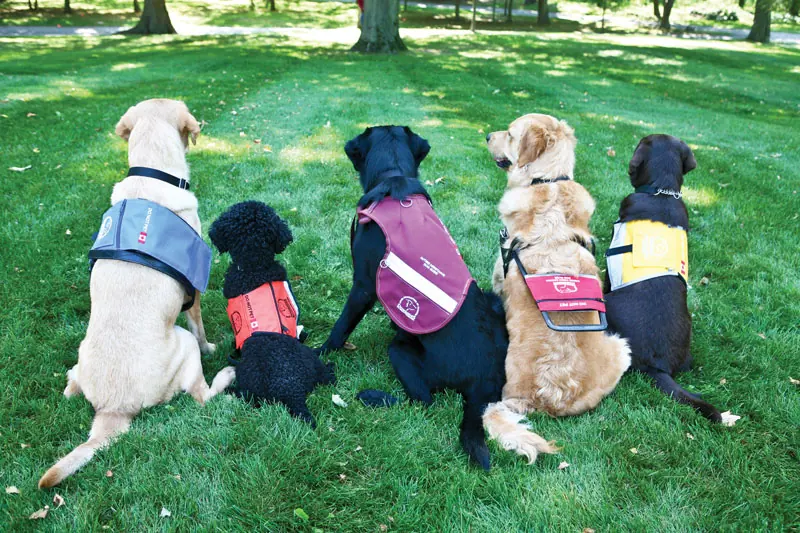
No. There is no official federal registry or certification for service dogs, and the Department of Justice does not recognize the certificates and vests sold online. A vest doesn't make a dog a service dog, and a service dog doesn't need one. What makes a service dog is its training and its handler's disability.
As of 2026, the Animal Legal & Historical Center counts 35 states with laws against passing off a pet as a service animal. Penalties are usually a misdemeanor or civil fine, sometimes with community service. In Alabama, for example, it's a Class C misdemeanor with a $100 fine and 100 hours of community service. Beyond the law, untrained "service dogs" that bark, lunge or wander make life harder for people who rely on real ones.
What changed for emotional support animals on planes?
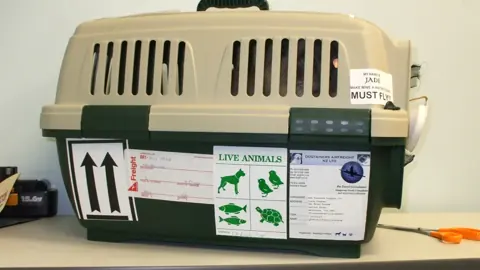
In December 2020, the Department of Transportation changed its Air Carrier Access Act rule. Since January 2021, airlines are no longer required to accept emotional support animals and may treat them as pets, with the airline's normal pet fees and size limits. Service dogs still fly in the cabin free of charge, and airlines may ask for DOT forms about the dog's training, health and behavior. If you're flying with any other dog, our guide to flying with a dog explains cabin and cargo rules.
Where do emotional support animals have legal protection?
In housing. Under the Fair Housing Act, the Department of Housing and Urban Development (HUD) uses a broader term, "assistance animal," which includes animals that provide emotional support for a person with a disability. A landlord or HOA with a no-pets policy generally has to make a reasonable accommodation for one, and HUD guidance says housing providers shouldn't charge pet fees or deposits for assistance animals. When the disability isn't obvious, the landlord can ask for reliable documentation of the need, often a letter from a health care provider who knows the person.
What about service dogs in training?
The ADA itself only covers fully trained service dogs, so a dog in training doesn't have federal public access rights. Many states fill that gap: their laws give trainers or handlers the right to bring service dogs in training into public places. Rules differ a lot from state to state, so trainers usually check their state's law or carry a letter from their training program.
Does a service dog have to wear a vest or be on a leash?
No vest is required. A service dog does have to be under control, which under the ADA means harnessed, leashed or tethered, unless that would interfere with the dog's work or the person's disability prevents it. In that case the handler must keep control by voice, signals or other means. A dog that runs around a store unattended doesn't meet that standard, vest or not.
Can a service dog or ESA use the dog park?
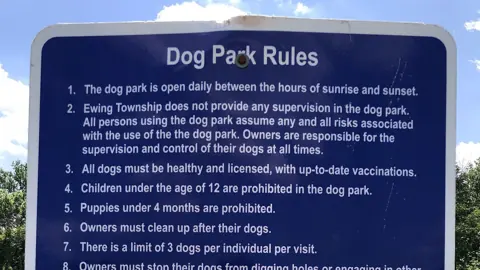
Yes, on the same terms as any other dog: licensed, vaccinated, healthy and under voice control. A dog park is an off-leash play space, so most handlers don't bring a working service dog there while it's on duty. Our dog park etiquette guide covers the rules that apply to everyone.
What about national parks?
The National Park Service allows service animals in park buildings and on trails where pets are not permitted, with some exceptions for wildlife or safety. Emotional support animals are treated as pets and follow pet rules, which in most parks means paved areas, campgrounds and a short list of trails. Park-by-park details are in dog-friendly national parks.
What can I do if a business refuses my service dog?
Stay calm and, if it helps, explain that the dog is a service animal and what task it does, since staff can ask those two questions. If the business still refuses and your dog wasn't out of control or having accidents, write down the date, place and names, and file a complaint with the Department of Justice at ada.gov. Many states also have their own civil rights or human rights agencies that take these complaints. For housing problems with an assistance animal, the complaint goes to HUD.
Frequently asked questions
Can a cat be a service animal?
Not under the ADA. Only dogs (and, in some cases, miniature horses) qualify. A cat can be an emotional support animal for housing purposes.
Is an emotional support dog a service dog?
No. Under the ADA, a service dog is individually trained to perform a task for a person with a disability. Emotional support, comfort or companionship alone doesn't qualify.
Can a restaurant refuse an emotional support dog?
Yes. Emotional support animals don't have ADA access rights, so restaurants can apply their normal pet rules. Many allow dogs on patios only.
What two questions can a business ask about a service dog?
Whether the dog is a service animal required because of a disability, and what work or task it has been trained to perform. Nothing else about the disability, and no documents.
Do I need to register my service dog?
No. There is no official federal registry, and online certificates and vests are not recognized by the Department of Justice.
Can airlines refuse emotional support animals?
Yes. Since January 2021, Department of Transportation rules let airlines treat emotional support animals as pets. Trained service dogs are still accepted.
Sources: Animal Legal & Historical Center, "Fraudulent Service Dogs" state law overview (animallaw.info, 2026); U.S. Department of Justice, ADA Requirements: Service Animals and Frequently Asked Questions about Service Animals and the ADA (ada.gov); U.S. Department of Transportation, final rule on traveling by air with service animals (Dec. 2020, effective Jan. 11, 2021); U.S. Department of Housing and Urban Development, guidance on assistance animals under the Fair Housing Act (FHEO-2020-01); National Park Service, service animal policy. This guide is general information, not legal advice.