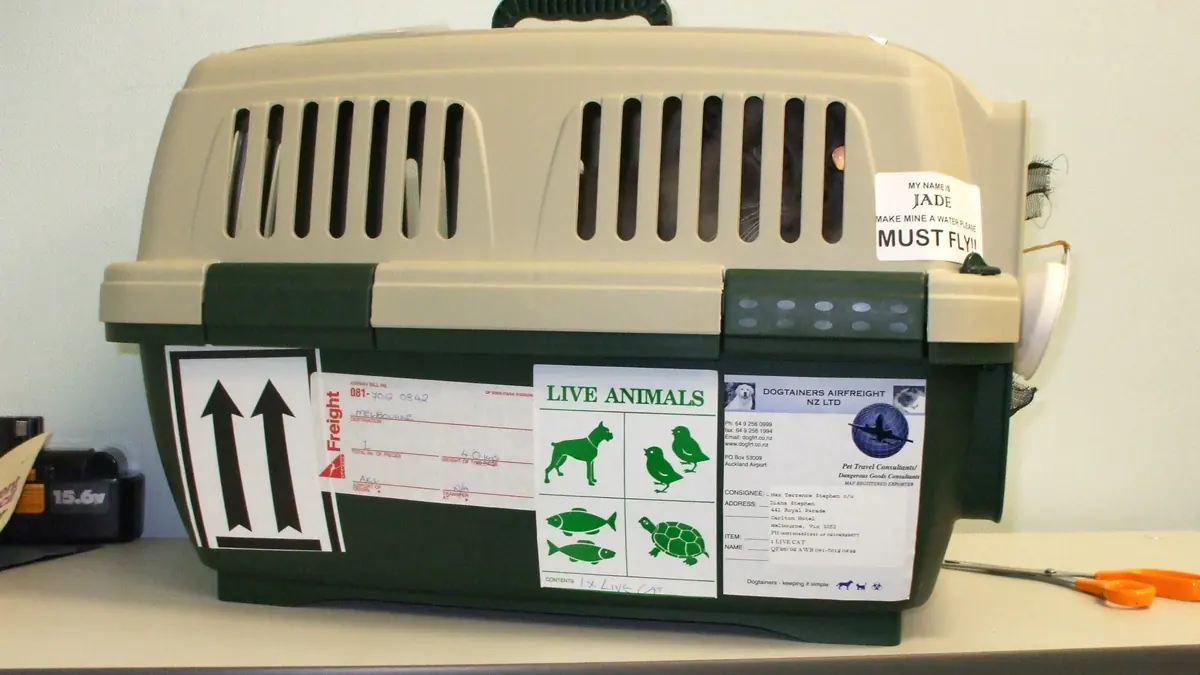
At a TSA checkpoint, take the dog out of the carrier, send the empty carrier through the X-ray, and carry the dog through the metal detector or walk it through on a leash. TSA's rule is absolute on one point: never put the dog in the X-ray tunnel. The X-ray is for bags, not for animals.
In this guide
Thanksgiving week is when this goes wrong, because the line is long, the dog is tired, and someone sets the carrier on the belt without looking. TSA has published the same steps for years, including after incidents in which pets were sent through an X-ray by mistake. The steps are short. The relief-area map is not. That map is the airport's, and it changes by terminal.
What do you do at the checkpoint, in order?
TSA's FAQ and its airport press releases describe the same sequence:
- Bring the pet to the checkpoint in a hand-held carrier.
- Take the pet out just before screening starts.
- Put the empty carrier on the belt so it can be X-rayed. Officers may also inspect it by looking and by hand.
- Never put the pet in the X-ray. TSA says the machine screens property and carry-on bags only.
- Carry the pet through the walk-through metal detector if you can. Otherwise walk the pet through on a leash. Do what the officer in front of you says.
- Take the leash off while you are carrying the pet through the detector, so the metal is not the thing that alarms.
- An officer swabs your hands for explosive trace.
- Put the pet back in the carrier at the recomposure area, away from the belt, so the animal is not loose in the crowd.
If the dog may panic or bolt when the carrier opens, ask for private screening before you unzip it in the line. TSA says an officer will take you to a room with the pet still in the carrier. That request is normal. It is not a special form you file a week ahead, and it is better than a loose dog in a bin of laptops.
What does TSA not decide?
Whether the dog can fly in the cabin, in cargo, or not at all. TSA screens what the airline has already agreed to carry. The FAQ says to contact the airline about its pet policy before you get to the airport. Weight caps, carrier dimensions, breed rules and seasonal heat embargoes are airline rules. We keep those in flying with a dog. This page is the metal detector and the relief area.
A service animal is screened too, and the airline's service-animal form is not a TSA pass. Tell the officer what you need, keep control of the dog, and do not assume the carrier steps apply the same way if the dog does not use a carrier. If you are unsure which category you are in, read service dog versus emotional support dog before you get in the precheck line and use the wrong words.
Why does TSA keep repeating the X-ray warning?
Because it still happens. In a March 15, 2023 release about Portland International Airport, TSA said it had seen pets sent through the X-ray, that the animals in those cases were not harmed, and that it should not have happened at all. The fix they publish is the same list: empty carrier on the belt, animal in your arms or on a leash, never in the tunnel. Thanksgiving does not change the physics of the machine. It changes how rushed you are. Put the leash on the dog before you lift the carrier onto the belt, so there is never a moment when both of your hands are on the bin and none are on the dog.
Set the empty carrier on the belt. Hold the dog. If you cannot do both, ask for help or for a private room. Do not "just this once" send the closed carrier through with the dog inside.
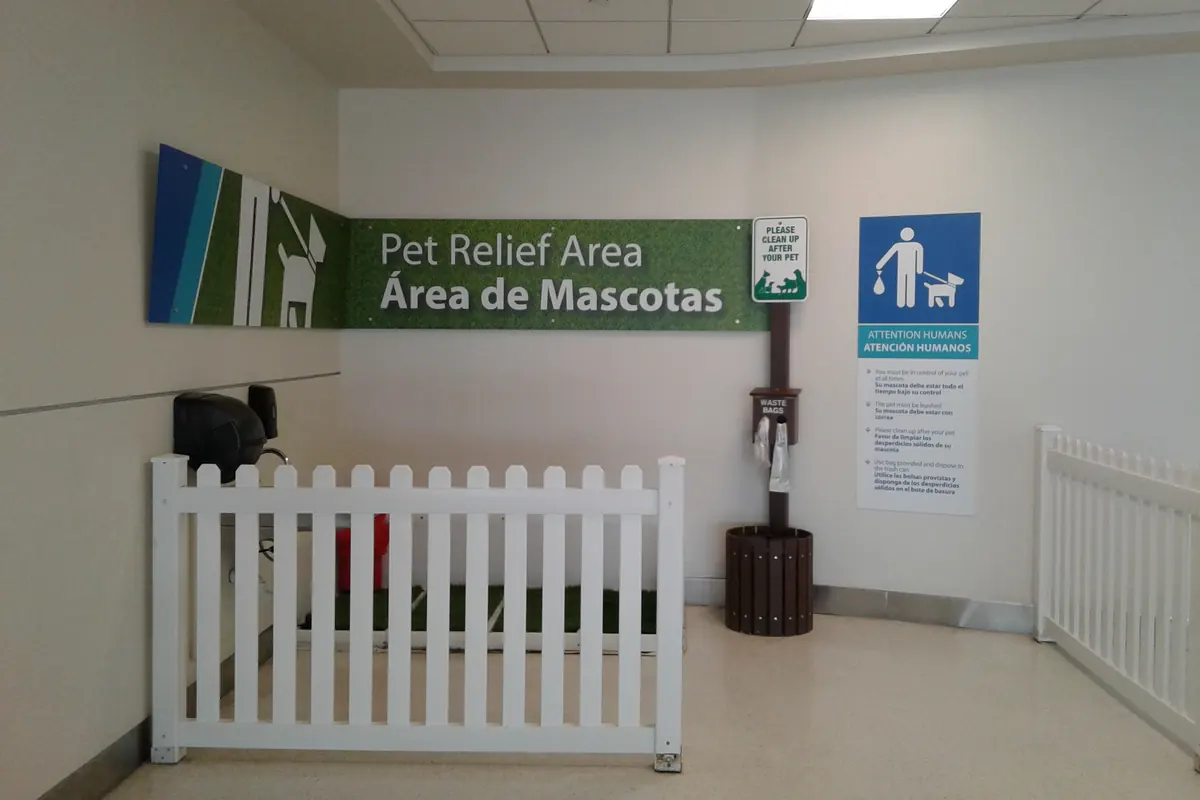
Where are the pet relief areas?
TSA tells you to learn them for the airport you are leaving and the airport you are landing in. TSA does not operate a single national map inside the pet FAQ. Airports publish their own. A few examples from TSA's own releases, which are years old and useful as a pattern, not as this week's floor plan:
| Airport, in a TSA release | What that release said |
|---|---|
| Washington Dulles, Feb. 24, 2023 | Four pet relief areas: two outside the terminal, before security, and two in the concourses, after security. |
| LaGuardia, Feb. 14, 2023 | Relief areas before and/or after security at each terminal. The release said there were none beyond security at Terminal A. Pets stay in carriers in the terminal except during screening, aside from service animals. |
| Portland (PDX), March 15, 2023 | A pre-security spot at baggage claim, plus post-security spots for B/C gates and for D/E gates. |
| Denver, Dec. 14, 2022 | A pre-security area on level 2 of the Jeppesen Terminal, and post-security areas on level 2 of the A, B and C gates. |
Those dates are on the releases on purpose. An airport can move a relief area. Look up the airport's current accessibility or pet page, and look for the sign, before you assume Terminal A at LaGuardia grew a post-security spot it did not have in 2023. If your connection is short, a relief area on the wrong side of security is a missed flight. Walk the dog in the pre-security area before you enter the line, not after you are at the gate with twenty minutes left.
What else does TSA want you to know in a crowd?
Get the dog used to the carrier on ordinary days, not on the holiday. TSA says that practice is what keeps the animal calmer at the checkpoint. Know whether your dog will thrash when the zipper opens. If the answer is yes, use the private room.
Working dogs belong to the government and to the airport. TSA says that if you see a working canine at the checkpoint or in the concourse, move to another line so you do not interfere with it. Your pet does not need a conversation with a detection dog. Neither do you.
A busy checkpoint is a bad place to find out the dog cannot be held. If you cannot carry the dog and manage the bin, you need a second person or the private screening room. A leash that is still in the suitcase is too late.
How does this fit a Thanksgiving itinerary?
Do the carrier practice the weekend before. Confirm the airline's cabin rules and the fee. Find the relief area on both airports' sites and save a screenshot, because airport wifi at noon on Wednesday is a myth. Arrive early enough to walk the dog before security, not early enough only for the human line. After you land, the hotel still has its own pet rule, which is not TSA's problem and not the airline's. That booking is in Thanksgiving getaways with a dog.
If the dog is too big for the cabin and you are tempted by a bus instead, read Greyhound before you buy. Pets are not allowed there. The page is can dogs ride Greyhound. A small dog on the train is a different yes, with a 20-pound combined cap, in can dogs ride Amtrak.
Frequently asked questions
Does my dog go through the X-ray?
No. TSA says to take the pet out and X-ray the empty carrier. The X-ray is for property. Never put the animal in the tunnel.
Do I carry the dog or use a leash?
Carry the dog through the metal detector if you can, with the leash removed so the hardware does not alarm. A leash walk-through is the alternative. Follow the officer.
Can I ask for a private room?
Yes. TSA says travelers whose pets may struggle or jump should request private screening. You go to the room with the pet still in the carrier.
Who decides if the dog can fly in the cabin?
The airline. TSA screens the trip the airline accepted. Check the carrier size and the fee with the airline before you leave for the airport.
Where do I walk the dog?
In a pet relief area at that airport, which may be before security, after security, or both, depending on the terminal. Confirm on the airport's current page. TSA's older press releases are examples, not a live map.
Sources: TSA, "Can I take my pet through the security checkpoint?" (tsa.gov); TSA press releases on pet screening at Dulles (Feb. 24, 2023), LaGuardia (Feb. 14, 2023), PDX (March 15, 2023) and Denver (Dec. 14, 2022). Relief-area details are quoted from those releases and may have changed. Airline pet rules are the airline's. Read Nov. 2026.