The biggest Halloween dangers for dogs are candy (chocolate and anything sugar-free with xylitol), an open front door on a night full of strangers, and costumes that restrict breathing, sight or movement. Keep the candy bowl out of reach, keep your dog in a quiet room during trick-or-treat hours, and if you think your dog ate something toxic, call your vet or the ASPCA Animal Poison Control Center at 888-426-4435 right away.
In this guide
- Which Halloween candy is dangerous for dogs?
- Which chocolate is the most dangerous?
- What should I do if my dog eats candy?
- How do I keep my dog from bolting on Halloween night?
- Are dog costumes safe?
- Are Halloween decorations dangerous for dogs?
- What's a good plan for Halloween night?
- My dog is scared of trick-or-treaters. What helps?
- Can I take my dog trick-or-treating?
- What about Halloween events at dog parks?
- Is the fake fog at Halloween parties safe for dogs?
- Frequently asked questions
Halloween is one of the busiest nights of the year for pet poison hotlines and lost-dog reports, and almost every case is preventable with a little planning. Pet Poison Helpline, one of the two big US animal poison lines, reports that its calls rise about 12% during Halloween week, making it the busiest week of its year. Over one year it took more than 1,100 calls about chocolate alone, and 98% of them involved dogs.
Which Halloween candy is dangerous for dogs?
| Item | Why it's dangerous |
|---|---|
| Chocolate | Contains theobromine and caffeine. Dark and baking chocolate are the most dangerous. |
| Sugar-free candy and gum (xylitol) | The ASPCA warns that even a small amount of xylitol can be fatal to dogs. |
| Raisins (and grapes) | Can cause kidney failure in dogs, even in small amounts. |
| Wrappers and lollipop sticks | Can block the intestines. |
| Glow sticks | Usually low toxicity, but the liquid tastes extremely bitter; dogs drool and panic. |
| Candles and jack-o'-lanterns | Burns, knocked-over flames, singed tails. |
Which chocolate is the most dangerous?
The darker and more bitter, the worse. Chocolate's toxic ingredients, theobromine and caffeine, are concentrated in cocoa solids. Baking chocolate and cocoa powder have the most, dark chocolate is next, milk chocolate has much less, and white chocolate has very little. Pet Poison Helpline gives a sense of scale: a single ounce of baker's chocolate can make a 50-pound dog sick.
Signs of chocolate poisoning usually start within a few hours: vomiting, diarrhea, restlessness, panting, excessive thirst and a racing heart, and in severe cases tremors and seizures. Because theobromine stays in a dog's body for a long time, symptoms can last a day or more.
Dogs have a nose built for finding the candy bag on the couch or the stash in a kid's backpack. The safest plan is to treat all candy like medicine: up high or behind a closed door.
What should I do if my dog eats candy?
- Take the rest away and keep the wrappers so you know what and how much was eaten.
- Call right away: your vet, an emergency vet, or the ASPCA Animal Poison Control Center (888-426-4435, a consultation fee may apply).
- Don't make your dog vomit unless a vet tells you to.
- Watch for signs: vomiting, restlessness, racing heart, tremors, weakness, collapse. With xylitol, signs can start quickly.
If the label says "sugar-free," treat it as an emergency until a vet says otherwise.
How do I keep my dog from bolting on Halloween night?
The doorbell rings dozens of times, strangers in masks appear, and the door stays open. That's how dogs slip out.
- Put your dog in a quiet room with the door closed, a bed, water and a chew, before trick-or-treaters start.
- Or hand out candy from the porch or driveway so the front door stays shut.
- Make sure your dog wears ID tags and the microchip information is current.
- Take a recent photo, just in case.
A license tag also gets lost dogs home faster. If yours is out of date, our guide to dog license fees by city shows how it works in big US cities.
Are dog costumes safe?
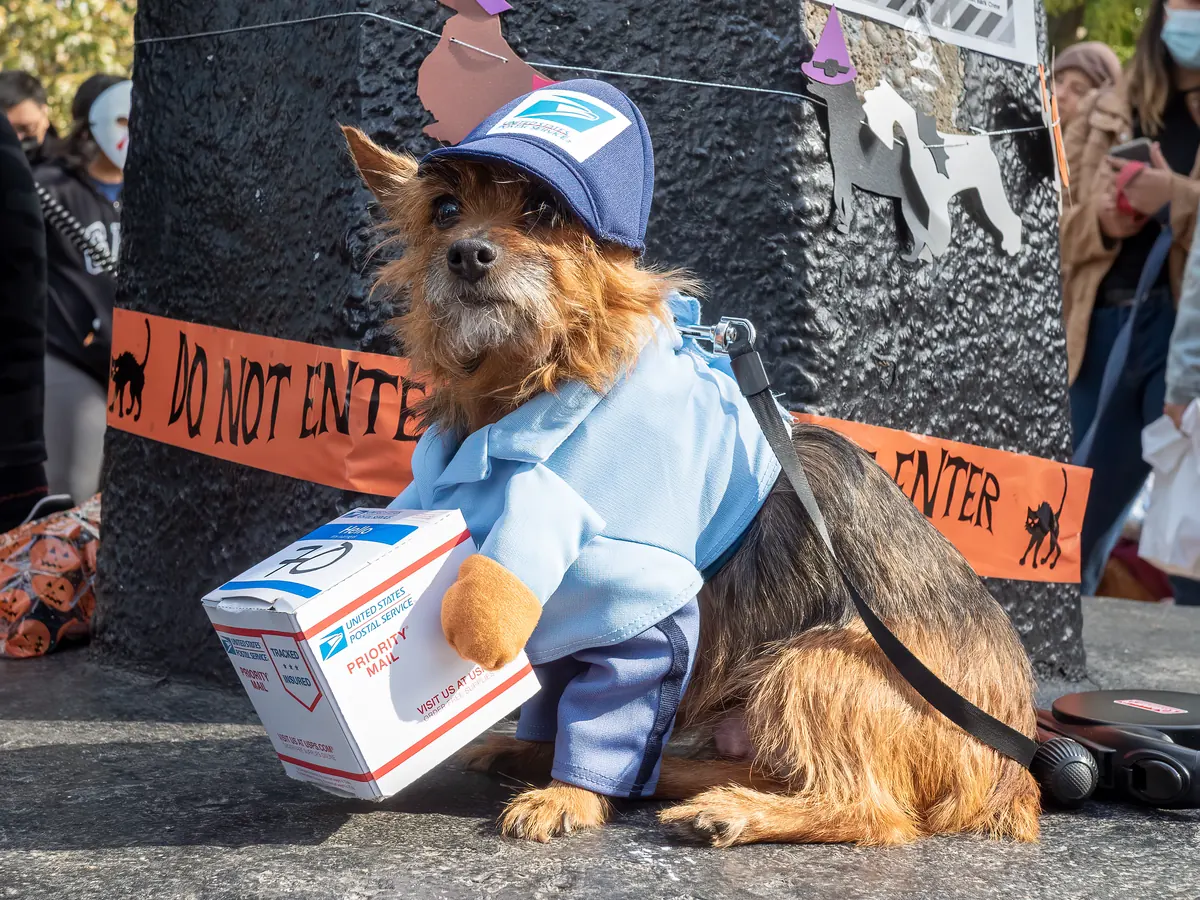
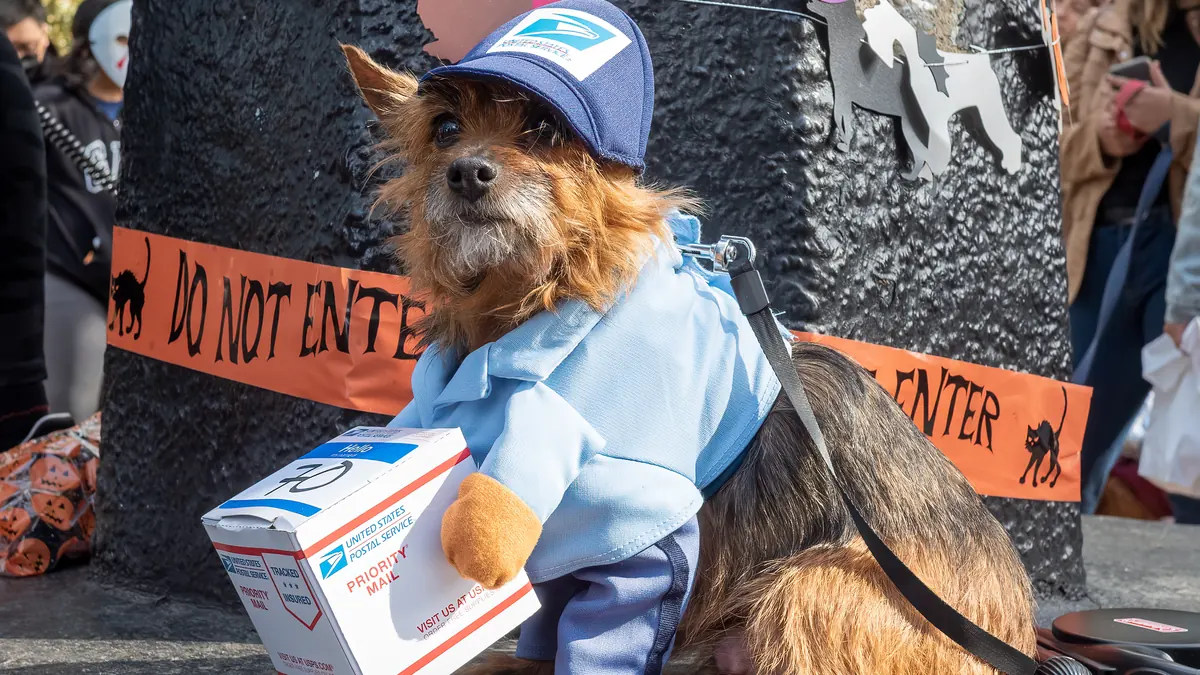
They can be, if your dog tolerates them. The ASPCA's guidance comes down to this:
- The costume shouldn't limit movement, sight or hearing, or make it hard to breathe or bark.
- No small, dangling or chewable pieces that could be swallowed.
- Try it on a few days before, for short periods, with treats.
- Never leave a dog in costume unsupervised.
- If your dog freezes, hides, or keeps trying to get it off, skip it. A festive bandana works too.
Are Halloween decorations dangerous for dogs?
Some are. The ones that cause the most trouble:
- Candles in jack-o'-lanterns at tail height. Battery candles are safer.
- Electrical cords for lights and animated decorations, which puppies love to chew.
- Fake cobwebs and small plastic decorations, which can be swallowed and block the intestines.
- Pumpkins and corn are not toxic, but a moldy pumpkin or a corn cob can upset the stomach or cause a blockage.
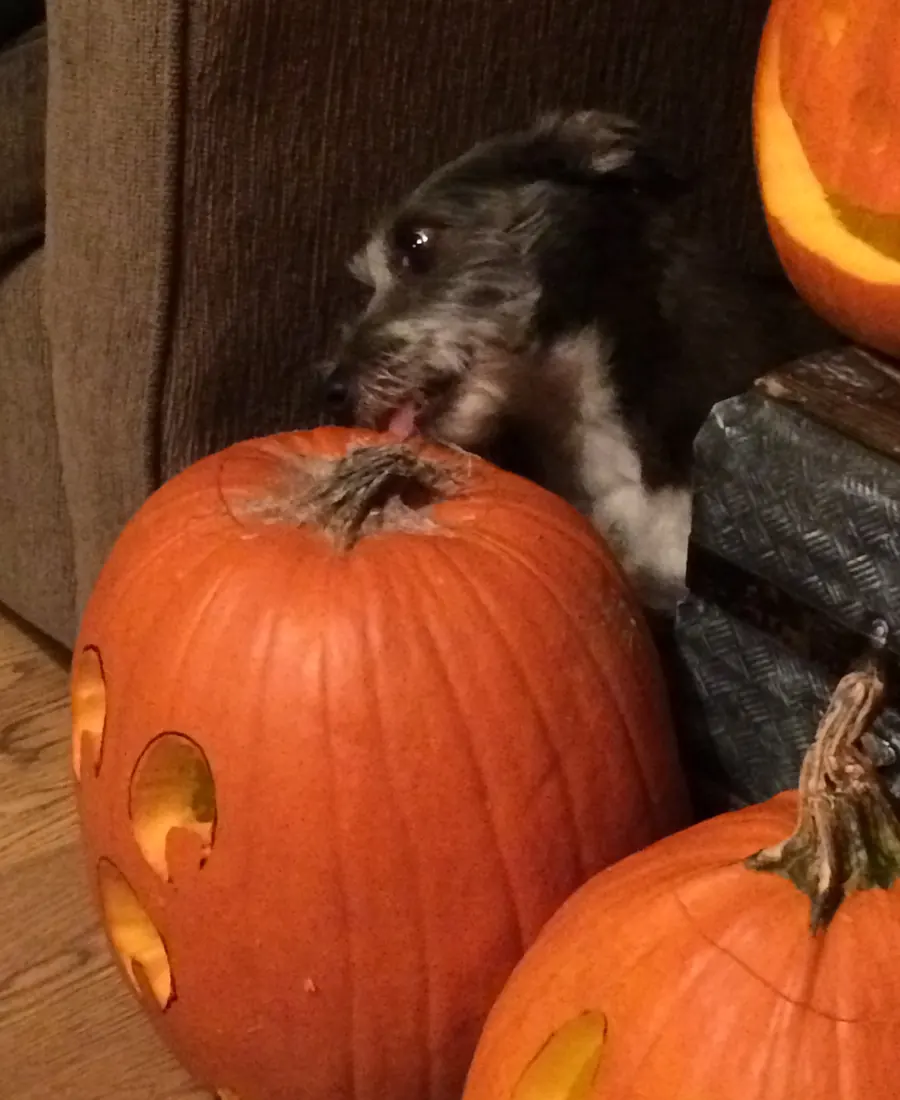
Walk through your decorations at dog height before the party, the same way you would for a toddler.
What's a good plan for Halloween night?
- Walk your dog and let it go to the bathroom before trick-or-treating starts.
- Set up a quiet room: bed, water, a long-lasting chew, a fan or TV for background noise.
- Check the ID tag and the microchip contact details, and take a fresh photo.
- Put candy bowls and kids' bags up high or behind a closed door.
- Swap real candles for battery ones.
- Save the poison control numbers in your phone: ASPCA 888-426-4435 and Pet Poison Helpline 855-764-7661 (fees may apply).
- Do a candy sweep after the kids come home: floors, couches and backpacks.
My dog is scared of trick-or-treaters. What helps?
A quiet room as far from the front door as possible, background noise like a fan or the TV, and something to chew. Take your dog out for a walk and bathroom break before trick-or-treating starts, so you don't have to open the door with a nervous dog later. If your dog is very anxious on noisy nights, ask your vet ahead of time; there are options that work best when planned in advance.
Can I take my dog trick-or-treating?
Only a calm, confident dog, and only for a short walk early in the evening. Use a 6-foot leash (not a retractable), add something reflective or a light, and avoid crowded streets. Kids in masks, costumes with props and sudden noises can scare even easygoing dogs. Most dogs are happier at home.
What about Halloween events at dog parks?
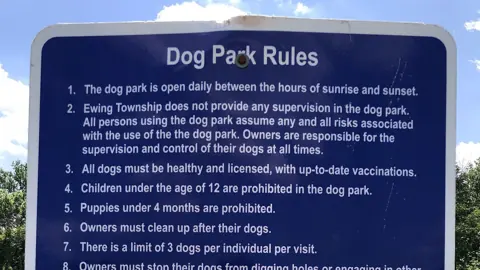
Some cities and dog parks host costume parades and "howl-o-ween" events. Check your park first: some city rules ban organized events inside dog parks. Nashville, for example, bans organized activities like classes and events in its dog parks. Costumes and off-leash play also don't mix well, since loose costume pieces can tangle or be chewed. The rest of the park rules are in our dog park etiquette guide.
Is the fake fog at Halloween parties safe for dogs?
Party fog from a fog machine and dry ice fog are both mostly a matter of ventilation. Dry ice releases carbon dioxide, which can build up in closed rooms, low to the floor, right where a dog breathes. Use it only in well-ventilated spaces and keep dogs away from the container. Never let a dog touch dry ice; at about -109°F it burns on contact.
Frequently asked questions
Which chocolate is worst for dogs?
Baking chocolate and cocoa powder, then dark chocolate. Milk chocolate is less concentrated, and white chocolate has very little of the toxic ingredient, though any amount should be reported to a vet for small dogs.
How much chocolate is toxic to a dog?
It depends on the type of chocolate and the dog's weight. Dark and baking chocolate are far more dangerous than milk chocolate. Don't wait for symptoms; call your vet or a poison control line with the amount and type eaten.
What is the ASPCA poison control number?
The ASPCA Animal Poison Control Center is 888-426-4435, available 24 hours a day. A consultation fee may apply.
Why is sugar-free candy dangerous for dogs?
Many sugar-free products contain xylitol, which the ASPCA warns can be fatal to dogs even in small amounts.
Is a glow stick poisonous to dogs?
Most are labeled non-toxic, but the liquid is extremely bitter and causes drooling and agitation. A small treat or some water usually helps; call your vet if your dog seems unwell.
Should my dog stay inside on Halloween?
Yes, ideally in a quiet room away from the front door during trick-or-treat hours, with ID tags on.
Sources: Pet Poison Helpline, Halloween dangers and media releases (petpoisonhelpline.com); Merck Veterinary Manual, chocolate toxicosis in animals; ASPCA, "Tips on Costumes, Candy and Celebrating Safely With Your Pets this Halloween" and ASPCA Animal Poison Control Center (aspca.org); Metro Nashville Parks dog park rules (organized activities); American Veterinary Medical Association, pet safety guidance (avma.org). This guide is general information, not veterinary advice.