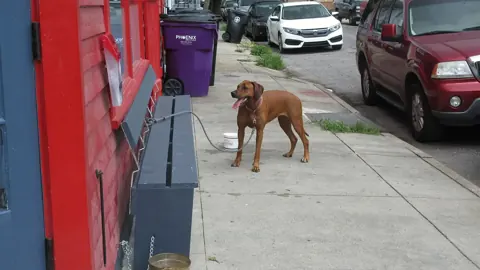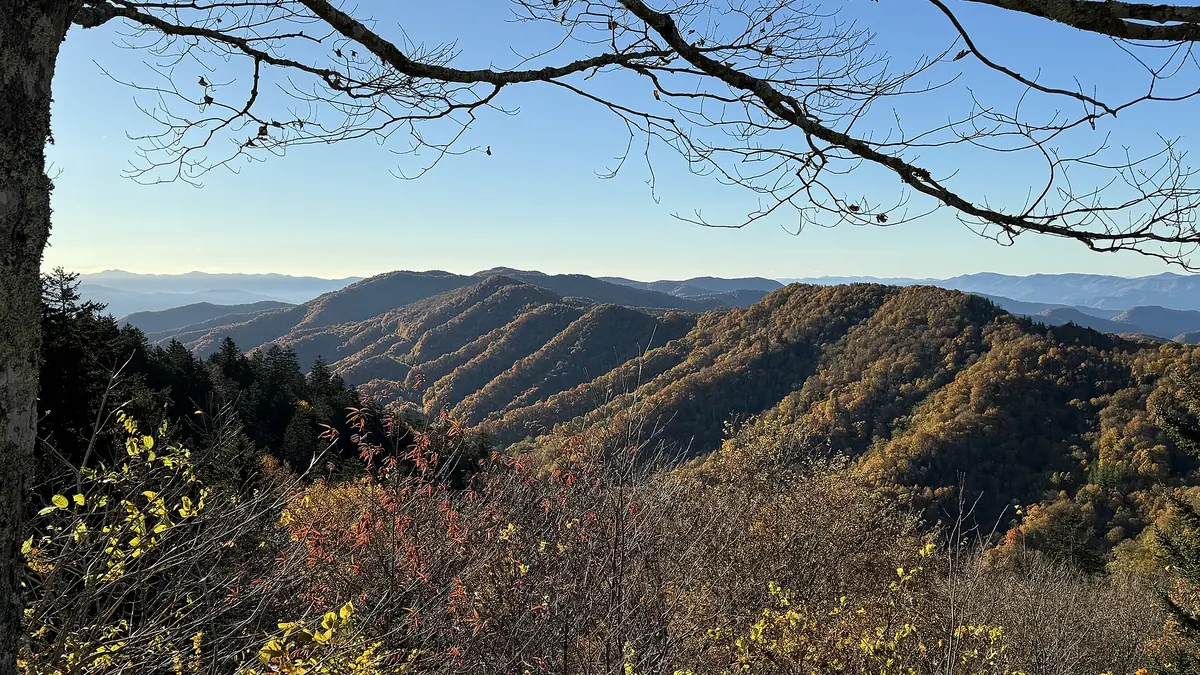
Only two trails in Great Smoky Mountains National Park allow pets: the Gatlinburg Trail and the Oconaluftee River Trail. Everywhere else on a park trail, dogs are prohibited. Pets may also be in frontcountry campgrounds, in picnic areas, and along roads, on a leash no longer than 6 feet. The National Park Service says you should consider leaving the dog at home, because most of the park will be off limits.
In this guide
Gatlinburg's tourism site repeats the same two-trail rule. A cabin in town does not add a third trail. Service dogs, individually trained to do work for a person with a disability, may go where visitors go. Emotional support animals, therapy animals, and service dogs in training are not service dogs under the park's pets page, and they follow the pet rules.
What are the two trails, in park units?
The Gatlinburg Trail is about 4 miles round trip, 6.4 kilometers, between Sugarlands Visitor Center and River Road in Gatlinburg. The park describes it as a riverside walk in cove hardwoods, one of the only trails that also allows bicycles, with sidewalk and road near the visitor center and a wider dirt path after the maintenance area. Historic stone chimneys are along it. It is not ADA accessible. A few steeper bits, roots, and rocks are called out, and the park still calls the grade mostly flat and wide. Park at Sugarlands, walk behind the building past the restrooms and the brick headquarters, and do not forget the parking tag. A tag is required to park in the park for more than 15 minutes. Restrooms are at the visitor center. The Oconaluftee River Trail is listed on that same page as an alternate of about 3 miles, 4.8 kilometers, round trip. Those two are the list. Little River, Cucumber Gap, Jakes Creek, and Big Creek appear as alternate hikes on the Gatlinburg Trail page and are not the pet list.
Why are the other trails closed to dogs?
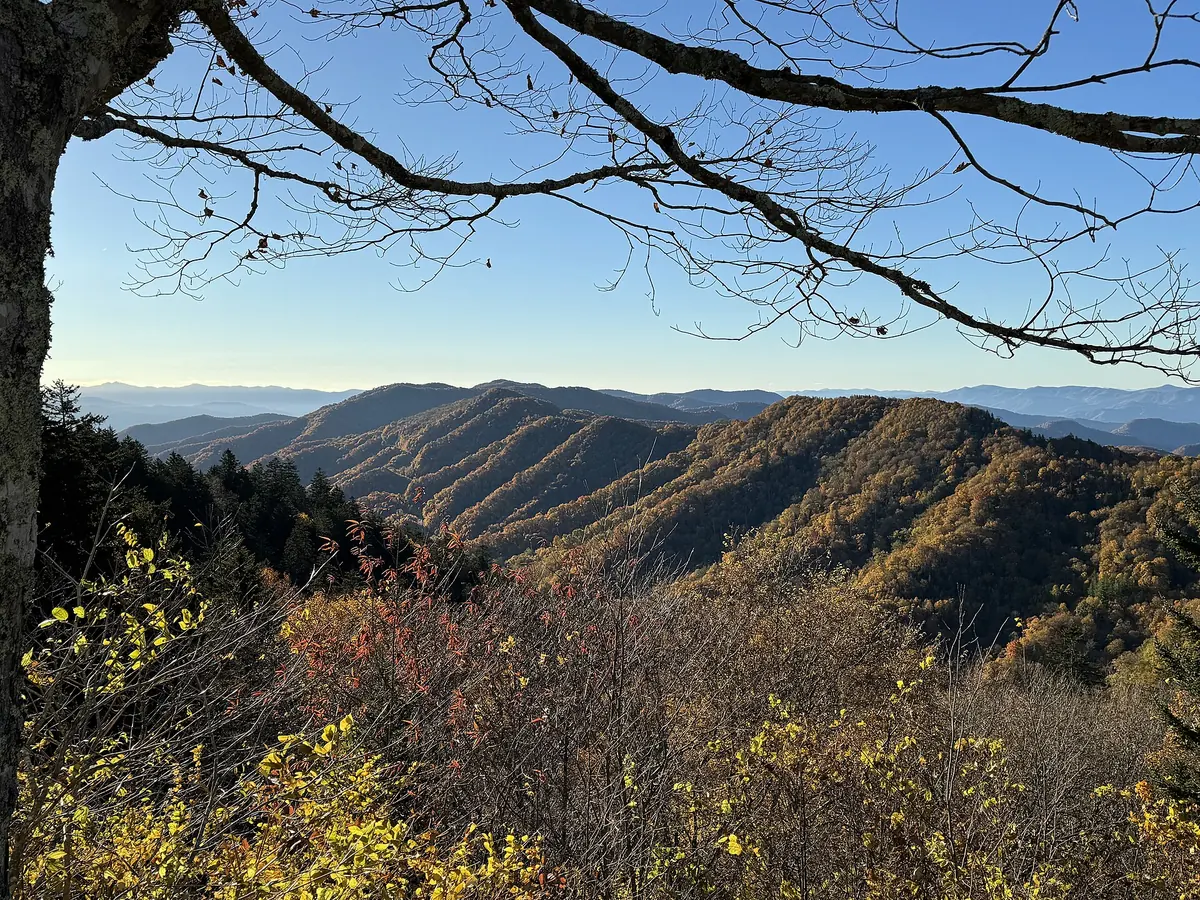
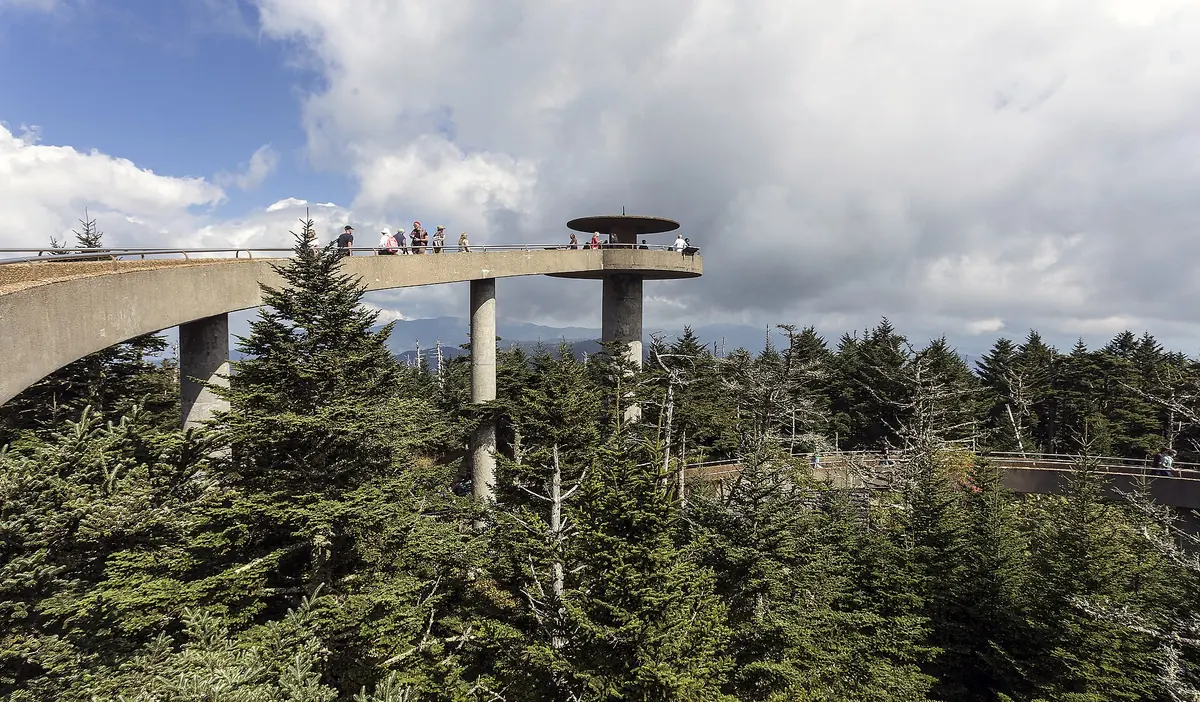
The pets page says the park has barred dogs from the backcountry since the 1930s. The reasons it lists are wildlife, the dog, and other visitors: disease moving between dogs and wildlife, animals leaving feeding and nesting areas because of a dog's scent, barking, predators, thorns and insects, and people who are afraid of dogs. You do not have to agree with every sentence to follow the map. The compendium line, quoted on the laws page, prohibits dogs and other pets on any park trail except the Gatlinburg Trail and the Oconaluftee River Trail. Clingmans Dome is the scenic counterexample. The observation tower is a famous stop. It is not one of the two trails. Bringing a dog up that path because the parking lot allowed the dog in the car is how people get the rule backward. Roads and parking areas are the leash zone. The trail leaving them is not, unless it is one of the two names.
What does the park say about bears?
The pets page tells you to carry bear spray and know how to use it, to skip headphones, and to turn around if you see a bear. It says not to let the dog bark at, chase, or corner a bear, and not to step between a dog and a bear. The park's line is that dogs are involved in most bear incidents with people, because a dog that runs at a bear can bring the bear back. It also says that if a dog confronts a bear there is a 50 percent chance the dog will be hurt or killed, and a higher chance a person will be hurt if they try to help. That is the park's warning, not a veterinary protocol. The behavior it asks for is a 6-foot leash and leaving. Trail etiquette is the general version. In this park the specific version is: most trails are a no, and the two that are a yes are still bear country.
| Place | Pets? | Condition |
|---|---|---|
| Gatlinburg Trail | Yes | About 4 miles round trip. Leash no longer than 6 feet. Parking tag if you stay over 15 minutes. |
| Oconaluftee River Trail | Yes | About 3 miles round trip. Same leash rule. |
| Other park trails, including Clingmans Dome | No | Prohibited. Service dogs are the legal exception on the pets page. |
| Frontcountry campgrounds, picnic areas, roads | Yes | Leash no longer than 6 feet. Do not leave the animal in a vehicle or RV. |
Do not leave the dog in the car while you hike a closed trail. The pets page says never leave pets unattended in vehicles or RVs. A December afternoon can still cook a car in the sun at a trailhead, and a cold night is not an excuse either. If the hike is not one of the two trails, the dog does not come, or you pick a road pull-off and a picnic area and you change the plan. Gatlinburg as a town trip only works if the hike you wanted is the Gatlinburg Trail.
What should you pack for the one trail that says yes?
A leash that cannot pay out past 6 feet. A fixed lead is the simple way to meet the number. A retractable leash locked short can still fail if the lock slips, and past 6 feet you are outside the rule. Bags, water, and the parking tag. The Gatlinburg Trail page says the path is not a smooth ADA surface. A stroller plan and a senior dog with bad feet need the HETAP description on that page, not a postcard. GRIT Freedom Chairs can be checked out for that trail, first come, on the park's accessibility terms. That is a chair program, not a dog program. Read it if someone in your group needs it. It does not move the dog onto a different trail.
- Name the trail before you leave the hotel. Gatlinburg Trail or Oconaluftee River Trail. If it is any other name, the dog stays home.
- Leash at 6 feet or less, in campgrounds, picnic areas, and on roads too.
- Parking tag for more than 15 minutes. Check the current fee on the park site.
- No unattended dog in the car.
- If you see a bear, turn around. Do not let the dog chase.
- Service dogs: the pets page's definition. A vest from a website is not the definition.
- Clean up. The page says to.
Pets along roads are allowed on a 6-foot leash. Pets on trails are not, except the two named trails. Newfound Gap and Clingmans Dome are famous because cars can reach them. The walks people take from those lots are still trails. If the sign does not say Gatlinburg Trail or Oconaluftee River Trail, the dog does not go up it.
How does this compare with a national forest next door?
National forests often allow leashed dogs on trails where this park does not. The boundary is the trip-breaker. A forest road that feels like the same mountains is a different rulebook. Other national parks vary. Do not export the Smokies' two-trail list to a park that allows more, and do not export a looser park's rule into the Smokies. Nashville has city dog parks. None of them are inside this national park. If the vacation is really about hiking, leave the dog with a sitter or pick a forest day and a separate Gatlinburg Trail morning. Doing both on one tired afternoon is how the dog ends up in the car at a trailhead the sign banned.
Frequently asked questions
Can I bring my dog to Great Smoky Mountains?
Yes, on a leash no longer than 6 feet, in frontcountry campgrounds, picnic areas, and along roads, and on only two trails: the Gatlinburg Trail and the Oconaluftee River Trail.
How long are those trails?
The park lists the Gatlinburg Trail at about 4 miles round trip and the Oconaluftee River Trail at about 3 miles round trip.
Can my dog go to Clingmans Dome?
Not on the trail. The tower walk is not one of the two pet trails. Roads and parking areas still require the 6-foot leash, and the trail beyond them does not allow pets.
Are emotional support animals allowed on every trail?
No. The pets page says emotional support, therapy, and in-training animals follow pet rules. A service dog is the category that may go where visitors go, under the definition on that page.
Can I leave my dog in the car while I hike?
The park says not to leave pets unattended in vehicles or RVs. Pick a pet trail or a plan that does not need the car as a kennel.
Sources: National Park Service, Great Smoky Mountains pets page (nps.gov/grsm/planyourvisit/pets.htm), two trails, 6-foot leash, campgrounds, picnic areas, roads, backcountry history, wildlife reasons, bear guidance, unattended-vehicle ban, and the service-animal definition; Gatlinburg Trail page, distance, route, parking tag, bicycles, and the Oconaluftee River Trail distance; park FAQ, the same pet summary; laws and policies page, compendium ban on pets on other trails. Gatlinburg's tourism site repeats the two-trail limit. Confirm alerts and the parking-tag price before you go.